

The source of the book
This book is published for the public benefit under a Creative Commons license, or with the permission of the author or publisher. If you have any objections to its publication, please contact us.
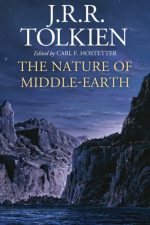
The Nature of Middle-Earth PDF - J. R. R. Tolkien
J. R. R. Tolkien • Fantasy novels • 551 Pages
(0)
Quate
Review
Save
Share
Book Description
The Nature of Middle-earth by J. R. R. Tolkien is a rich and illuminating collection of late writings that opens an entirely new window into the vast secondary world of Middle-earth, offering readers an extraordinary opportunity to explore the depth, evolution, and intellectual foundation behind one of the most influential fantasy universes ever created. Compiled and edited by Carl F. Hostetter from previously unpublished manuscripts, this volume gathers Tolkien’s reflections on cosmology, metaphysics, chronology, geography, linguistics, and the metaphysical laws that govern Arda, revealing how meticulously he continued refining his legendarium long after the publication of The Lord of the Rings. Unlike a conventional narrative novel, The Nature of Middle-earth functions as a scholarly yet deeply imaginative exploration of Tolkien’s creative process, making it an essential read for devoted fans, fantasy literature scholars, and anyone fascinated by world-building at its highest level. The book expands upon themes that shaped Tolkien’s entire mythology, including the structure of Elvish immortality, the aging of Elves and Men, the nature of reincarnation among the Elves, and the philosophical underpinnings of fate, free will, and divine providence within his sub-created universe. Readers encounter detailed essays and fragments that examine the physical and spiritual laws of Middle-earth, from the behavior of time in Aman to the nature of the sun, moon, and stars as understood within Tolkien’s mythic framework, providing a deeper appreciation of how science, theology, and myth intertwine in his storytelling. One of the most compelling aspects of this collection is its focus on Tolkien’s linguistic imagination, where the development of Elvish languages such as Quenya and Sindarin is intertwined with cultural and historical evolution, demonstrating how language itself shaped the identity of entire civilizations within Middle-earth. The Nature of Middle-earth also revisits and expands the timelines of key events, offering revised chronologies and alternative interpretations that show Tolkien’s constant refinement of his world, even decades after its initial creation, highlighting his perfectionist approach to consistency and internal logic. For readers who have journeyed through The Silmarillion, The Hobbit, and The Lord of the Rings, this book serves as a profound continuation of that experience, not by extending the story forward, but by deepening the conceptual and philosophical layers behind it, allowing a more intimate understanding of how Middle-earth operates as a fully realized mythological system. It is especially valuable for those interested in fantasy world-building, literary mythology, and the intersection of language and narrative structure, as it reveals how Tolkien constructed not just stories, but entire systems of meaning that support those stories. The tone of the material varies between highly academic analysis and poetic speculation, reflecting Tolkien’s dual identity as both a philologist and a myth-maker, and this combination makes the work uniquely rewarding for readers who appreciate both intellectual depth and imaginative richness. The Nature of Middle-earth does not follow a linear plot, but instead invites readers into a mosaic of ideas, drafts, and conceptual explorations that together form a clearer picture of Middle-earth as a living, evolving creation. Through its pages, readers gain insight into the metaphysical questions that preoccupied Tolkien throughout his life, such as the nature of mortality, the destiny of souls, and the relationship between created worlds and divine intention, all of which contribute to the enduring emotional and philosophical resonance of his fiction. Ultimately, The Nature of Middle-earth stands as a testament to J. R. R. Tolkien’s unparalleled dedication to world-building and his belief that fantasy can serve as a vehicle for profound truth, offering readers not just additional lore, but a deeper understanding of the very essence of Middle-earth itself.
J. R. R. Tolkien
J. R. R. Tolkien is widely regarded as one of the most influential authors of the twentieth century and the foundational figure of modern high fantasy literature. Best known for his masterpieces The Hobbit and The Lord of the Rings, Tolkien was not only a novelist but also a distinguished philologist and professor at the University of Oxford. His academic expertise in ancient languages, medieval literature, and linguistic structures profoundly shaped his creative work, giving his fictional world of Middle-earth an unprecedented depth and realism.
Born in 1892 in Bloemfontein, South Africa, Tolkien moved to England after the death of his father and was raised in the English countryside. From an early age, he developed a fascination with language, mythology, and storytelling. His academic career at Oxford focused on Old English literature, particularly texts such as Beowulf, which he both studied and helped reinterpret for modern scholarship.
Tolkien’s experience in World War I had a lasting impact on his worldview. The themes of loss, camaraderie, and the struggle between good and evil that appear throughout his writings are often connected to his wartime experiences. After the war, he began developing stories that would eventually become The Hobbit, published in 1937. Its success led to the creation of his epic legendarium, The Lord of the Rings, published in three volumes between 1954 and 1955.
What distinguishes Tolkien’s work is his meticulous world-building. He created not only stories but entire civilizations, complete with histories, genealogies, languages, and mythologies. His constructed languages, such as Quenya and Sindarin, remain among the most sophisticated fictional languages ever created.
Tolkien passed away in 1973, but his legacy continues to shape literature, film, and popular culture. His works have inspired countless authors and remain central to the fantasy genre.
Earn Rewards While Reading!
Every 10 pages you read and spent 30 seconds on every page, earns you 5 reward points! Keep reading to unlock achievements and exclusive benefits.
Read
Rate Now
5 Stars
4 Stars
3 Stars
2 Stars
1 Stars
The Nature of Middle-Earth Quotes
Top Rated
Latest
Quate
Be the first to leave a quote and earn 10 points
instead of 3
Other books by J. R. R. Tolkien
Other books like The Nature of Middle-Earth
'%20/%3e%3c/svg%3e "Fantastic Beasts: The Crimes of Grindelwald - the Original Screenplay")
J. K. Rowling.
Fantasy novels
(0)
7573
English
Comments
Be the first to leave a comment and earn 5 points
instead of 3