

The source of the book
This book is published for the public benefit under a Creative Commons license, or with the permission of the author or publisher. If you have any objections to its publication, please contact us.
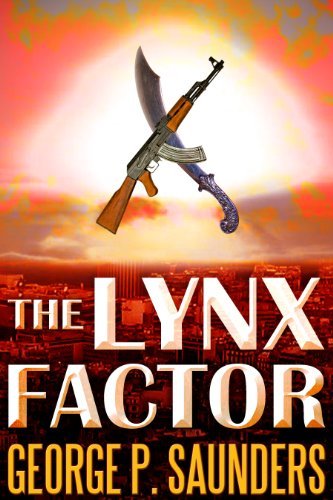
The Lynx Factor PDF - George Saunders
George Saunders • romantic novels • 110 Pages
(0)
Quate
Review
Save
Share
Book Description
The Lynx Factor by George P. Saunders
The Lynx Factor by George P. Saunders is an action-driven thriller built around danger, bad luck, and a hero whose life seems to attract trouble at the worst possible moments. Blending elements of espionage fiction, terrorism thriller, and fast-paced adventure, the book introduces Peter Lynx, an ex-Navy SEAL and part-time mortician whose unusual background immediately gives the story a distinctive edge. He is not a polished, untouchable action hero moving smoothly through danger; he is a man shaped by experience, irony, survival, and a strange pattern of misfortune he calls “The Lynx Factor.”
At the center of the story is a high-stakes threat that brings violence and chaos close to home. Peter Lynx finds himself facing terrorists on American soil, with the danger connected to his own apartment complex and a wider plot involving a destructive weapon. The premise gives the novel a tense, cinematic quality, moving between personal vulnerability and large-scale suspense. Readers looking for a military action thriller, a counterterrorism novel, or a suspense story with an unconventional lead will find the book’s appeal in its combination of urgency, grit, and darkly comic bad luck.
A Thriller Built Around an Unusual Hero
Peter Lynx stands out because he brings together two very different worlds. As an ex-Navy SEAL, he carries the instincts, discipline, and combat awareness associated with elite military training. As a part-time mortician, he also lives close to death in a quieter, stranger, and more reflective way. This contrast gives the character a memorable identity within the action thriller genre. He is connected to danger both professionally and personally, and the book uses that background to shape a hero who can confront extreme situations while still feeling offbeat and unpredictable.
The idea of “The Lynx Factor” adds personality to the novel. Rather than presenting bad luck as a simple joke, the title suggests a recurring force in Peter’s life, a pattern of misfortune that follows him into crisis. This gives the story a slightly ironic tone beneath the suspense. Peter may be trained, capable, and courageous, but the world around him rarely cooperates. That tension between skill and chaos helps make the book more than a straightforward action story; it gives the narrative a character-driven hook that readers can remember.
Action, Espionage, and Counterterrorism Suspense
The Lynx Factor fits naturally for readers who enjoy action suspense, espionage thrillers, and stories where an ordinary location becomes the center of an extraordinary threat. The terrorist plot raises the stakes quickly, while Peter Lynx’s proximity to the danger makes the conflict personal. Instead of beginning in a distant war zone or a formal intelligence agency, the story brings the threat into a familiar civilian space, creating a strong sense of immediacy and confinement.
This kind of setup is especially effective for fans of thrillers where time pressure, hidden weapons, and unpredictable enemies drive the plot forward. The mention of a dirty bomb and smuggled missiles places the book within the tradition of modern terrorism fiction, where the danger is not only physical but psychological. The reader is invited to follow a protagonist who must think fast, act decisively, and survive a situation that escalates beyond normal control.
A Fast-Paced Reading Experience
The reading experience of The Lynx Factor is designed for momentum. Its premise promises confrontation, rapid escalation, and a hero forced into action before life gives him time to prepare. The novel’s strength lies in its direct appeal to readers who want a thriller that moves with energy and keeps danger close to the main character. It is not a slow literary mystery or a quiet psychological drama; it is a book for readers drawn to high-stakes suspense, military adventure, and the pressure of a crisis unfolding in real time.
At the same time, Peter Lynx’s “bad luck” gives the story a distinctive flavor. Many thrillers depend on flawless heroes, but this one leans into complication. Peter is capable, yet not immune to absurdity. He may have the background of a professional warrior, but he also seems to attract disaster with almost comic persistence. That balance can make the book appealing to readers who enjoy action stories with a rougher, quirkier personality rather than a perfectly controlled hero.
Themes of Survival, Fate, and Personal Responsibility
Beneath the action, The Lynx Factor touches on themes that are common to strong thriller fiction: survival under pressure, responsibility in the face of danger, and the way one person’s choices can matter when institutions or systems fail to respond quickly enough. Peter Lynx is placed in a situation where his background becomes more than biography. His training, courage, and instincts are tested in a crisis that demands immediate action.
The title also points toward a theme of fate. Peter’s belief in “The Lynx Factor” suggests a life shaped by recurring misfortune, but the thriller format asks whether bad luck can be overcome by discipline, nerve, and persistence. In that sense, the book is not only about stopping a threat; it is also about a man confronting the pattern that seems to define his life. The danger outside him mirrors the chaos that has always followed him, giving the action a personal dimension.
For Readers Who Enjoy Military and Terrorism Thrillers
The Lynx Factor is a fitting choice for readers searching for a military thriller with an ex-Navy SEAL protagonist, a terrorism suspense novel, or an action adventure book with a cinematic pace. Fans of stories involving elite-trained heroes, domestic threats, hidden plots, and urgent confrontations will recognize the familiar pleasures of the genre, while the mortician background and bad-luck motif give the book its own identity.
The novel may also appeal to readers who like thrillers that feel direct, accessible, and plot-focused. Its central conflict is clear, the stakes are dangerous, and the protagonist is placed in the middle of the action rather than watching events from a distance. For readers browsing for a suspenseful book with danger, military experience, and an unconventional hero, The Lynx Factor by George P. Saunders offers a compact and energetic entry into that world.
Why The Lynx Factor Stands Out
What helps The Lynx Factor stand out is the combination of familiar thriller ingredients with an unusual lead character. Terrorists, weapons, and a race against danger belong to the classic language of action fiction, but Peter Lynx’s personality and circumstances create a different angle. His life as an ex-SEAL gives him credibility in dangerous situations, while his work as a mortician adds a darker, more eccentric layer. The result is a protagonist who belongs in a thriller but does not feel entirely conventional.
The book’s title also works as more than a label. “The Lynx Factor” captures the idea that trouble is not simply something Peter encounters; it is something that seems woven into his life. This gives the story a memorable hook for readers and a strong SEO-friendly identity for anyone searching for The Lynx Factor book, George P. Saunders thriller, or Peter Lynx action novel.
A Suspenseful Introduction to Peter Lynx
As a first Peter Lynx story, The Lynx Factor introduces a hero defined by skill, misfortune, and resilience. It offers the kind of action-centered suspense that readers expect from a terrorism thriller while adding enough character eccentricity to make the premise distinctive. The novel is suited to readers who want danger, momentum, and a protagonist who can move from the ordinary world into extraordinary conflict without losing his human edge.
The Lynx Factor by George P. Saunders is ultimately a thriller about what happens when bad luck meets real danger. With its ex-Navy SEAL hero, domestic terrorism plot, and fast-moving suspense, it offers an engaging choice for readers drawn to action thrillers, espionage fiction, counterterrorism stories, and unconventional heroes forced to act when the stakes could not be higher.
George Saunders
George Saunders is an American author, short story writer, novelist, essayist, and teacher whose work has become central to contemporary literary fiction, especially for readers interested in satire, moral imagination, experimental narrative form, and compassionate social criticism. Although he is now widely recognized as one of the most distinctive writers in modern American literature, Saunders followed an unusual path into fiction. He studied geophysical engineering, worked in technical and industrial settings, and brought into literature a sharp awareness of systems, workplaces, bureaucratic language, consumer culture, and the pressures placed on ordinary people by institutions that often speak in polished slogans while producing real suffering. This background helps explain the strange energy of his fiction: his stories often feel at once futuristic and familiar, comic and devastating, absurd and deeply humane. In works such as CivilWarLand in Bad Decline, Pastoralia, In Persuasion Nation, Tenth of December, and Liberation Day, Saunders explores theme parks, corporate environments, artificial communities, media-saturated worlds, and damaged families, using exaggerated premises to reveal emotional truths about fear, ambition, debt, shame, kindness, and moral choice. His style is instantly recognizable for its blend of vernacular speech, dark humor, surreal invention, and sudden moments of tenderness. Rather than presenting satire as simple ridicule, he uses satire to ask how people become trapped inside economic pressures, cultural scripts, and self-protective stories, and how they might still act with generosity. Saunders achieved a major international breakthrough with Lincoln in the Bardo, his first novel, which won the Booker Prize and expanded his audience far beyond the world of short fiction. The novel uses a chorus of voices to imagine the grief of Abraham Lincoln after the death of his son Willie, while also creating a spiritual landscape filled with comic, tragic, and yearning presences. It is formally daring, emotionally direct, and historically resonant, showing Saunders’s ability to turn an experimental structure into a moving meditation on death, love, national sorrow, and the difficulty of letting go. His later novel Vigil continues many of his central concerns, including mortality, spiritual reckoning, environmental responsibility, corporate power, and the possibility of empathy even at the edge of judgment. Saunders is also admired for A Swim in a Pond in the Rain, a craft book and literary meditation drawn from his long experience teaching Russian short stories, where he examines how narrative attention works and why fiction can sharpen the reader’s moral perception. As a professor of creative writing at Syracuse University, he has influenced many writers not only through his published books but also through his approach to teaching, which emphasizes precision, revision, playfulness, and the ethical force of noticing. His honors include a MacArthur Fellowship, a Guggenheim Fellowship, the PEN/Malamud Award for excellence in the short story, the Story Prize and the Folio Prize for Tenth of December, recognition by Time as one of the world’s most influential people in 2013, and the 2025 Medal for Distinguished Contribution to American Letters. Yet the real significance of George Saunders lies not only in awards or reputation. His fiction has helped renew the short story as a form capable of confronting contemporary life without becoming flatly realistic or narrowly political. He understands that modern cruelty often hides inside ordinary language, that people can be ridiculous and worthy of love at the same time, and that moral awakening may begin in a tiny hesitation before harm. For readers, students, and writers, Saunders offers a model of literary art that is inventive without being cold, funny without being shallow, and compassionate without being sentimental. His books remain especially valuable for anyone seeking fiction that challenges the imagination while deepening the capacity for attention, mercy, and self-examination.
Earn Rewards While Reading!
Every 10 pages you read and spent 30 seconds on every page, earns you 5 reward points! Keep reading to unlock achievements and exclusive benefits.
Read
Rate Now
5 Stars
4 Stars
3 Stars
2 Stars
1 Stars
The Lynx Factor Quotes
Top Rated
Latest
Quate
Be the first to leave a quote and earn 10 points
instead of 3
'%20/%3e%3c/svg%3e "Tenth Of December")
Comments
Be the first to leave a comment and earn 5 points
instead of 3