

The source of the book
This book is published for the public benefit under a Creative Commons license, or with the permission of the author or publisher. If you have any objections to its publication, please contact us.
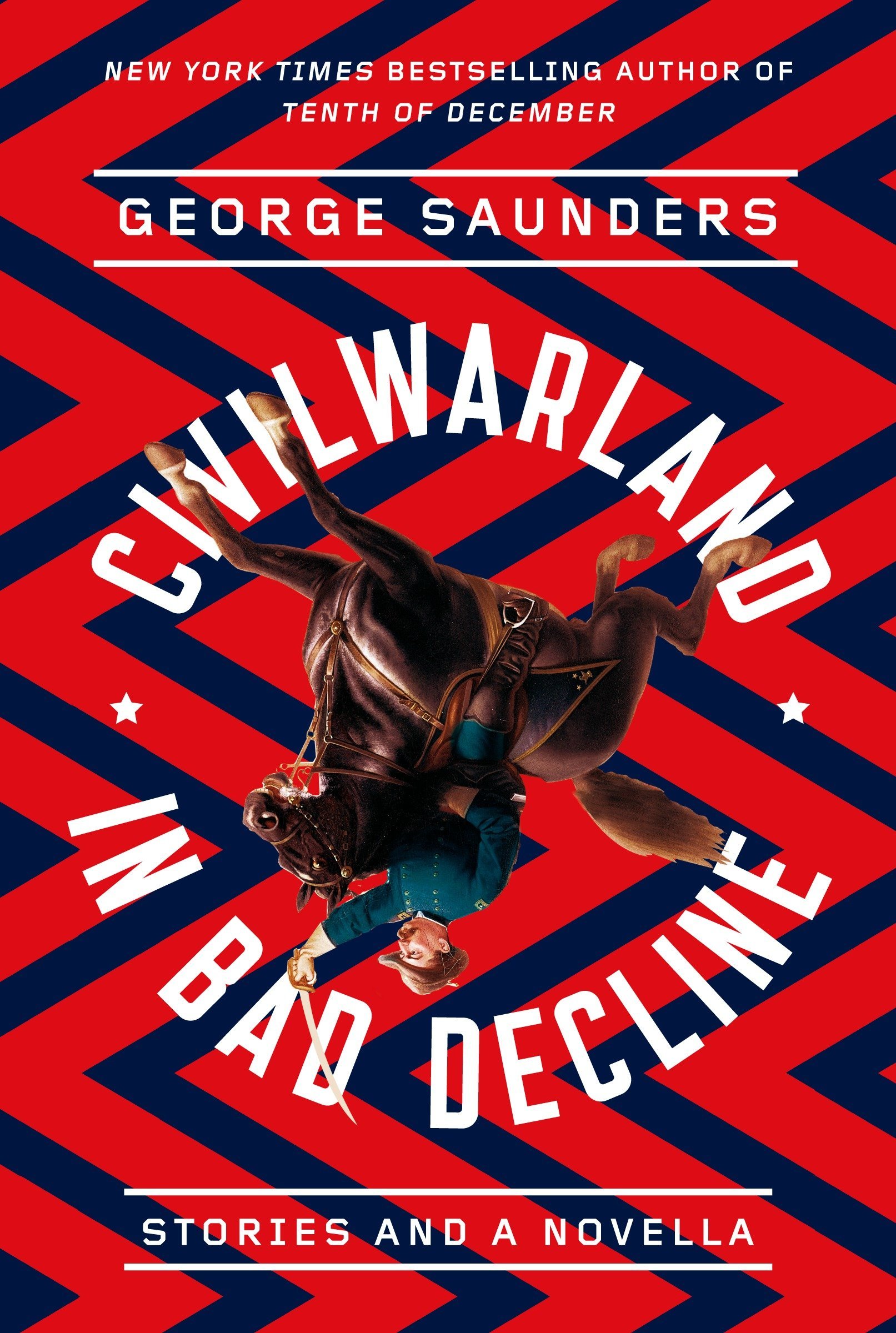
CivilWarLand in Bad Decline PDF - George Saunders
George Saunders • short stories • 225 Pages
(0)
Author
George SaundersCategory
literatureSection
Number Of Downloads
50
Number Of Reads
266
File Size
1.07 MB
Views
1,589
Quate
Review
Save
Share
Book Description
CivilWarLand in Bad Decline by George Saunders
CivilWarLand in Bad Decline by George Saunders is a sharp, darkly comic collection of American short stories and a novella that introduced one of contemporary fiction’s most distinctive voices. First published in 1996, this debut collection brings together six stories and one novella, creating a strange, unsettling, and unforgettable vision of a near-future America where entertainment, commerce, violence, poverty, and loneliness collide. (PenguinRandomhouse.com)
A Darkly Funny Vision of American Life
At the center of CivilWarLand in Bad Decline is Saunders’s ability to make the absurd feel painfully recognizable. His fictional worlds are often built around failing theme parks, damaged workplaces, corporate systems, desperate employees, and people trying to survive inside institutions that treat them as replaceable. The title story, set around a Civil War-themed attraction, captures the book’s larger mood: history has become spectacle, work has become humiliation, and ordinary people are forced to perform optimism in environments that are visibly falling apart. (Kirkus Reviews)
This is dystopian fiction, but not in a distant or coldly futuristic sense. Saunders’s dystopia feels close to everyday life, exaggerating familiar anxieties about money, status, violence, entertainment culture, and moral compromise. The result is a collection that belongs naturally beside literary fiction, satirical fiction, speculative fiction, and dark comedy, while still feeling emotionally grounded in the fears and hopes of vulnerable characters.
Stories of Work, Survival, and Moral Pressure
The characters in CivilWarLand in Bad Decline are not heroic in a traditional sense. They are clerks, workers, managers, outcasts, caretakers, and dreamers caught inside systems they barely understand and cannot easily escape. Saunders places them in exaggerated situations, yet their emotional struggles remain deeply human: they want security, dignity, love, forgiveness, and some small proof that their lives matter.
What makes the collection powerful is the tension between comic surface and moral seriousness. A Saunders story may begin with an outrageous premise, a surreal workplace, or a grotesque social arrangement, but underneath the strangeness is a serious question: what happens to kindness when people are frightened, underpaid, ashamed, or desperate? This gives the book its lasting force. It is not simply weird for the sake of being weird; it uses weirdness to expose the pressures that shape ordinary behavior.
George Saunders’s Original Voice
For readers discovering George Saunders, this book is an essential starting point. Later works such as Tenth of December, Pastoralia, Liberation Day, and the Booker Prize-winning novel Lincoln in the Bardo would expand his reputation, but CivilWarLand in Bad Decline already contains many of the qualities that define his fiction: verbal energy, compassion for flawed people, satire of American consumer culture, and a rare ability to mix brutality with tenderness. Saunders’s official author biography notes his major works and honors, including the Man Booker Prize for Lincoln in the Bardo and a MacArthur Fellowship. (georgesaundersbooks.com)
His prose is fast, inventive, and often startlingly funny. The language can sound casual, bureaucratic, anxious, or absurdly cheerful, especially when characters are explaining terrible circumstances in the language of customer service, management, or self-improvement. That contrast gives the stories their bite. Saunders understands how people use official language to hide fear, shame, cruelty, and confusion, and he turns that language into one of the book’s most memorable comic tools.
Themes and Reading Experience
Readers looking for dark humor in contemporary American fiction will find much to appreciate in CivilWarLand in Bad Decline. The collection explores class insecurity, failed systems, historical nostalgia, violence, loneliness, and the strange emotional cost of living in a culture that turns everything into a product. It is funny, but the humor is rarely comfortable. Saunders often makes the reader laugh at something absurd, then slowly reveals the sadness or danger beneath it.
The book also works as a critique of entertainment culture. In these stories, amusement parks, spectacles, and simulations do not provide escape from reality; they intensify reality’s cruelty. History becomes a marketable attraction, suffering becomes background noise, and workers must maintain artificial cheerfulness while the world around them breaks down. This makes the collection especially compelling for readers interested in social satire, postmodern fiction, workplace fiction, and near-future literary dystopia.
Who Should Read CivilWarLand in Bad Decline?
CivilWarLand in Bad Decline is ideal for readers who enjoy fiction that is imaginative, unsettling, intelligent, and emotionally layered. It will appeal to fans of literary short stories that challenge expectations, as well as readers drawn to authors who combine comedy with social criticism. Those who appreciate the satirical edge of writers such as Kurt Vonnegut, the moral unease of dystopian literature, or the surreal pressure of modern workplace fiction may find Saunders’s debut especially rewarding.
This is not a light collection in the simple sense, even when it is hilarious. The stories can be bleak, strange, and uncomfortable, and their worlds are often marked by cruelty or collapse. Yet Saunders’s compassion keeps the book from becoming merely cynical. Again and again, he notices the people who are ignored, exploited, mocked, or pushed aside. His fiction asks readers to look more closely at those lives and to recognize the fragile humanity inside damaged social systems.
A Memorable Debut Collection of Stories and a Novella
As a debut, CivilWarLand in Bad Decline remains important because it shows George Saunders arriving with a voice that already feels unmistakable. The collection’s mixture of satire, speculative fiction, dark comedy, and emotional realism gives it a distinctive place in modern American literature. Its settings may be exaggerated, but its concerns are enduring: how people survive economic pressure, how institutions deform compassion, how language hides violence, and how moments of grace can still appear in degraded places.
For readers searching for CivilWarLand in Bad Decline by George Saunders, this book offers a bold and memorable entry into Saunders’s fictional universe. It is a collection of strange attractions, broken systems, frightened workers, dark jokes, moral tests, and unexpected tenderness. More than a set of dystopian stories, it is a searching portrait of people trying to remain human in a world that keeps asking them to become something less.
George Saunders
George Saunders is an American author, short story writer, novelist, essayist, and teacher whose work has become central to contemporary literary fiction, especially for readers interested in satire, moral imagination, experimental narrative form, and compassionate social criticism. Although he is now widely recognized as one of the most distinctive writers in modern American literature, Saunders followed an unusual path into fiction. He studied geophysical engineering, worked in technical and industrial settings, and brought into literature a sharp awareness of systems, workplaces, bureaucratic language, consumer culture, and the pressures placed on ordinary people by institutions that often speak in polished slogans while producing real suffering. This background helps explain the strange energy of his fiction: his stories often feel at once futuristic and familiar, comic and devastating, absurd and deeply humane. In works such as CivilWarLand in Bad Decline, Pastoralia, In Persuasion Nation, Tenth of December, and Liberation Day, Saunders explores theme parks, corporate environments, artificial communities, media-saturated worlds, and damaged families, using exaggerated premises to reveal emotional truths about fear, ambition, debt, shame, kindness, and moral choice. His style is instantly recognizable for its blend of vernacular speech, dark humor, surreal invention, and sudden moments of tenderness. Rather than presenting satire as simple ridicule, he uses satire to ask how people become trapped inside economic pressures, cultural scripts, and self-protective stories, and how they might still act with generosity. Saunders achieved a major international breakthrough with Lincoln in the Bardo, his first novel, which won the Booker Prize and expanded his audience far beyond the world of short fiction. The novel uses a chorus of voices to imagine the grief of Abraham Lincoln after the death of his son Willie, while also creating a spiritual landscape filled with comic, tragic, and yearning presences. It is formally daring, emotionally direct, and historically resonant, showing Saunders’s ability to turn an experimental structure into a moving meditation on death, love, national sorrow, and the difficulty of letting go. His later novel Vigil continues many of his central concerns, including mortality, spiritual reckoning, environmental responsibility, corporate power, and the possibility of empathy even at the edge of judgment. Saunders is also admired for A Swim in a Pond in the Rain, a craft book and literary meditation drawn from his long experience teaching Russian short stories, where he examines how narrative attention works and why fiction can sharpen the reader’s moral perception. As a professor of creative writing at Syracuse University, he has influenced many writers not only through his published books but also through his approach to teaching, which emphasizes precision, revision, playfulness, and the ethical force of noticing. His honors include a MacArthur Fellowship, a Guggenheim Fellowship, the PEN/Malamud Award for excellence in the short story, the Story Prize and the Folio Prize for Tenth of December, recognition by Time as one of the world’s most influential people in 2013, and the 2025 Medal for Distinguished Contribution to American Letters. Yet the real significance of George Saunders lies not only in awards or reputation. His fiction has helped renew the short story as a form capable of confronting contemporary life without becoming flatly realistic or narrowly political. He understands that modern cruelty often hides inside ordinary language, that people can be ridiculous and worthy of love at the same time, and that moral awakening may begin in a tiny hesitation before harm. For readers, students, and writers, Saunders offers a model of literary art that is inventive without being cold, funny without being shallow, and compassionate without being sentimental. His books remain especially valuable for anyone seeking fiction that challenges the imagination while deepening the capacity for attention, mercy, and self-examination.
Earn Rewards While Reading!
Every 10 pages you read and spent 30 seconds on every page, earns you 5 reward points! Keep reading to unlock achievements and exclusive benefits.
Read
Rate Now
5 Stars
4 Stars
3 Stars
2 Stars
1 Stars
CivilWarLand in Bad Decline Quotes
Top Rated
Latest
Quate
Be the first to leave a quote and earn 10 points
instead of 3
'%20/%3e%3c/svg%3e "Tenth Of December")
Comments
Be the first to leave a comment and earn 5 points
instead of 3