

The source of the book
This book is published for the public benefit under a Creative Commons license, or with the permission of the author or publisher. If you have any objections to its publication, please contact us.
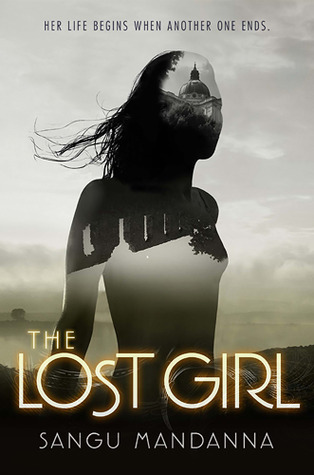
The Lost Girl PDF - Sangu Mandanna
Sangu Mandanna • romantic novels • 341 Pages
(0)
Quate
Review
Save
Share
Book Description
The Lost Girl by Sangu Mandanna is a haunting and emotionally layered young adult speculative fiction novel about identity, grief, love, and the right to live as more than someone else’s replacement. At the heart of the story is Eva, an “echo” created by mysterious figures known as the Weavers to serve as a living copy of another girl, Amarra. Eva has been raised with one purpose: if Amarra dies, Eva must step into her life and become her in every visible way. She studies Amarra’s habits, memories, family, tastes, relationships, and daily routines, preparing for a future that may never come but still defines every moment of her existence. When Amarra is killed in a car crash, Eva is suddenly forced to leave behind the life she has known and become the girl she was made to replace.
This powerful premise gives The Lost Girl the shape of a thriller, the emotional depth of a coming-of-age novel, and the moral tension of a science fiction story about cloning, creation, and humanity. Sangu Mandanna builds a world where grief has been turned into a system, where loss can be resisted through technology, and where a copied life can be treated as property rather than personhood. Yet the novel is not simply about a futuristic idea; it is about a girl who has been told from birth that she belongs to someone else’s story, and who must decide whether she can claim a story of her own.
A Young Adult Science Fiction Novel About Identity and Belonging
Eva’s life is shaped by absence before she fully understands freedom. She exists because another family could not bear the possibility of losing their daughter, and because the Weavers have the power to create echoes who are trained to replace the dead. This makes her both protected and imprisoned. She is watched, taught, corrected, and prepared, but she is not truly allowed to belong to herself. Her name, her desires, her friendships, and even her private thoughts become acts of quiet resistance in a world that insists she is only a substitute.
As a young adult science fiction book, The Lost Girl explores questions that are especially powerful for teen and adult readers alike: What makes a person real? Is identity something copied from another life, or something built through memory, choice, love, and pain? Can someone created for a purpose reject that purpose without losing the people who depend on her? These questions give the novel its lasting emotional force. The speculative premise may involve echoes and the Loom, but the emotional conflict is deeply human: Eva wants to be seen not as an imitation, but as a person with a heart, a history, and a future.
Mandanna’s story also speaks to readers who enjoy books about outsiders, hidden lives, and characters caught between duty and selfhood. Eva is not a traditional heroine seeking adventure for its own sake. She is a girl under pressure from systems larger than herself: the expectations of the family who commissioned her, the secrecy of the Weavers, the legal and social danger surrounding echoes, and the intimate grief of people who want Amarra back. This tension makes the novel both thoughtful and suspenseful, allowing the emotional stakes to grow naturally from the premise.
A Moving Story of Grief, Love, and Replacement
One of the most memorable aspects of The Lost Girl by Sangu Mandanna is the way it treats grief. Amarra’s family does not receive Eva as a simple miracle. Eva may look and act like the girl they lost, but she cannot erase the reality of death, and she cannot fully become someone whose life was never hers. This creates a painful and fascinating emotional landscape: a grieving family wants comfort, Eva wants survival and recognition, and everyone is forced to confront the difference between love and possession.
The novel’s power comes from this emotional complexity. Eva is not only afraid of being discovered; she is also afraid of disappearing inside Amarra’s identity. Every relationship she enters carries a question beneath the surface: Is she being loved for herself, or for the girl she resembles? The romance, family drama, and suspense all grow out of this central uncertainty. For readers looking for a YA novel about grief and identity, the book offers a deeply felt exploration of what it means to mourn someone while standing beside a person who was created to replace them.
The story’s connection to themes often associated with Frankenstein-inspired fiction is also important. Like many works that examine artificial creation, The Lost Girl asks whether the act of making life gives the creator ownership over that life. Eva’s existence challenges the boundaries between science and ethics, duty and cruelty, protection and control. The result is a novel that feels intimate rather than distant: its biggest questions are philosophical, but they are always anchored in Eva’s fear, longing, courage, and desire to be more than an echo.
The Reading Experience: Atmospheric, Emotional, and Thought-Provoking
Readers who come to The Lost Girl expecting only a fast-paced dystopian plot may be surprised by how personal and lyrical the novel feels. There is danger, secrecy, and tension, especially as Eva moves into a life where echoes are not accepted and where her true nature must remain hidden. Kirkus Reviews described the novel as a “thriller/romance” concerned with what it means to be human, while Publishers Weekly highlighted its focus on identity and the human reaction to death.
At the same time, the book is not built only around external conflict. Its most gripping moments often come from Eva’s inner struggle: the ache of leaving behind the people who raised her, the discomfort of living among strangers who are supposed to be her family, and the quiet rebellion of wanting ordinary things she has never been promised. Sangu Mandanna balances speculative world-building with emotional realism, creating a story that is accessible for readers of young adult fiction, but rich enough for anyone interested in literary science fiction, ethical dilemmas, and character-driven storytelling.
The novel also has an international emotional and physical scope. Eva’s movement from England into Amarra’s world in India gives the story a feeling of displacement that mirrors her inner conflict. She is not only entering a new household; she is crossing into a life already filled with memories, relationships, customs, expectations, and grief. That sense of being surrounded by a world that recognizes her face but not her soul is one of the book’s most compelling elements.
Who Should Read The Lost Girl?
The Lost Girl is an excellent choice for readers who enjoy young adult science fiction with emotional depth, especially stories that combine a strong speculative concept with questions about identity, family, and belonging. It will appeal to readers who like dystopian fiction but want something more intimate than a large-scale rebellion, as well as readers drawn to books about clones, doubles, artificial life, and the ethics of scientific creation. The novel’s focus on Eva’s emotional journey makes it especially appealing to those who prefer character-driven YA fiction with moral complexity.
Fans of thoughtful romantic tension, grief-centered storytelling, and coming-of-age novels will also find much to appreciate. The romance in the story is not simply decorative; it is tied to the deeper question of whether Eva can be loved as herself. The family relationships are equally layered, shaped by sorrow, guilt, hope, and denial. This makes the book suitable for readers searching for a moving YA novel about self-discovery, as well as those interested in speculative fiction that asks difficult questions without losing its emotional warmth.
Because the story deals with death, replacement, identity, and the pain of being treated as less than fully human, it carries a reflective and sometimes heartbreaking tone. It is best suited to readers who appreciate emotionally intense fiction rather than light escapism. However, its suspenseful premise and clear emotional stakes make it readable and engaging, even for readers who do not usually choose science fiction.
Why The Lost Girl Stands Out
What makes The Lost Girl by Sangu Mandanna stand out is the way it turns a science fiction concept into a deeply personal story of selfhood. Eva is not interesting because she is an echo; she is unforgettable because she refuses to be only an echo. Her struggle is not just to survive in Amarra’s place, but to prove that her own existence matters. This gives the book a powerful emotional center and helps it remain memorable long after the central mystery and danger have unfolded.
Sangu Mandanna’s novel offers a rare blend of YA speculative fiction, ethical tension, family drama, romance, and literary emotion. It asks readers to think about how far people might go to avoid loss, what it means to create life for someone else’s comfort, and whether love can truly exist without recognizing the other person’s freedom. For anyone looking for a thoughtful and absorbing book about grief, identity, and the courage to become oneself, The Lost Girl is a compelling and beautifully imagined novel.
Sangu Mandanna
Sangu Mandanna is an India-born, UK-based author whose work spans adult cozy fantasy, romantic fantasy, young adult fiction, middle grade adventure, science fiction, mythology-inspired retellings, and graphic novels, making her a distinctive voice for readers who love magic with emotional depth. Born and raised in Bangalore, India, and now living in Norwich in the east of England with her family, Mandanna has shaped a literary identity around stories of belonging, chosen family, courage, anxiety, identity, myth, and the quiet power of characters who discover they are stronger than they believed. Her official biography recalls that she wrote her first story as a child after being chased by an elephant on a forest road, and that many years and many manuscripts later she signed her first book deal; that early sense of wonder, danger, humor, and persistence still echoes through her books. Mandanna is best known to many adult readers for The Very Secret Society of Irregular Witches, a warm romantic cozy fantasy about Mika Moon, an isolated witch who is invited to Nowhere House to teach three young witches and unexpectedly finds community, love, and a home. The novel became a favorite among readers of witchy romance and found-family fantasy, and Mandanna’s own site lists it as a Goodreads Choice Award finalist in fantasy. Her later adult novel A Witch’s Guide to Magical Innkeeping, published in 2025, continued her reputation for heartfelt magical storytelling; Penguin Random House describes it as an instant New York Times bestseller and presents it as the story of Sera Swan, a witch seeking to restore her lost power while helping run an enchanted inn, navigating a talking fox, a watchful Guild, an icy magical historian, and the possibility that the family she has built may be the strongest magic of all. Mandanna’s career, however, is far broader than her adult witch novels. Her debut, The Lost Girl, explores identity, grief, bioethical unease, and what it means to be human through Eva, an “echo” created to replace another girl. Her Celestial Trilogy, beginning with A Spark of White Fire, reimagines the Mahabharata as a sweeping science-fantasy space opera of gods, spaceships, cursed families, power, exile, jealousy, and love. For middle grade readers, Kiki Kallira Breaks a Kingdom and Kiki Kallira Conquers a Curse turn anxiety, drawing, Indian myth, and portal fantasy into adventurous stories of imagination and bravery, while Jupiter Nettle and the Seven Schools of Magic, illustrated by Pablo Ballesteros, uses the graphic novel form to explore friendship, courage, belonging, and the importance of recognizing each person’s unique strengths. Mandanna has also edited Color Outside the Lines, an anthology centered on interracial relationships, and has contributed to short fiction projects, showing an interest in inclusive, emotionally resonant storytelling across age categories. Her prose is often described by readers as comforting, witty, tender, and luminous, but beneath the charm is a serious concern with loneliness, self-worth, mental health, cultural memory, and the need to build safer communities. For SEO-focused author pages, Sangu Mandanna can be introduced as the author of The Very Secret Society of Irregular Witches, A Witch’s Guide to Magical Innkeeping, Kiki Kallira Breaks a Kingdom, The Lost Girl, The Celestial Trilogy, and Jupiter Nettle and the Seven Schools of Magic, and as a writer whose books blend cozy fantasy, magical romance, Indian mythology, science-fantasy adventure, found family, and hopeful storytelling for readers of many ages.
Earn Rewards While Reading!
Every 10 pages you read and spent 30 seconds on every page, earns you 5 reward points! Keep reading to unlock achievements and exclusive benefits.
Read
Rate Now
5 Stars
4 Stars
3 Stars
2 Stars
1 Stars
The Lost Girl Quotes
Top Rated
Latest
Quate
Be the first to leave a quote and earn 10 points
instead of 3
'%20/%3e%3c/svg%3e "The Very Secret Society of Irregular Witches")
Comments
Be the first to leave a comment and earn 5 points
instead of 3