

The source of the book
This book is published for the public benefit under a Creative Commons license, or with the permission of the author or publisher. If you have any objections to its publication, please contact us.
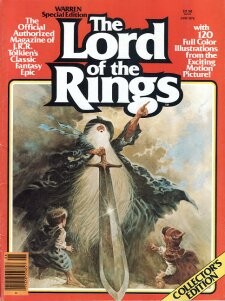
The Lord of the Rings PDF - J. R. R. Tolkien
J. R. R. Tolkien • Fantasy novels • 47 Pages
(0)
Quate
Review
Save
Share
Book Description
The Lord of the Rings by J.R.R. Tolkien — Overview: The Lord of the Rings is one of the most influential and widely read epic fantasy novels in modern literature, written by the legendary English author J. R. R. Tolkien, and it continues to define the fantasy genre for readers around the world. Set in the richly detailed fictional world of Middle-earth, the story follows an immense journey centered around a powerful artifact known as the One Ring, a source of immense dark power created by the Dark Lord Sauron. The narrative begins in a peaceful rural setting but quickly expands into a sweeping epic that spans kingdoms, ancient histories, and deeply layered mythologies. Tolkien’s world-building is one of the most celebrated aspects of the book, blending languages, cultures, geography, and ancient lore into a fully immersive universe that feels both mythical and historically grounded. Story Premise: At its core, the story follows a reluctant hero, Frodo Baggins, who is entrusted with the dangerous task of destroying the One Ring to prevent the rise of overwhelming darkness across Middle-earth. Accompanied by a diverse fellowship of companions from different races and backgrounds, Frodo’s journey becomes both a physical expedition across perilous lands and a psychological struggle against temptation, fear, and corruption. The Fellowship of the Ring, the breaking of the fellowship, and the subsequent unfolding journeys across multiple regions create a multi-layered narrative structure that explores bravery, sacrifice, friendship, and the burden of responsibility. As the forces of evil gather strength, different characters and kingdoms are drawn into the conflict, expanding the story into a full-scale war between light and darkness that tests the endurance and unity of all free peoples. Themes and Meaning: The Lord of the Rings explores deep and enduring themes such as the corrupting influence of power, the resilience of hope, the importance of friendship and loyalty, and the idea that even the smallest individual can change the course of history. Tolkien weaves moral and philosophical questions throughout the narrative without reducing the story to simple allegory, allowing readers to interpret its meaning on multiple levels. The struggle between good and evil is portrayed not as a simple binary conflict but as a complex moral landscape where courage often appears in unexpected forms and where even the most powerful characters must confront internal weaknesses. The theme of loss, nostalgia for a fading world, and the passing of ancient ages also plays a significant role, giving the story a melancholic beauty that resonates deeply with readers. Reading Experience: The reading experience of The Lord of the Rings is immersive and richly descriptive, characterized by detailed landscapes, poetic language, and a slow-building narrative rhythm that rewards patient readers. Tolkien’s writing style combines epic storytelling with linguistic artistry, drawing on his background as a philologist to create invented languages, ancient songs, and historical depth that enhance the realism of Middle-earth. The pacing shifts between quiet, reflective moments and intense action sequences, creating a balanced epic structure that feels both grand and intimate. Readers often find themselves deeply absorbed in the journey, not only following the external quest but also experiencing the internal growth of the characters as they face increasingly difficult challenges. Audience and Appeal: This book appeals strongly to readers who enjoy high fantasy, epic adventures, mythological storytelling, and richly developed fictional worlds. It is especially popular among fans of fantasy literature who appreciate detailed world-building, complex lore, and long-form storytelling that unfolds across multiple volumes. It also attracts readers interested in philosophical and moral storytelling, as well as those who enjoy classic literature with enduring cultural influence. The Lord of the Rings has inspired countless adaptations, academic studies, and creative works, making it a cornerstone of modern fantasy culture. Value to the Reader: Reading The Lord of the Rings offers not only an engaging and unforgettable story but also a deeper exploration of timeless human values such as courage, humility, perseverance, and hope in the face of overwhelming adversity. It encourages readers to reflect on the nature of power, the importance of unity in diversity, and the idea that even the most unlikely individuals can play a crucial role in shaping history. As a literary work, it stands as a monumental achievement in storytelling, blending myth, language, and imagination into a cohesive epic that continues to captivate new generations of readers. Whether approached as an adventure, a philosophical journey, or a foundational work of fantasy literature, The Lord of the Rings remains a powerful and enduring reading experience that defines what epic storytelling can achieve.
J. R. R. Tolkien
J. R. R. Tolkien is widely regarded as one of the most influential authors of the twentieth century and the foundational figure of modern high fantasy literature. Best known for his masterpieces The Hobbit and The Lord of the Rings, Tolkien was not only a novelist but also a distinguished philologist and professor at the University of Oxford. His academic expertise in ancient languages, medieval literature, and linguistic structures profoundly shaped his creative work, giving his fictional world of Middle-earth an unprecedented depth and realism.
Born in 1892 in Bloemfontein, South Africa, Tolkien moved to England after the death of his father and was raised in the English countryside. From an early age, he developed a fascination with language, mythology, and storytelling. His academic career at Oxford focused on Old English literature, particularly texts such as Beowulf, which he both studied and helped reinterpret for modern scholarship.
Tolkien’s experience in World War I had a lasting impact on his worldview. The themes of loss, camaraderie, and the struggle between good and evil that appear throughout his writings are often connected to his wartime experiences. After the war, he began developing stories that would eventually become The Hobbit, published in 1937. Its success led to the creation of his epic legendarium, The Lord of the Rings, published in three volumes between 1954 and 1955.
What distinguishes Tolkien’s work is his meticulous world-building. He created not only stories but entire civilizations, complete with histories, genealogies, languages, and mythologies. His constructed languages, such as Quenya and Sindarin, remain among the most sophisticated fictional languages ever created.
Tolkien passed away in 1973, but his legacy continues to shape literature, film, and popular culture. His works have inspired countless authors and remain central to the fantasy genre.
Earn Rewards While Reading!
Every 10 pages you read and spent 30 seconds on every page, earns you 5 reward points! Keep reading to unlock achievements and exclusive benefits.
Read
Rate Now
5 Stars
4 Stars
3 Stars
2 Stars
1 Stars
The Lord of the Rings Quotes
Top Rated
Latest
Quate
Be the first to leave a quote and earn 10 points
instead of 3
Other books by J. R. R. Tolkien
Other books like The Lord of the Rings
'%20/%3e%3c/svg%3e "Fantastic Beasts: The Crimes of Grindelwald - the Original Screenplay")
J. K. Rowling.
Fantasy novels
(0)
7574
English
Comments
Be the first to leave a comment and earn 5 points
instead of 3