

The source of the book
This book is published for the public benefit under a Creative Commons license, or with the permission of the author or publisher. If you have any objections to its publication, please contact us.
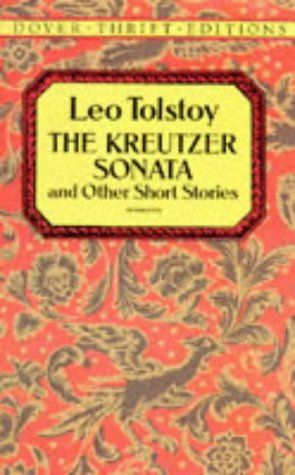
The Kreutzer Sonata and Other Short Stories PDF - Leo Tolstoy
Leo Tolstoy • literature • 144 Pages
(0)
Quate
Review
Save
Share
Book Description
The Kreutzer Sonata and Other Short Stories by Leo Tolstoy
The Kreutzer Sonata and Other Short Stories brings together some of Leo Tolstoy’s most searching short fiction, offering readers a concentrated encounter with the moral force, psychological depth, and spiritual intensity that define one of literature’s greatest writers. Known worldwide for monumental novels such as War and Peace and Anna Karenina, Tolstoy was also a master of the shorter form, using novellas and stories to explore life’s most urgent questions with remarkable clarity. This collection includes three powerful works often associated with his later moral and philosophical period: “How Much Land Does a Man Need?,” “The Death of Ivan Ilych,” and “The Kreutzer Sonata.” (Internet Archive)
A Classic Collection of Tolstoy’s Moral and Psychological Fiction
At the heart of this collection is Tolstoy’s extraordinary ability to turn ordinary human experiences into profound moral drama. These stories examine ambition, fear, marriage, jealousy, illness, death, social hypocrisy, and spiritual awakening, yet they never feel abstract or distant. Tolstoy writes about people caught in moments of crisis, when the comforts of habit and convention suddenly collapse and a deeper truth becomes impossible to ignore.
“How Much Land Does a Man Need?” is one of Tolstoy’s most famous moral tales, a sharply simple yet unforgettable story about greed, desire, and the human hunger for more. Its direct style gives it the quality of a parable, but its insight into ambition remains deeply relevant for modern readers. Through the figure of a man who believes that more land will bring him security and happiness, Tolstoy exposes the danger of allowing possession to become the measure of life.
“The Death of Ivan Ilych” moves into a darker and more intimate register. Widely regarded as one of Tolstoy’s finest short masterpieces, it follows a respectable public official whose comfortable life is shattered by illness and the approach of death. Without relying on melodrama, Tolstoy creates a devastating portrait of a man forced to ask whether he has lived honestly, loved deeply, or merely followed the expectations of society. The result is a work of classic Russian literature that speaks with unusual directness to anyone interested in mortality, meaning, and self-examination.
The Power and Controversy of The Kreutzer Sonata
The title story, “The Kreutzer Sonata,” is one of Tolstoy’s most intense and controversial works. First published in the late nineteenth century, it takes its name from Beethoven’s famous violin sonata and unfolds largely through the confession of a man consumed by jealousy, suspicion, and moral torment. The story’s central voice is disturbing, passionate, and unreliable, yet Tolstoy uses that voice to explore the destructive force of desire, the pressures of marriage, and the hypocrisies surrounding love and sexuality in society. The work was controversial in its own time and was censored by Russian authorities, partly because of its provocative treatment of marriage, sexuality, and moral abstinence. (Wikipedia)
For readers searching for The Kreutzer Sonata by Leo Tolstoy, this collection offers the story in a broader context. Read alongside “How Much Land Does a Man Need?” and “The Death of Ivan Ilych,” the novella becomes part of a larger Tolstoyan investigation into false values: the pursuit of property, the performance of social respectability, the illusion of romantic possession, and the fear of spiritual truth. Each story approaches a different human weakness, but together they reveal Tolstoy’s fierce concern with the question of how a person ought to live.
Themes of Greed, Death, Jealousy, and Spiritual Awakening
One reason The Kreutzer Sonata and Other Short Stories remains so compelling is the unity of its themes. Tolstoy is not merely telling dramatic stories; he is examining the inner life beneath social appearances. His characters often begin with confidence in the world they know. They trust money, status, marriage, pleasure, property, professional success, or public approval. Then something happens that strips away illusion and forces them into confrontation with themselves.
In “How Much Land Does a Man Need?”, the test is desire. The story asks how much is truly enough, and whether the endless pursuit of more can ever lead to peace. In “The Death of Ivan Ilych,” the test is mortality. Ivan’s suffering reveals the emptiness of a life built around ambition, politeness, and external success. In “The Kreutzer Sonata,” the test is jealousy and possessive passion. The narrator’s confession becomes a dark study of obsession, guilt, and the moral confusion that can hide beneath respectable domestic life.
These themes make the book valuable not only as Russian classic fiction, but also as a work of philosophical and spiritual literature. Tolstoy’s stories do not offer easy comfort. Instead, they challenge the reader to look closely at human motives and to question the habits that society often treats as normal. His fiction can be severe, but it is severe because it is searching for truth.
A Reading Experience That Is Direct, Intense, and Unforgettable
Tolstoy’s short fiction has a distinctive power because it combines simplicity of narration with extraordinary psychological force. His prose often appears plain, but beneath that plainness lies careful moral pressure. A peasant’s desire for land, a dying man’s fear, a husband’s jealous confession—each becomes a lens through which Tolstoy studies the human condition. The stories are accessible enough for readers new to Tolstoy, yet rich enough to reward rereading and serious literary study.
This collection is especially suitable for readers who want to experience Tolstoy beyond his great long novels. While War and Peace and Anna Karenina offer vast social worlds, The Kreutzer Sonata and Other Short Stories presents Tolstoy in a more concentrated form. The emotional stakes are immediate, the moral questions are clear, and the impact is powerful. These works show how much Tolstoy could achieve within the compact shape of a story or novella.
The book also appeals to readers interested in classic moral fiction, philosophical fiction, nineteenth-century Russian literature, and stories that examine the conflict between social life and inner truth. Tolstoy’s questions remain modern: What does success mean if it leaves the soul empty? How much wealth or property is enough? Can love become corrupted by possession? How should a person face death? What does it mean to live sincerely?
Why This Collection Matters for Modern Readers
Although these stories were written in another century, their concerns remain strikingly familiar. The desire for more, the pressure to appear successful, the fear of death, the instability of intimate relationships, and the search for moral clarity are not limited to Tolstoy’s Russia. They are enduring human problems. That is why The Kreutzer Sonata and Other Short Stories continues to speak to readers who want literature that is not only beautifully written, but also intellectually and emotionally demanding.
Tolstoy’s greatness lies in his refusal to treat moral questions as distant theories. He places them inside the body, the household, the sickroom, the field, the marriage, and the ordinary routines of daily life. His characters are not symbols first; they are people under pressure. Through them, the reader encounters moments of fear, pride, shame, recognition, and possible transformation.
For students, this collection offers an excellent introduction to Tolstoy’s later concerns and to the tradition of Russian realist literature. For general readers, it provides three memorable stories that can be read individually yet gain strength when considered together. For anyone drawn to books about conscience, faith, mortality, marriage, and the moral cost of self-deception, this volume remains a deeply rewarding choice.
A Powerful Introduction to Leo Tolstoy’s Short Masterpieces
The Kreutzer Sonata and Other Short Stories by Leo Tolstoy is a compact but profound collection that reveals the author’s genius for moral drama and psychological insight. Through stories of greed, death, jealousy, and awakening, Tolstoy examines the hidden forces that shape human life and the difficult truths people often avoid until crisis makes avoidance impossible.
This is an essential book for readers of classic literature, Russian fiction, and philosophical storytelling. It captures Tolstoy at his most direct and uncompromising, offering stories that are brief in length but vast in meaning. Whether read for literary study, personal reflection, or the pleasure of encountering one of the world’s great writers in a shorter form, this collection leaves a lasting impression through its honesty, intensity, and enduring moral power.
Leo Tolstoy
Leo Tolstoy is one of the most influential writers in world literature, a Russian novelist, moral thinker, and social critic whose work helped define the possibilities of the modern novel. Born into an aristocratic family in Russia, he grew up close to the rural estate life that later became central to his imagination, his ethical concerns, and his understanding of class, labor, family, faith, and personal responsibility. Tolstoy is best known for the monumental novels War and Peace and Anna Karenina, two works that continue to stand among the highest achievements of literary realism. His fiction is celebrated not merely for its scale, but for its extraordinary ability to portray human consciousness, social pressure, moral confusion, and the hidden movement of history through the lives of individuals. In War and Peace, Tolstoy transforms the historical novel into a vast meditation on war, fate, leadership, memory, and ordinary human experience. He portrays the Napoleonic era not as a simple sequence of heroic decisions, but as a complex web of personal choices, accidents, social customs, emotions, and forces beyond the control of any single ruler or general. In Anna Karenina, he offers one of literature’s most penetrating studies of love, marriage, desire, jealousy, social judgment, and spiritual hunger, creating characters whose inner lives feel immediate, contradictory, and painfully human. Tolstoy’s narrative style combines simplicity with depth: he can describe a ballroom, a battlefield, a family quarrel, a harvest, or a moment of private doubt with such precision that each scene becomes a window into moral and psychological truth. His characters are memorable because they are never reduced to symbols; they change, hesitate, deceive themselves, seek forgiveness, suffer, and grow. Beyond his novels, Tolstoy wrote short fiction, essays, autobiographical works, religious reflections, and educational writings that reveal a lifelong struggle to reconcile art, conscience, and everyday life. In his later years, he became increasingly concerned with questions of nonviolence, poverty, property, organized religion, and the ethical meaning of Christianity. His critique of violence and his insistence on moral self-examination influenced readers far beyond Russia and helped shape later discussions of peaceful resistance, social reform, and spiritual simplicity. As an author for book lovers, Tolstoy remains essential because his works speak to both private feeling and public history. He examines the intimate life of families while also asking how nations move toward war, how societies punish those who break their rules, and how individuals can live truthfully in a world built on pride, ambition, and illusion. His influence can be felt in modern realism, psychological fiction, historical narrative, philosophical literature, and moral essays. Readers return to Tolstoy because his books do not offer easy answers; they invite deep attention to life itself. He writes about birth, death, love, work, faith, conflict, and forgiveness with a seriousness that makes ordinary experience feel immense. Leo Tolstoy’s legacy endures because he created literature that is both artistically powerful and ethically demanding, literature that asks every generation to reconsider what it means to live honestly, love responsibly, and search for meaning in a complicated world.
Earn Rewards While Reading!
Every 10 pages you read and spent 30 seconds on every page, earns you 5 reward points! Keep reading to unlock achievements and exclusive benefits.
Read
Rate Now
5 Stars
4 Stars
3 Stars
2 Stars
1 Stars
The Kreutzer Sonata and Other Short Stories Quotes
Top Rated
Latest
Quate
Be the first to leave a quote and earn 10 points
instead of 3
Other books by Leo Tolstoy
Other books like The Kreutzer Sonata and Other Short Stories
'%20/%3e%3c/svg%3e "The Missionary Position: Mother Teresa in Theory and Practice")
3650
English
Comments
Be the first to leave a comment and earn 5 points
instead of 3