

The source of the book
This book is published for the public benefit under a Creative Commons license, or with the permission of the author or publisher. If you have any objections to its publication, please contact us.
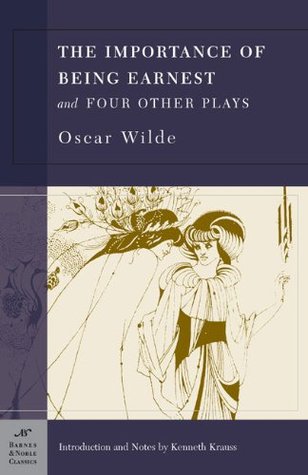
The Importance of Being Earnest and Four Other Plays PDF - Oscar Wilde
Oscar Wilde • Classical physics • 413 Pages
(0)
Quate
Review
Save
Share
Book Description
The Importance of Being Earnest and Four Other Plays by Oscar Wilde is a celebrated collection that brings together some of the most brilliant examples of late-Victorian theatre. At its heart, this volume showcases Wilde’s unmatched ability to blend sparkling comedy, social criticism, and intellectual satire into plays that remain just as relevant today as when they were first performed. Known for his sharp dialogue, elegant irony, and fearless critique of societal norms, Wilde uses these works to expose the contradictions, pretensions, and hypocrisies of high society while keeping readers and audiences thoroughly entertained.
The collection is best known for its masterpiece, The Importance of Being Earnest, widely regarded as one of the greatest comedic plays ever written in the English language. Alongside it, the volume includes four additional plays that reveal the range of Wilde’s dramatic imagination and his command of theatrical form. Together, these works offer a complete introduction to Wilde’s dramatic world—one where wit becomes a weapon, identity becomes a performance, and social conventions are gently dismantled through humor and irony.
A Masterpiece of Wit and Social Satire
At the center of this collection lies The Importance of Being Earnest, a play that turns mistaken identities, romantic entanglements, and absurd social rituals into a perfectly constructed comedy of manners. The story follows characters who adopt false identities in order to escape social obligations and pursue love more freely. What unfolds is a chain of misunderstandings, witty exchanges, and increasingly ridiculous situations that reveal how fragile and performative social identity can be.
Wilde’s dialogue is famously sharp, filled with epigrams and paradoxes that have become some of the most quoted lines in theatre history. Beneath the humor, however, lies a deeper critique of Victorian values—especially the obsession with respectability, marriage conventions, and class expectations. The play suggests that society itself is built on carefully maintained illusions, and that honesty often takes a back seat to appearances.
The Other Plays in the Collection
While The Importance of Being Earnest is the highlight, the additional plays in this collection provide important insight into Wilde’s broader dramatic themes and artistic development.
One of these works is Lady Windermere’s Fan, a witty exploration of reputation, morality, and misunderstanding within aristocratic society. The play examines how quickly reputation can be shaped or destroyed by rumor, and how rigid moral codes often fail to reflect real human complexity. Through clever plotting and emotionally layered characters, Wilde challenges the audience to reconsider the difference between appearance and truth.
Another included work, A Woman of No Importance, deepens Wilde’s critique of gender roles and social judgment. It explores themes of hypocrisy, forgiveness, and the consequences of past secrets in a society that harshly judges women while excusing male behavior. The play’s emotional undertones are balanced with Wilde’s signature wit, creating a compelling blend of drama and satire.
An Ideal Husband shifts focus to politics, corruption, and personal integrity. It follows a respected politician whose past secret threatens to destroy his career and marriage. Through this narrative, Wilde examines the tension between public image and private morality, raising questions about whether perfection in public life is ever truly possible—or even desirable.
The collection is completed by Salomé (in some editions or related groupings depending on publication), a darker and more symbolic work that departs from Wilde’s comedic style. Written originally in French, it presents a poetic and intense retelling of the biblical story of Salome and John the Baptist. With its lush imagery and tragic tone, it reveals a different side of Wilde’s creativity, one more focused on desire, obsession, and fatal consequence.
Themes That Define Wilde’s Theatre
Across all five plays, certain themes consistently emerge, giving the collection its unity and lasting appeal. One of the most prominent is the idea of social performance—the notion that identity is something constructed rather than inherent. Characters frequently adopt masks, lies, or exaggerated personas in order to navigate society, suggesting that truth is often less influential than appearance.
Another central theme is satire of Victorian society, particularly its rigid class structure and moral hypocrisy. Wilde exposes how social respectability is often maintained through superficial behavior rather than genuine virtue. His characters frequently speak in contradictions that reveal uncomfortable truths beneath polished surfaces.
Love and marriage also play a major role, especially as institutions shaped by social expectation rather than emotional authenticity. Wilde treats romantic relationships not only as personal connections but also as social contracts influenced by wealth, reputation, and family pressure. Through humor, he reveals how love can be both sincere and constrained by external forces.
Why These Plays Remain Relevant Today
The continued popularity of The Importance of Being Earnest and Four Other Plays lies in Wilde’s extraordinary ability to speak to universal human behavior. Even though the settings are rooted in Victorian England, the themes of identity, reputation, and social performance remain deeply familiar in the modern world.
Audiences today still recognize the pressure to present idealized versions of themselves, whether in social settings or digital spaces. Wilde’s insight that people often prioritize appearance over authenticity feels especially contemporary. His plays encourage reflection on how society shapes behavior and how easily truth can be distorted by expectation.
Additionally, Wilde’s humor remains timeless. His wit is not only entertaining but intellectually engaging, offering layers of meaning that reward repeated reading or viewing. Each line often contains dual interpretations—one comedic, one critical—making the plays enjoyable for both casual audiences and literary analysis.
Reading Experience and Literary Value
This collection is particularly valuable for readers who appreciate classic English literature, theatrical comedy, and satirical writing. Wilde’s style is elegant yet accessible, making these plays suitable for both first-time readers of classic drama and experienced literary enthusiasts. The dialogue-driven structure ensures that the plays read almost like modern scripts, with a rhythm that feels alive and engaging even without stage performance.
For students of literature, the collection offers rich material for exploring themes such as irony, symbolism, dramatic structure, and character construction. For general readers, it provides entertainment that is both intelligent and emotionally resonant. Wilde’s ability to combine humor with philosophical depth makes these plays stand out in the canon of English theatre.
A Timeless Collection of Comedy and Critique
The Importance of Being Earnest and Four Other Plays remains one of the most significant collections in dramatic literature, offering a complete view of Oscar Wilde’s theatrical brilliance. From sparkling comedic misunderstandings to deeper reflections on morality and identity, these plays continue to captivate audiences more than a century after they were written.
Through unforgettable characters, sharp dialogue, and enduring themes, Wilde invites readers into a world where society is both celebrated and gently dismantled through laughter. This collection stands as a testament to the power of wit as a form of critique and to the enduring relevance of theatre that dares to question the world it reflects.
Oscar Wilde
Oscar Wilde (1854-1900) was an Irish playwright, poet, and novelist who is widely regarded as one of the greatest writers of the Victorian era. He was born in Dublin, Ireland, and educated at Trinity College, Dublin, and Magdalen College, Oxford. Wilde was a flamboyant figure in Victorian society, known for his wit, dandyism, and homosexuality, which was then considered a crime.
Wilde's literary career began in the 1880s, when he gained popularity with his comedic plays, including "Lady Windermere's Fan," "A Woman of No Importance," and "The Importance of Being Earnest." These plays were known for their clever wordplay, social commentary, and satirical portrayal of Victorian society.
In addition to his plays, Wilde also wrote novels, including "The Picture of Dorian Gray," which tells the story of a beautiful young man who makes a Faustian pact to remain young and beautiful while his portrait ages and becomes ugly. The novel caused controversy when it was first published in 1890 because of its decadent themes and homoerotic undertones.
Despite his literary success, Wilde's personal life was tumultuous. In 1895, he was convicted of homosexual acts and sentenced to two years of hard labor. The trial and subsequent imprisonment destroyed his reputation and health, and he died in Paris in 1900, at the age of 46.
Wilde's legacy lives on through his works, which continue to be celebrated for their wit, humor, and social commentary. His writing has influenced generations of writers, and his plays continue to be performed and adapted for film and television. Today, Wilde is remembered not only as a great writer, but also as a symbol of resistance against Victorian moralism and hypocrisy.
Earn Rewards While Reading!
Every 10 pages you read and spent 30 seconds on every page, earns you 5 reward points! Keep reading to unlock achievements and exclusive benefits.
Read
Rate Now
5 Stars
4 Stars
3 Stars
2 Stars
1 Stars
The Importance of Being Earnest and Four Other Plays Quotes
Top Rated
Latest
Quate
Be the first to leave a quote and earn 10 points
instead of 3
Other books by Oscar Wilde
Other books like The Importance of Being Earnest and Four Other Plays
'%20/%3e%3c/svg%3e "Student Solutions Manual and Study Guide for SERWAY")
4315
English
2275
English
2278
English
Comments
Be the first to leave a comment and earn 5 points
instead of 3