

The source of the book
This book is published for the public benefit under a Creative Commons license, or with the permission of the author or publisher. If you have any objections to its publication, please contact us.
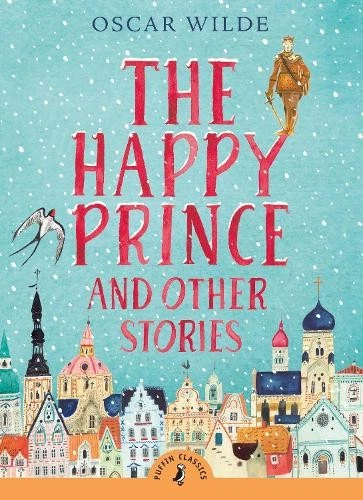
The Happy Prince and Other Tales PDF - Oscar Wilde
Oscar Wilde • literature • 53 Pages
(0)
Quate
Review
Save
Share
Book Description
The Happy Prince and Other Tales is one of the most cherished works in classic English literature, written by the celebrated Irish writer and poet Oscar Wilde. First published in 1888, this elegant collection brings together a series of fairy tales that blend emotional depth, symbolic storytelling, and moral reflection. Although often categorized as children’s literature, the stories carry a powerful dual appeal: they enchant younger readers with their simplicity and imagination while offering adults profound philosophical and emotional insight.
This collection includes some of Wilde’s most famous tales, such as The Happy Prince, The Nightingale and the Rose, The Selfish Giant, and The Devoted Friend. Each story is crafted with poetic language and layered meaning, exploring themes of love, sacrifice, beauty, selfishness, and redemption. Through these narratives, Wilde transforms simple fairy tale structures into deeply moving moral allegories that remain relevant across generations.
A Collection of Fairy Tales with a Deeper Purpose
At first glance, The Happy Prince and Other Tales appears to be a series of traditional fairy stories filled with talking animals, magical elements, and symbolic characters. However, beneath their surface simplicity lies a carefully constructed critique of society, human behavior, and emotional indifference.
In the title story, The Happy Prince, a gilded statue watches over a city and enlists a swallow to help him distribute his gold and jewels to the poor. This tale becomes a powerful meditation on compassion, sacrifice, and the hidden suffering behind outward beauty. It reflects Wilde’s belief that true value is found not in appearance or wealth, but in empathy and selflessness.
Similarly, The Nightingale and the Rose explores the tragic intensity of love and artistic sacrifice. A nightingale gives its life to create a red rose for a student who believes the flower will win him love, only to reveal the painful contrast between idealized emotion and human superficiality. This story is often interpreted as a critique of romantic idealism and the fragile nature of human desire.
Major Themes: Beauty, Sacrifice, and Social Critique
One of the defining strengths of this collection is its exploration of universal themes that continue to resonate with modern readers. Wilde uses simple narrative forms to address complex emotional and philosophical ideas.
Compassion and Sacrifice
Many stories in the collection highlight the idea that true goodness requires sacrifice. Characters such as the Happy Prince and the nightingale willingly give up their beauty, wealth, or even life itself to help others. This recurring motif emphasizes Wilde’s belief in selfless love as the highest form of human virtue.
Critique of Materialism and Social Inequality
Wilde subtly critiques Victorian society’s obsession with wealth, status, and superficial appearances. The suffering of the poor in The Happy Prince contrasts sharply with the indifference of the wealthy elite. Through fairy tale symbolism, Wilde exposes the moral emptiness of a society that values gold more than human life.
The Nature of Love and Beauty
Love in Wilde’s stories is often idealized yet tragic. Whether it is romantic love in The Nightingale and the Rose or friendship and loyalty in The Devoted Friend, Wilde explores how love can be both inspiring and destructive depending on how it is understood and practiced.
Innocence and Moral Awakening
Several stories, including The Selfish Giant, focus on transformation and redemption. The Giant’s journey from selfish isolation to compassionate awareness illustrates Wilde’s recurring belief that innocence and kindness are central to spiritual awakening.
Literary Style: Poetry in Prose
One of the most striking features of The Happy Prince and Other Tales is Wilde’s lyrical and highly stylized prose. His background as a poet is evident in every sentence, with carefully crafted rhythms, vivid imagery, and symbolic language. Even in translation, the elegance of his storytelling remains clear.
Wilde’s use of fairy tale structure allows him to communicate moral ideas without overt preaching. Instead of directly instructing the reader, he builds emotionally charged narratives that naturally lead to reflection. This subtlety is one reason the collection continues to be widely studied in literature courses and enjoyed by general readers alike.
The stories also demonstrate Wilde’s mastery of irony. Often, characters who appear wise or powerful are revealed to be blind to deeper truths, while humble or marginalized figures embody genuine wisdom. This inversion of expectations adds depth and complexity to the seemingly simple tales.
Why This Collection Remains Important Today
Despite being written in the late 19th century, The Happy Prince and Other Tales continues to feel remarkably modern. Its exploration of inequality, emotional alienation, and moral responsibility speaks directly to contemporary readers.
In a world still shaped by social division and material pursuit, Wilde’s stories serve as a reminder of the importance of empathy and human connection. The emotional weight of the narratives encourages readers to reflect on how they perceive beauty, value, and success in their own lives.
For readers seeking classic literature that is both accessible and meaningful, this collection offers an ideal entry point into Wilde’s work. It bridges the gap between children’s storytelling and philosophical literature, making it suitable for a wide audience, including students, educators, and lovers of timeless fiction.
Audience and Reading Experience
This collection is particularly appealing to readers who enjoy classic fairy tales, moral fiction, Victorian literature, and symbolic storytelling. It is often recommended in academic settings due to its rich thematic content and clear narrative structure, but it also works beautifully as personal reading for reflection and enjoyment.
Younger readers may be drawn to the magical and emotional storytelling, while older readers are likely to appreciate the deeper commentary on society and human nature. The dual-layered storytelling ensures that each reading can reveal new interpretations depending on the reader’s age and perspective.
The Enduring Legacy of Oscar Wilde’s Fairy Tales
Through this collection, Oscar Wilde established himself not only as a master of wit and social satire but also as a profound storyteller capable of expressing deep emotional truths through simplicity. The Happy Prince and Other Tales remains a cornerstone of his literary legacy, showcasing his ability to merge beauty with meaning and imagination with moral reflection.
The stories continue to be adapted, studied, and cherished worldwide, proving their lasting relevance in global literature. Their emotional depth, poetic language, and universal themes ensure that they remain as powerful today as they were over a century ago.
A Timeless Invitation to Reflect and Feel
The Happy Prince and Other Tales is more than a collection of fairy tales—it is an invitation to see the world through a lens of compassion, beauty, and moral awareness. Oscar Wilde’s storytelling encourages readers to look beyond appearances and recognize the unseen struggles and sacrifices that define human existence.
Whether read as a literary classic, a moral fable collection, or a poetic reflection on society, this book continues to inspire empathy and introspection. Its timeless messages ensure that every generation can find something meaningful within its pages, making it one of the most enduring works in English literature.
Oscar Wilde
Oscar Wilde (1854-1900) was an Irish playwright, poet, and novelist who is widely regarded as one of the greatest writers of the Victorian era. He was born in Dublin, Ireland, and educated at Trinity College, Dublin, and Magdalen College, Oxford. Wilde was a flamboyant figure in Victorian society, known for his wit, dandyism, and homosexuality, which was then considered a crime.
Wilde's literary career began in the 1880s, when he gained popularity with his comedic plays, including "Lady Windermere's Fan," "A Woman of No Importance," and "The Importance of Being Earnest." These plays were known for their clever wordplay, social commentary, and satirical portrayal of Victorian society.
In addition to his plays, Wilde also wrote novels, including "The Picture of Dorian Gray," which tells the story of a beautiful young man who makes a Faustian pact to remain young and beautiful while his portrait ages and becomes ugly. The novel caused controversy when it was first published in 1890 because of its decadent themes and homoerotic undertones.
Despite his literary success, Wilde's personal life was tumultuous. In 1895, he was convicted of homosexual acts and sentenced to two years of hard labor. The trial and subsequent imprisonment destroyed his reputation and health, and he died in Paris in 1900, at the age of 46.
Wilde's legacy lives on through his works, which continue to be celebrated for their wit, humor, and social commentary. His writing has influenced generations of writers, and his plays continue to be performed and adapted for film and television. Today, Wilde is remembered not only as a great writer, but also as a symbol of resistance against Victorian moralism and hypocrisy.
Earn Rewards While Reading!
Every 10 pages you read and spent 30 seconds on every page, earns you 5 reward points! Keep reading to unlock achievements and exclusive benefits.
Read
Rate Now
5 Stars
4 Stars
3 Stars
2 Stars
1 Stars
The Happy Prince and Other Tales Quotes
Top Rated
Latest
Quate
Be the first to leave a quote and earn 10 points
instead of 3
Other books by Oscar Wilde
Other books like The Happy Prince and Other Tales
'%20/%3e%3c/svg%3e "The Missionary Position: Mother Teresa in Theory and Practice")
3635
English
Comments
Be the first to leave a comment and earn 5 points
instead of 3