

The source of the book
This book is published for the public benefit under a Creative Commons license, or with the permission of the author or publisher. If you have any objections to its publication, please contact us.
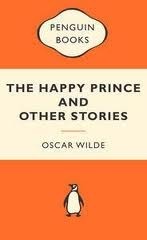
The Happy Prince and other stories Puffin Classics PDF - Oscar Wilde
Oscar Wilde • Fantasy novels • 178 Pages
(0)
Quate
Review
Save
Share
Book Description
The Happy Prince and Other Stories by The Happy Prince and Other Stories is one of the most beloved collections in classic English literature, written by the legendary Irish author Oscar Wilde. First published in 1888, this timeless anthology brings together a series of beautifully crafted moral fairy tales that blend elegance, emotion, and sharp social observation. Although often categorized as children’s literature, these stories carry profound philosophical depth, making them equally meaningful for adult readers who appreciate symbolic storytelling and literary richness.
This collection includes some of Wilde’s most famous short stories, such as The Happy Prince, The Selfish Giant, The Nightingale and the Rose, and The Devoted Friend. Each story is written with Wilde’s signature wit, lyrical prose, and deep sensitivity to human nature. At its core, the book explores themes of compassion, sacrifice, love, beauty, and social inequality, wrapped in allegorical narratives that remain relevant across generations.
A Collection of Timeless Moral Fairy Tales
The brilliance of The Happy Prince and Other Stories lies in its ability to transform simple fairy-tale structures into emotionally powerful moral reflections. The title story, The Happy Prince, follows a gilded statue who, despite his luxurious appearance, becomes deeply aware of human suffering only after his death. With the help of a small swallow, he begins to distribute his riches to the poor, revealing Wilde’s deep concern for social injustice and empathy.
In The Selfish Giant, Wilde presents a moving tale about redemption and the spiritual consequences of selfishness. A giant who refuses to share his beautiful garden with children eventually learns the value of love and generosity. The story’s emotional progression reflects Wilde’s belief in the transformative power of kindness.
The Nightingale and the Rose offers a tragic yet poetic exploration of romantic idealism and sacrifice. A nightingale gives its life to create a rose for a young student in love, only for the gift to be rejected. This story is often interpreted as a critique of superficial love and human insensitivity toward true emotional depth.
Meanwhile, The Devoted Friend uses satire to expose hypocrisy and exploitation disguised as friendship. Through a layered narrative, Wilde critiques selfish behavior and the misuse of emotional trust.
Themes of Compassion, Beauty, and Social Critique
One of the defining strengths of this collection is its rich thematic structure. Wilde explores compassion and sacrifice as central moral forces that elevate the human spirit. Many characters in the stories achieve moral clarity only through suffering or selfless action, reflecting Wilde’s belief that empathy is essential to true humanity.
Another dominant theme is the contrast between external beauty and internal virtue. The Happy Prince is physically beautiful but only truly understands suffering when he becomes emotionally awakened. Similarly, the Nightingale’s sacrifice highlights the difference between symbolic beauty and lived emotional truth.
Wilde also weaves a subtle yet powerful critique of social inequality and class division. The suffering of the poor, the indifference of the wealthy, and the moral blindness of society are recurring motifs throughout the collection. Even though the stories are framed as fairy tales, their emotional foundation is deeply rooted in real-world social observation.
Oscar Wilde’s Literary Style and Artistic Vision
The writing style of Oscar Wilde is one of the most distinctive aspects of this collection. His prose is lyrical, polished, and often poetic, creating a dreamlike reading experience that blends fantasy with moral realism. Wilde’s use of symbolism allows each story to function on multiple levels: as a simple narrative for younger readers and as a philosophical allegory for more mature audiences.
Wilde’s dialogue and narrative voice also reflect his mastery of contrast. He often juxtaposes innocence with cruelty, beauty with suffering, and generosity with selfishness. This technique enhances the emotional impact of each story and encourages readers to reflect deeply on human behavior.
Another hallmark of Wilde’s style is his subtle use of irony. Even in emotionally tragic moments, there is often a quiet undercurrent of critique directed at societal norms, materialism, or emotional superficiality. This balance of beauty and irony gives the collection its enduring literary appeal.
Why This Book Remains Relevant Today
Despite being written in the late 19th century, The Happy Prince and Other Stories continues to resonate strongly with modern readers. Its exploration of empathy, kindness, and moral responsibility aligns closely with contemporary discussions about social justice and emotional intelligence.
In an age where material success is often prioritized, Wilde’s stories serve as a reminder of the importance of compassion and human connection. The emotional sacrifices depicted in the tales encourage readers to reflect on their own values and relationships, making the collection both timeless and universally relatable.
For students of English literature, this book is also an essential introduction to allegory, symbolism, and Victorian storytelling traditions. Its accessible language combined with profound meaning makes it a frequent choice in academic curricula worldwide.
Reader Experience and Emotional Impact
Reading The Happy Prince and Other Stories is often an emotionally immersive experience. The stories are short but deeply impactful, leaving a lasting impression long after they are finished. Readers are frequently moved by the emotional depth of the characters and the moral weight of their decisions.
Children may enjoy the fairy-tale structure, animals, and magical elements, while adult readers are more likely to appreciate the philosophical undertones and social commentary. This dual-layered storytelling is one of the reasons the collection has remained popular for more than a century.
The emotional tone of the book shifts between sorrow, beauty, and hope. While many stories contain tragic elements, they ultimately emphasize moral awakening and the possibility of spiritual transformation. This balance makes the collection both thought-provoking and emotionally rewarding.
A Classic That Transcends Generations
The Happy Prince and Other Stories stands as one of the most important works in classic English literature due to its emotional depth, symbolic richness, and timeless moral insight. Through simple yet powerful narratives, Oscar Wilde captures the essence of human compassion and the complexity of moral choice.
The collection continues to be widely read, studied, and adapted across cultures, proving its enduring relevance in both literary and educational contexts. Whether approached as a work of children’s storytelling or as a philosophical reflection on human nature, it remains a masterpiece that speaks to readers of all ages.
Ultimately, this book is not just a collection of fairy tales—it is a meditation on kindness, sacrifice, and the quiet power of empathy in a world often driven by material values.
Oscar Wilde
Oscar Wilde (1854-1900) was an Irish playwright, poet, and novelist who is widely regarded as one of the greatest writers of the Victorian era. He was born in Dublin, Ireland, and educated at Trinity College, Dublin, and Magdalen College, Oxford. Wilde was a flamboyant figure in Victorian society, known for his wit, dandyism, and homosexuality, which was then considered a crime.
Wilde's literary career began in the 1880s, when he gained popularity with his comedic plays, including "Lady Windermere's Fan," "A Woman of No Importance," and "The Importance of Being Earnest." These plays were known for their clever wordplay, social commentary, and satirical portrayal of Victorian society.
In addition to his plays, Wilde also wrote novels, including "The Picture of Dorian Gray," which tells the story of a beautiful young man who makes a Faustian pact to remain young and beautiful while his portrait ages and becomes ugly. The novel caused controversy when it was first published in 1890 because of its decadent themes and homoerotic undertones.
Despite his literary success, Wilde's personal life was tumultuous. In 1895, he was convicted of homosexual acts and sentenced to two years of hard labor. The trial and subsequent imprisonment destroyed his reputation and health, and he died in Paris in 1900, at the age of 46.
Wilde's legacy lives on through his works, which continue to be celebrated for their wit, humor, and social commentary. His writing has influenced generations of writers, and his plays continue to be performed and adapted for film and television. Today, Wilde is remembered not only as a great writer, but also as a symbol of resistance against Victorian moralism and hypocrisy.
Earn Rewards While Reading!
Every 10 pages you read and spent 30 seconds on every page, earns you 5 reward points! Keep reading to unlock achievements and exclusive benefits.
Read
Rate Now
5 Stars
4 Stars
3 Stars
2 Stars
1 Stars
The Happy Prince and other stories Puffin Classics Quotes
Top Rated
Latest
Quate
Be the first to leave a quote and earn 10 points
instead of 3
Other books by Oscar Wilde
Other books like The Happy Prince and other stories Puffin Classics
'%20/%3e%3c/svg%3e "Fantastic Beasts: The Crimes of Grindelwald - the Original Screenplay")
J. K. Rowling.
Fantasy novels
(0)
7574
English
Comments
Be the first to leave a comment and earn 5 points
instead of 3