

The source of the book
This book is published for the public benefit under a Creative Commons license, or with the permission of the author or publisher. If you have any objections to its publication, please contact us.
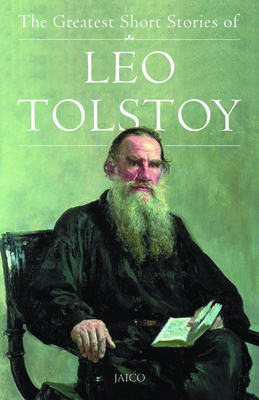
The Greatest Short Stories of Leo Tolstoy PDF - Leo Tolstoy
Leo Tolstoy • Literary novels • 384 Pages
(0)
Quate
Review
Save
Share
Book Description
The Greatest Short Stories of Leo Tolstoy by Leo Tolstoy
The Greatest Short Stories of Leo Tolstoy brings together the remarkable short fiction of Leo Tolstoy, one of the most influential voices in Russian literature and world classics. Best known for monumental novels such as War and Peace and Anna Karenina, Tolstoy was also a master of the short story form, using concise narratives to explore the deepest questions of human life. In these stories, ordinary people face moral choices, spiritual struggles, social pressures, greed, injustice, love, suffering, and the search for truth. The result is a collection that feels both historically rooted and timelessly relevant.
This book is an excellent introduction to Tolstoy’s short stories for readers who want to experience his literary power in a more accessible form. Instead of the vast scale of his major novels, these works offer concentrated moments of insight, emotion, and reflection. Tolstoy’s storytelling often begins with simple situations—a peasant’s desire for land, a man wrongly accused, a traveler seeking wisdom, a ruler confronted by moral truth—but each story gradually opens into a profound meditation on what it means to live well.
A Classic Collection of Moral, Spiritual, and Human Stories
At the heart of The Greatest Short Stories of Leo Tolstoy is Tolstoy’s extraordinary ability to connect everyday life with universal meaning. His characters are not distant literary figures; they are men, women, workers, landowners, prisoners, children, soldiers, seekers, and sinners whose experiences reveal the contradictions of human nature. Through them, Tolstoy asks questions that remain powerful for modern readers: How much is enough? What is justice? Can forgiveness free the soul? What gives life meaning? Why do people suffer? What does it mean to act with compassion?
Many of Tolstoy’s short works are shaped by moral parable, philosophical fiction, and spiritual storytelling, yet they never feel merely abstract. His stories are vivid because they are grounded in recognizable human desires and weaknesses. Greed, pride, fear, impatience, cruelty, ambition, and self-deception appear again and again, but so do kindness, humility, endurance, mercy, and faith. This balance gives the collection its enduring strength: Tolstoy does not simply judge human beings; he studies them with clarity, sympathy, and moral seriousness.
The Reading Experience: Simple Narratives with Lasting Depth
One of the pleasures of reading Leo Tolstoy’s greatest short stories is discovering how much meaning he can create through direct and graceful storytelling. His language is often clear, his plots are easy to follow, and his scenes are built from familiar details. Yet beneath that simplicity lies remarkable depth. A story may seem at first like a folk tale, a domestic episode, or a lesson in common sense, but by the end it may leave the reader reflecting on death, conscience, repentance, faith, or the hidden cost of desire.
This makes the collection especially appealing to readers of classic short stories who value literature that is both readable and thought-provoking. Tolstoy does not rely on elaborate twists or decorative style. Instead, he creates tension through moral conflict and emotional truth. His endings often feel inevitable, not because they are predictable, but because they reveal the deeper consequences of a character’s choices. The stories invite slow reading, personal reflection, and discussion, making the book suitable for individual enjoyment, literature classes, reading groups, and anyone exploring classic Russian fiction.
Themes of Justice, Greed, Faith, Forgiveness, and Redemption
The major themes in The Greatest Short Stories of Leo Tolstoy reflect the author’s lifelong concern with ethics, religion, society, and the inner life. In stories connected with greed and possession, Tolstoy examines the human tendency to confuse material gain with happiness. His characters often believe that more land, more status, more security, or more recognition will bring peace, only to discover that desire can become a trap. Through such stories, Tolstoy turns simple plots into unforgettable reflections on wealth, ambition, and mortality.
Other stories explore justice and forgiveness, especially when innocent people suffer or when truth is delayed. Tolstoy was deeply interested in the gap between human judgment and moral truth, and his fiction often shows that outward events do not reveal the whole meaning of a life. Patience, humility, and spiritual endurance become central virtues. In this sense, the collection is not only a work of classic literature but also a powerful study of conscience and redemption.
Faith is another essential element of Tolstoy’s short fiction. His religious and spiritual concerns appear in stories that question formal power, social pride, and empty ritual while emphasizing compassion, simplicity, and inner transformation. Even readers who approach the book from a literary rather than religious perspective can appreciate the seriousness with which Tolstoy explores moral responsibility. His stories suggest that the smallest acts of kindness, honesty, and self-restraint may carry greater weight than worldly success.
Why Readers of Russian Classics Will Value This Book
For readers interested in Russian classics, this collection offers a valuable way to experience Tolstoy’s genius without beginning with one of his longest novels. The stories contain many of the qualities that made him one of literature’s central figures: psychological insight, moral intensity, social observation, and a rare ability to portray the drama of ordinary life. Readers who admire Fyodor Dostoevsky, Anton Chekhov, or other great writers of nineteenth-century Russian literature will find in Tolstoy a distinct voice—less focused on irony than Chekhov, less feverish than Dostoevsky, but equally powerful in his search for truth.
The book is also meaningful for readers who already know Tolstoy through War and Peace or Anna Karenina. His short stories reveal another side of his art: compact, direct, and often parable-like, yet still rich in emotional and philosophical weight. They show how Tolstoy could move from the grand sweep of history to the intimate scale of a single moral decision without losing any of his authority as a storyteller.
A Thoughtful Choice for Students, Classic Literature Readers, and Reflective Minds
The Greatest Short Stories of Leo Tolstoy by Leo Tolstoy is well suited for students of literature, readers building a personal classics library, and anyone drawn to books that combine story with meaning. The collection can be read as an introduction to Tolstoy, as a companion to his major novels, or as a standalone work of timeless short fiction. Its stories are accessible enough for new readers of classic literature, yet layered enough to reward rereading.
What makes the collection especially enduring is its ability to speak across cultures and generations. Although Tolstoy wrote from a specific Russian social and historical world, the emotional and moral questions in his fiction remain familiar. The longing for security, the fear of death, the pain of injustice, the difficulty of forgiveness, and the desire to live with purpose are not limited to one time or place. Tolstoy’s greatness lies in making these questions visible through memorable stories that feel clear, humane, and deeply alive.
A Timeless Collection from One of Literature’s Greatest Writers
The Greatest Short Stories of Leo Tolstoy is more than a collection of classic tales; it is a journey through the moral imagination of one of the world’s most important authors. Each story offers a different window into human weakness, human dignity, and the possibility of spiritual awakening. Tolstoy’s short fiction reminds readers that literature can entertain, challenge, comfort, and transform, often within the space of a few pages.
For anyone searching for Leo Tolstoy books, classic Russian short stories, moral fiction, or a meaningful introduction to one of the greatest writers in world literature, this collection provides a rich and rewarding reading experience. It captures Tolstoy’s enduring concern with truth, compassion, justice, and the inner life, making it a valuable addition to any collection of classic literature and a book that continues to invite reflection long after the final story is finished.
Leo Tolstoy
Leo Tolstoy is one of the most influential writers in world literature, a Russian novelist, moral thinker, and social critic whose work helped define the possibilities of the modern novel. Born into an aristocratic family in Russia, he grew up close to the rural estate life that later became central to his imagination, his ethical concerns, and his understanding of class, labor, family, faith, and personal responsibility. Tolstoy is best known for the monumental novels War and Peace and Anna Karenina, two works that continue to stand among the highest achievements of literary realism. His fiction is celebrated not merely for its scale, but for its extraordinary ability to portray human consciousness, social pressure, moral confusion, and the hidden movement of history through the lives of individuals. In War and Peace, Tolstoy transforms the historical novel into a vast meditation on war, fate, leadership, memory, and ordinary human experience. He portrays the Napoleonic era not as a simple sequence of heroic decisions, but as a complex web of personal choices, accidents, social customs, emotions, and forces beyond the control of any single ruler or general. In Anna Karenina, he offers one of literature’s most penetrating studies of love, marriage, desire, jealousy, social judgment, and spiritual hunger, creating characters whose inner lives feel immediate, contradictory, and painfully human. Tolstoy’s narrative style combines simplicity with depth: he can describe a ballroom, a battlefield, a family quarrel, a harvest, or a moment of private doubt with such precision that each scene becomes a window into moral and psychological truth. His characters are memorable because they are never reduced to symbols; they change, hesitate, deceive themselves, seek forgiveness, suffer, and grow. Beyond his novels, Tolstoy wrote short fiction, essays, autobiographical works, religious reflections, and educational writings that reveal a lifelong struggle to reconcile art, conscience, and everyday life. In his later years, he became increasingly concerned with questions of nonviolence, poverty, property, organized religion, and the ethical meaning of Christianity. His critique of violence and his insistence on moral self-examination influenced readers far beyond Russia and helped shape later discussions of peaceful resistance, social reform, and spiritual simplicity. As an author for book lovers, Tolstoy remains essential because his works speak to both private feeling and public history. He examines the intimate life of families while also asking how nations move toward war, how societies punish those who break their rules, and how individuals can live truthfully in a world built on pride, ambition, and illusion. His influence can be felt in modern realism, psychological fiction, historical narrative, philosophical literature, and moral essays. Readers return to Tolstoy because his books do not offer easy answers; they invite deep attention to life itself. He writes about birth, death, love, work, faith, conflict, and forgiveness with a seriousness that makes ordinary experience feel immense. Leo Tolstoy’s legacy endures because he created literature that is both artistically powerful and ethically demanding, literature that asks every generation to reconsider what it means to live honestly, love responsibly, and search for meaning in a complicated world.
Earn Rewards While Reading!
Every 10 pages you read and spent 30 seconds on every page, earns you 5 reward points! Keep reading to unlock achievements and exclusive benefits.
Read
Rate Now
5 Stars
4 Stars
3 Stars
2 Stars
1 Stars
The Greatest Short Stories of Leo Tolstoy Quotes
Top Rated
Latest
Quate
Be the first to leave a quote and earn 10 points
instead of 3
'%20/%3e%3c/svg%3e "War and Peace")
Comments
Be the first to leave a comment and earn 5 points
instead of 3