

The source of the book
This book is published for the public benefit under a Creative Commons license, or with the permission of the author or publisher. If you have any objections to its publication, please contact us.
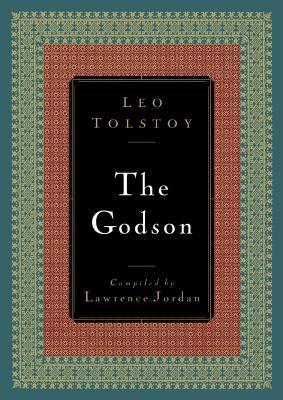
The Godson PDF - Leo Tolstoy
Leo Tolstoy • short stories • 91 Pages
(0)
Quate
Review
Save
Share
Book Description
The Godson by Leo Tolstoy: A Spiritual Tale of Conscience, Sin, and Redemption
The Godson by Leo Tolstoy is a powerful moral and spiritual short story that reflects the Russian master’s deep interest in faith, responsibility, human weakness, and the difficult path toward inner transformation. Known throughout world literature for monumental works such as War and Peace and Anna Karenina, Leo Tolstoy also wrote shorter religious and philosophical tales that speak with remarkable simplicity while carrying profound ethical meaning. The Godson belongs to this tradition: it is a story shaped like a parable, written in clear and accessible language, yet rich with questions about temptation, pride, justice, forgiveness, and the consequences of trying to correct evil in the wrong way.
At the center of the story is the son of a poor peasant, a child whose life begins with rejection when no one in the village wishes to stand as his godfather. A mysterious stranger accepts the role, setting in motion a journey that will lead the boy far beyond ordinary village life and into a world of symbolic trials. As the godson grows, he seeks out his godfather and enters a strange moral landscape where every action carries spiritual weight. Without relying on elaborate plot twists or decorative language, Tolstoy builds a narrative that feels both like a folk tale and a religious meditation, inviting readers to consider how easily good intentions can become mixed with judgment, anger, and pride.
A Classic Tolstoy Short Story with the Shape of a Parable
The Godson is especially appealing to readers who are looking for Leo Tolstoy short stories, classic Russian literature, Christian moral fiction, or philosophical tales about the human soul. The story does not need a long novelistic structure to make its impact. Instead, it uses the directness of a traditional parable: a poor family, a mysterious godfather, a forbidden space, a moment of disobedience, and a long road toward understanding. These elements give the story a timeless quality, making it suitable for readers who enjoy literature that is simple on the surface but deeply reflective underneath.
Tolstoy’s storytelling in The Godson is deliberately plain, but that plainness is part of its strength. The language moves with the rhythm of oral tradition, as though the tale is being passed from one generation to another. Behind the simplicity, however, lies a serious moral vision. Tolstoy asks what it means to interfere with evil, whether punishment can truly heal wrongdoing, and how a person should respond when confronted with human suffering and moral failure. These questions give the story its lasting relevance, especially for readers interested in spiritual literature, ethical reflection, and the moral imagination of nineteenth-century Russian writing.
Themes of Temptation, Judgment, and Moral Responsibility
One of the central themes of The Godson by Leo Tolstoy is the danger of acting from pride while believing oneself to be righteous. The godson is not presented as a villain; he is a human being who must learn that moral responsibility is more complex than simply identifying evil and striking against it. Tolstoy explores the difference between wisdom and impulse, justice and revenge, compassion and control. Through the godson’s mistakes and gradual awakening, the story suggests that true goodness requires humility, patience, and a deep awareness of one’s own spiritual condition.
The story also reflects Tolstoy’s religious and ethical concerns, especially his belief that violence and coercion cannot create genuine moral improvement. In The Godson, attempts to correct wrongdoing through force only deepen the problem, placing spiritual burdens on the person who acts without understanding. This makes the tale particularly meaningful for readers interested in Tolstoy’s later moral philosophy, his Christian themes, and his concern with nonviolence, repentance, and personal transformation. Rather than offering easy answers, Tolstoy presents a world in which every human action has consequences, and where the path to redemption requires more than outward obedience.
A Reading Experience Filled with Symbolism and Spiritual Meaning
Although The Godson can be read quickly, it rewards careful attention. The story is filled with symbolic scenes that invite interpretation: the mysterious godfather, the palace, the forbidden room, the observations of human wrongdoing, and the godson’s long process of learning. These images give the tale a dreamlike quality while keeping it grounded in practical moral concerns. Readers who enjoy allegorical fiction, religious parables, and symbolic storytelling will find much to reflect on in the way Tolstoy turns simple events into spiritual lessons.
The atmosphere of the story is also important. Tolstoy does not create suspense in the modern thriller sense; instead, he creates moral suspense. The reader watches the godson face choices that seem understandable in the moment but gradually reveal deeper consequences. This creates a thoughtful and sometimes unsettling reading experience, because the story does not allow the reader to remain detached. It encourages self-examination: How do we respond to evil? Do we judge others before understanding ourselves? Can good intentions become harmful when they are guided by pride rather than love?
Why The Godson Still Matters to Modern Readers
The Godson remains valuable because its questions are not limited to the religious or historical world in which Tolstoy wrote. Modern readers continue to struggle with the same problems the story explores: anger at injustice, the desire to punish wrongdoing, the difficulty of forgiveness, and the challenge of acting with compassion without becoming passive. Tolstoy’s tale speaks to anyone who has wondered whether moral certainty can become dangerous when it is separated from humility and mercy.
For students and lovers of classic literature, the story offers a compact introduction to Tolstoy’s moral imagination. For readers of Christian fiction and spiritual classics, it provides a memorable reflection on sin, redemption, and the mystery of divine justice. For those interested in philosophy, ethics, or Russian literature, it shows how Tolstoy could transform a simple narrative into a searching examination of the human conscience. The story’s accessibility makes it suitable for both new readers of Tolstoy and those already familiar with his larger works.
A Meaningful Choice for Readers of Moral and Philosophical Fiction
Readers who choose The Godson by Leo Tolstoy will find a short story that is less concerned with entertainment in the ordinary sense and more concerned with awakening thought. It is a tale about learning to see beyond the surface of human behavior, about recognizing the hidden cost of judgment, and about discovering that redemption is not achieved through power but through inner change. Tolstoy’s moral vision is demanding, yet the story remains compassionate because it understands human weakness from within.
This makes The Godson an excellent choice for readers seeking a meaningful classic short story, a spiritual parable by Leo Tolstoy, or a reflective work of Russian literature that can be read in one sitting but remembered for much longer. Its enduring power lies in the way it combines narrative clarity with moral depth. Through the journey of the godson, Tolstoy invites readers to think carefully about conscience, responsibility, and the difficult work of becoming truly good.
Leo Tolstoy
Leo Tolstoy is one of the most influential writers in world literature, a Russian novelist, moral thinker, and social critic whose work helped define the possibilities of the modern novel. Born into an aristocratic family in Russia, he grew up close to the rural estate life that later became central to his imagination, his ethical concerns, and his understanding of class, labor, family, faith, and personal responsibility. Tolstoy is best known for the monumental novels War and Peace and Anna Karenina, two works that continue to stand among the highest achievements of literary realism. His fiction is celebrated not merely for its scale, but for its extraordinary ability to portray human consciousness, social pressure, moral confusion, and the hidden movement of history through the lives of individuals. In War and Peace, Tolstoy transforms the historical novel into a vast meditation on war, fate, leadership, memory, and ordinary human experience. He portrays the Napoleonic era not as a simple sequence of heroic decisions, but as a complex web of personal choices, accidents, social customs, emotions, and forces beyond the control of any single ruler or general. In Anna Karenina, he offers one of literature’s most penetrating studies of love, marriage, desire, jealousy, social judgment, and spiritual hunger, creating characters whose inner lives feel immediate, contradictory, and painfully human. Tolstoy’s narrative style combines simplicity with depth: he can describe a ballroom, a battlefield, a family quarrel, a harvest, or a moment of private doubt with such precision that each scene becomes a window into moral and psychological truth. His characters are memorable because they are never reduced to symbols; they change, hesitate, deceive themselves, seek forgiveness, suffer, and grow. Beyond his novels, Tolstoy wrote short fiction, essays, autobiographical works, religious reflections, and educational writings that reveal a lifelong struggle to reconcile art, conscience, and everyday life. In his later years, he became increasingly concerned with questions of nonviolence, poverty, property, organized religion, and the ethical meaning of Christianity. His critique of violence and his insistence on moral self-examination influenced readers far beyond Russia and helped shape later discussions of peaceful resistance, social reform, and spiritual simplicity. As an author for book lovers, Tolstoy remains essential because his works speak to both private feeling and public history. He examines the intimate life of families while also asking how nations move toward war, how societies punish those who break their rules, and how individuals can live truthfully in a world built on pride, ambition, and illusion. His influence can be felt in modern realism, psychological fiction, historical narrative, philosophical literature, and moral essays. Readers return to Tolstoy because his books do not offer easy answers; they invite deep attention to life itself. He writes about birth, death, love, work, faith, conflict, and forgiveness with a seriousness that makes ordinary experience feel immense. Leo Tolstoy’s legacy endures because he created literature that is both artistically powerful and ethically demanding, literature that asks every generation to reconsider what it means to live honestly, love responsibly, and search for meaning in a complicated world.
Earn Rewards While Reading!
Every 10 pages you read and spent 30 seconds on every page, earns you 5 reward points! Keep reading to unlock achievements and exclusive benefits.
Read
Rate Now
5 Stars
4 Stars
3 Stars
2 Stars
1 Stars
The Godson Quotes
Top Rated
Latest
Quate
Be the first to leave a quote and earn 10 points
instead of 3
'%20/%3e%3c/svg%3e "War and Peace")
Comments
Be the first to leave a comment and earn 5 points
instead of 3