

The source of the book
This book is published for the public benefit under a Creative Commons license, or with the permission of the author or publisher. If you have any objections to its publication, please contact us.
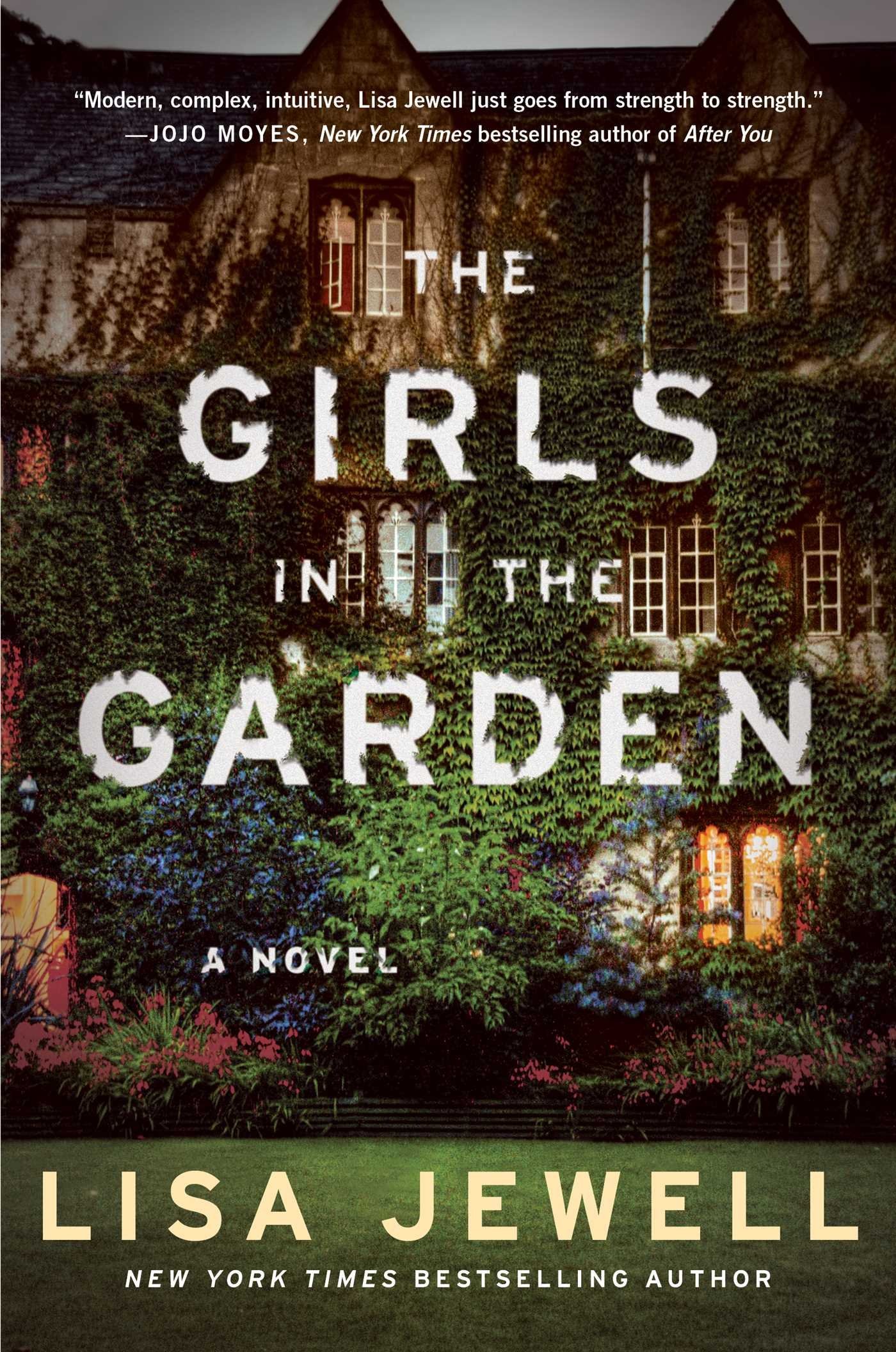
The Girls in the Garden PDF - Lisa Jewell
Lisa Jewell • Drama novels • 320 Pages
(0)
Quate
Review
Save
Share
Book Description
The Girls in the Garden by Lisa Jewell is a gripping psychological suspense novel about trust, childhood, community, and the dangerous secrets that can hide inside the most beautiful places. Set around a picturesque communal garden square in urban London, the novel begins with a setting that appears almost idyllic: children roam freely between homes, neighbors know one another well, and the shared garden seems to offer a rare pocket of safety in the middle of the city. But Lisa Jewell turns that sense of safety into the novel’s central question. On a midsummer night, during a neighborhood party, young Pip discovers her thirteen-year-old sister Grace lying unconscious and bloodied in a hidden corner of the rose garden, forcing everyone in the close-knit community to ask what really happened and who among them can be trusted. (simonandschuster.com)
A Beautiful Garden with a Dark Secret
The power of The Girls in the Garden comes from the contrast between its setting and its mystery. The communal garden should be a sanctuary. It is green, enclosed, familiar, and shared by families who believe they understand the rules of their small world. For Clare and her two daughters, Grace and Pip, moving into an apartment on the garden square appears to offer the chance for a new beginning after their family life has been shaken by crisis. Clare hopes the neighborhood will provide stability, companionship, and a gentler environment for her children. Instead, the garden becomes the place where innocence, secrecy, and danger collide.
Lisa Jewell uses this setting with great skill. The garden is not only a physical space; it is a symbol of the community’s confidence in itself. Parents believe their children are safe because the place feels familiar. Children believe they are free because adults are nearby but not always watching. Neighbors believe intimacy is the same as knowledge. Yet the attack on Grace exposes the fragility of all those assumptions. The beauty of the garden becomes unsettling because it suggests how easily danger can be hidden behind flowers, gates, summer evenings, and friendly faces.
Clare, Grace, Pip, and the Search for Safety
At the emotional center of the novel is Clare, a mother trying to rebuild life for herself and her daughters. Grace and Pip are at different stages of childhood, but both are affected by the family’s past and by the new social world they enter. Grace, thirteen, stands at the threshold between childhood and adolescence, where curiosity, secrecy, attraction, friendship, and vulnerability become difficult to separate. Pip, younger and more watchful, becomes one of the novel’s most important emotional lenses, especially after she finds her sister in the garden.
Jewell is especially strong at showing how children can understand more than adults realize while still being unable to fully interpret the danger around them. Pip’s perspective gives the novel tenderness and urgency, while Grace’s situation brings the story into darker psychological territory. The mystery is not only about an attack; it is about the hidden pressures surrounding young girls as they grow up in a world where adults may be distracted, careless, secretive, or too willing to believe that everything is under control.
A Community Full of Questions
When Clare and her daughters enter the garden square, they are drawn into a network of families and neighbors who appear welcoming and friendly. Clare befriends Adele, a stay-at-home mother with an unconventional parenting style, and Adele’s charming husband, Leo. The girls begin spending time with the neighborhood children, becoming part of a loose social group that seems exciting, intimate, and slightly unpredictable. The publisher’s reading group guide identifies Clare, Grace, Pip, Adele, and Leo as central figures in this tightly connected community, where hospitality and suspicion become increasingly difficult to separate. (simonandschuster.com)
This community is one of the most compelling elements of The Girls in the Garden. Jewell understands that small groups can be both comforting and claustrophobic. Everyone watches everyone else, but no one sees everything. Parents make judgments about other parents. Children form alliances that adults only partly understand. Secrets are protected not only by lies, but by politeness, embarrassment, fear, and the desire to preserve the image of a perfect neighborhood. As the investigation into Grace’s attack unfolds, the reader is invited to examine each relationship more closely. Who had access to the garden? Who is telling the truth? Who is hiding something out of guilt, love, shame, or fear?
Themes of Parenting, Adolescence, and Hidden Danger
The Girls in the Garden is a strong choice for readers who enjoy domestic suspense, family mystery novels, and psychological thrillers that focus on ordinary lives under extraordinary pressure. Rather than building suspense through a distant criminal world, Lisa Jewell builds it through parenting choices, teenage behavior, neighborhood assumptions, and the quiet tensions between adults who think they are doing the right thing. The result is a novel where emotional realism and mystery work together.
One of the book’s most important themes is the question of how much freedom children should have. The garden square offers a form of independence that feels rare and precious: children can run, explore, form friendships, and create their own small society. Yet that freedom also creates blind spots. The adults want to believe that the garden is protected because it is enclosed and familiar, but the novel asks whether closeness can sometimes make people less alert rather than more secure. This makes the story especially engaging for readers interested in parenting dilemmas, the transition from childhood to adolescence, and the complicated boundary between protection and control.
Another major theme is the performance of normality. Many characters in the novel carry private anxieties, family histories, and emotional wounds, yet the surface of the community remains bright and sociable. Jewell is particularly good at showing how people behave when they want to appear generous, relaxed, progressive, responsible, or desirable. Underneath those performances, however, are jealousy, insecurity, attraction, resentment, and fear. The mystery surrounding Grace becomes a way of revealing the hidden emotional architecture of the neighborhood.
Lisa Jewell’s Skill in Psychological Suspense
Lisa Jewell is widely known for writing suspense that feels both readable and emotionally grounded. Her publisher describes her as a number one New York Times bestselling author of twenty-four novels, including None of This Is True, The Family Upstairs, Then She Was Gone, Invisible Girl, and Watching You, and notes that her books have sold more than fifteen million copies internationally and have been translated into more than thirty languages. (simonandschuster.com)
In The Girls in the Garden, Jewell uses many of the qualities that have made her one of the most popular writers of contemporary psychological fiction. She creates a cast of believable characters, gives each relationship a hidden pressure point, and slowly turns an attractive domestic setting into a place of unease. Her suspense does not depend only on what happened to Grace, but on how each character responds after the event. Some people protect themselves. Some protect their children. Some protect the story they have told about who they are. This gives the novel a layered structure, where every revelation changes the reader’s understanding of the people living around the garden.
Why Readers Are Drawn to The Girls in the Garden
Readers who enjoy Lisa Jewell books, British psychological thrillers, domestic mystery, and neighborhood suspense novels will find The Girls in the Garden especially appealing. It offers the pleasure of a central mystery, but also the emotional depth of a story about mothers, daughters, friendship, trauma, and the loss of innocence. The novel is tense without being purely procedural, dark without losing its human focus, and accessible while still rich in atmosphere.
The book also works well for readers who like novels built around a single place. The garden square gives the story unity and atmosphere, almost like a stage on which every character is visible and yet not fully known. Its beauty makes the violence more disturbing, and its intimacy makes the mystery more personal. The question is not only what happened in the garden, but how such a thing could happen in a place where everyone believed they were safe.
A Suspenseful Novel About Trust and the Illusion of Safety
Ultimately, The Girls in the Garden is a suspenseful and emotionally layered novel about the dangers that can grow inside trust. Lisa Jewell takes a setting associated with childhood freedom, neighborly closeness, and urban beauty, then reveals how quickly that world can become uncertain after one act of violence. Through Clare, Grace, Pip, Adele, Leo, and the surrounding families, the novel explores how communities protect themselves, how parents misunderstand their children, and how secrets can remain hidden even in places where everyone thinks they knows everyone else.
For readers looking for a psychological thriller about family secrets, a domestic suspense novel set in London, or a tense mystery about childhood, community, and betrayal, The Girls in the Garden delivers a compelling reading experience. It is a story about a garden that should have been safe, a girl whose attack changes everything, and a group of people forced to confront the unsettling truth that danger does not always come from outside the gate.
Lisa Jewell
Lisa Jewell is a British author whose name has become strongly associated with psychological thrillers, domestic suspense, family secrets, missing-person mysteries, and emotionally layered crime fiction. Her fiction is widely read because it combines page-turning tension with a close understanding of ordinary lives: marriages, friendships, neighborhoods, memories, grief, obsession, and the quiet unease that can exist behind respectable doors. Her publisher describes her as a number one New York Times bestselling author of twenty-four novels, including Don’t Let Him In, None of This Is True, The Family Upstairs, Then She Was Gone, Invisible Girl, and Watching You; the same publisher notes that her novels have sold more than fifteen million copies internationally and have been translated into more than thirty languages.
Jewell’s career began with Ralph's Party, a novel that helped establish her as a fresh voice in popular fiction at the end of the 1990s. In her early work, she was often associated with warm, witty, relationship-driven fiction, but her career later moved into darker psychological territory. That shift is one of the reasons her body of work is so appealing: she did not abandon character or emotional realism when she entered the thriller field. Instead, she brought those strengths into stories about secrecy, manipulation, disappearance, memory, and danger. As a result, her thrillers feel intimate as well as suspenseful. The fear in her books often begins not with a spectacular crime scene, but with a person noticing that something in a familiar relationship does not quite fit.
One of Jewell’s defining qualities is her ability to make ordinary settings feel charged with hidden meaning. A family home, a London street, a garden, a pub, or a quiet community can become the center of a mystery where the past refuses to stay buried. In novels such as Then She Was Gone, The Family Upstairs, The Night She Disappeared, Invisible Girl, and None of This Is True, she often explores what happens when private histories collide with public identities. Her characters are rarely simple heroes or villains. They are grieving parents, lonely strangers, unreliable witnesses, wounded children, charming manipulators, and people who have learned to survive by hiding pieces of themselves. This psychological depth gives her stories a strong emotional pull.
Jewell is especially effective at writing suspense that is accessible without being shallow. Her chapters are usually shaped by momentum, revelation, and shifting points of view, but beneath the structure lies a steady interest in trauma, denial, family damage, and the stories people tell in order to protect themselves. Readers who come to her books for twists often stay for the emotional stakes. She understands that a secret is not only a plot device; it is also a burden that changes how people love, remember, trust, and fear. This makes her novels highly suitable for fans of domestic thrillers, crime fiction, book club mysteries, and psychological suspense novels that combine readability with emotional complexity.
Her reputation has continued to grow with the modern thriller audience. Penguin has described her as an author once beloved for romance who has become a household name in crime fiction, with books frequently appearing on the Sunday Times bestseller list. None of This Is True also became a major reader favorite; the BBC reported that it won Book of the Year at the 2024 TikTok Book Awards, reflecting the way Jewell’s suspense reaches both traditional readers and contemporary online reading communities.
A major part of Jewell’s appeal lies in her control of uncertainty. She rarely gives the reader a complete picture at the beginning. Instead, she offers fragments: a memory that may be wrong, a person whose charm feels slightly rehearsed, a disappearance that has never been fully explained, or a household whose surface calm hides something rotten. The reader is invited to assemble the truth alongside the characters, but the truth usually arrives with emotional consequences. That structure gives her books their compulsive rhythm, making them the kind of novels readers often describe as difficult to put down.
For readers discovering Lisa Jewell, her work offers a strong entry point into contemporary British suspense. She writes about fear, but also about longing, grief, family bonds, social performance, and the way the past can return through the smallest detail. Her novels appeal to readers who enjoy clever plotting, morally complicated characters, and stories where danger grows from the most familiar spaces. Whether the book begins with a missing girl, a strange inheritance, a dangerous friendship, or a man who seems too perfect to trust, Jewell’s fiction promises a carefully built atmosphere of suspicion and emotional discovery.
Earn Rewards While Reading!
Every 10 pages you read and spent 30 seconds on every page, earns you 5 reward points! Keep reading to unlock achievements and exclusive benefits.
Read
Rate Now
5 Stars
4 Stars
3 Stars
2 Stars
1 Stars
The Girls in the Garden Quotes
Top Rated
Latest
Quate
Be the first to leave a quote and earn 10 points
instead of 3
'%20/%3e%3c/svg%3e "None of This Is True")
Comments
Be the first to leave a comment and earn 5 points
instead of 3