

The source of the book
This book is published for the public benefit under a Creative Commons license, or with the permission of the author or publisher. If you have any objections to its publication, please contact us.
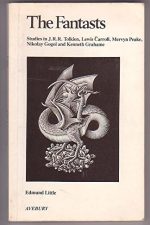
The Fantasts PDF - J. R. R. Tolkien
J. R. R. Tolkien • literature • 148 Pages
(0)
Quate
Review
Save
Share
Book Description
Studies in J. R. R. Tolkien’s Fantasy Worlds – The Fantasts: Studies in J.R.R. Tolkien
The Fantasts: Studies in J.R.R. Tolkien by J. R. R. Tolkien is a scholarly-inspired exploration of the imaginative, linguistic, and mythic dimensions associated with one of the most influential fantasy authors in modern literature. This English-language work is positioned within the broader field of Tolkien studies and literary criticism, offering readers an in-depth lens into the structures, ideas, and narrative philosophies that define Tolkien’s legendary creations, including his approach to world-building, mythology, and storytelling.
Rather than functioning as a traditional narrative novel, this book belongs to the category of critical studies and academic reflection. It brings together interpretive perspectives that examine how Tolkien’s writing reshaped the fantasy genre and established new standards for secondary world construction. Readers encountering this title are typically those interested in literary theory, mythopoeia, philology, and the evolution of modern fantasy literature, especially as it relates to Tolkien’s enduring literary legacy.
Understanding Tolkien’s Literary Universe and Mythic Construction
At the core of The Fantasts: Studies in J.R.R. Tolkien lies a deep engagement with the conceptual architecture of Tolkien’s fictional universe. His works are widely recognized for their extraordinary depth, from invented languages to fully realized histories and mythologies. This study-oriented text examines how these elements function together to create a cohesive and immersive secondary world.
Tolkien’s approach to storytelling is often described as myth-making rather than simple fiction writing. The book explores how his background in linguistics and medieval literature influenced his creative process, shaping narratives that feel both ancient and timeless. Readers are guided through interpretations of how myth, language, and cultural memory intertwine in Tolkien’s imagined histories, offering insight into why his works continue to resonate across generations.
Themes of Fantasy, Language, and Meaning
One of the central themes explored in The Fantasts: Studies in J.R.R. Tolkien is the relationship between language and fantasy creation. Tolkien’s professional expertise as a philologist deeply informed his literary work, and this study highlights how constructed languages such as Elvish are not merely decorative elements but foundational to the realism and depth of his fictional world.
The book also examines the philosophical and thematic layers present in Tolkien’s storytelling. Concepts such as heroism, loss, fellowship, corruption, and redemption are analyzed in relation to broader mythological traditions and literary history. Through these discussions, readers gain a clearer understanding of how Tolkien’s narratives reflect universal human experiences while remaining rooted in a carefully constructed fantasy framework.
Critical Perspectives on Tolkien’s Influence
The Fantasts: Studies in J.R.R. Tolkien also places strong emphasis on Tolkien’s lasting impact on modern fantasy literature. His works, including The Hobbit and The Lord of the Rings, have shaped countless authors and established conventions that continue to define the genre today. This study investigates how later writers have responded to, expanded upon, or challenged Tolkien’s narrative model.
The analysis often extends beyond literature into cultural studies, considering how Tolkien’s mythology has influenced film, gaming, and contemporary storytelling. His world-building techniques, moral frameworks, and linguistic creativity are examined as foundational elements that redefined what fantasy fiction could achieve on both artistic and intellectual levels.
Reading Experience and Scholarly Depth
This book is designed for readers who appreciate thoughtful, analytical engagement with literature. The writing style typically reflects an academic tone while remaining accessible to dedicated fans of Tolkien’s work. It encourages readers to think critically about narrative structure, symbolism, and the relationship between fiction and myth.
Because it is a study of Tolkien rather than a fictional story, the reading experience is reflective and interpretive. It invites readers to slow down and consider the layers of meaning embedded within Tolkien’s texts, from linguistic invention to philosophical undertones. For students of literature, this makes it a valuable companion to Tolkien’s original works, offering frameworks that enhance comprehension and appreciation.
Audience and Academic Relevance
The Fantasts: Studies in J.R.R. Tolkien is particularly suited for readers with an interest in literary criticism, fantasy literature studies, medieval influences in modern fiction, and mythological storytelling. University students, researchers, and dedicated Tolkien enthusiasts will find the analytical approach especially rewarding.
It also appeals to general readers who wish to deepen their understanding of why Tolkien’s works have achieved such enduring global popularity. By exploring the intellectual foundations behind his storytelling, the book provides a bridge between popular fantasy reading and academic literary analysis.
Tolkien’s Legacy Through Critical Study
One of the most compelling aspects of this work is its reflection on Tolkien’s legacy as both a storyteller and a scholar. His influence extends far beyond entertainment, shaping how entire generations perceive fantasy worlds and narrative depth. This study reinforces the idea that Tolkien’s writing operates on multiple levels—literary, linguistic, philosophical, and mythological.
Through careful analysis, the book highlights how Tolkien created not just stories, but an interconnected system of meaning that continues to inspire academic debate and creative adaptation. His legacy is shown not as static, but as evolving through ongoing interpretation and cultural engagement.
A Deep Dive into Fantasy as a Literary Form
Ultimately, The Fantasts: Studies in J.R.R. Tolkien positions fantasy literature as a serious and meaningful field of study. It challenges the misconception that fantasy is purely escapist by demonstrating how Tolkien’s work engages with profound questions about history, morality, identity, and creativity.
For readers seeking a richer understanding of Tolkien’s intellectual and artistic contributions, this book offers a structured and insightful exploration of his world. It stands as a testament to the depth of fantasy literature when approached through a scholarly lens, revealing how imagination and scholarship can come together to produce enduring cultural significance.
J. R. R. Tolkien
J. R. R. Tolkien is widely regarded as one of the most influential authors of the twentieth century and the foundational figure of modern high fantasy literature. Best known for his masterpieces The Hobbit and The Lord of the Rings, Tolkien was not only a novelist but also a distinguished philologist and professor at the University of Oxford. His academic expertise in ancient languages, medieval literature, and linguistic structures profoundly shaped his creative work, giving his fictional world of Middle-earth an unprecedented depth and realism.
Born in 1892 in Bloemfontein, South Africa, Tolkien moved to England after the death of his father and was raised in the English countryside. From an early age, he developed a fascination with language, mythology, and storytelling. His academic career at Oxford focused on Old English literature, particularly texts such as Beowulf, which he both studied and helped reinterpret for modern scholarship.
Tolkien’s experience in World War I had a lasting impact on his worldview. The themes of loss, camaraderie, and the struggle between good and evil that appear throughout his writings are often connected to his wartime experiences. After the war, he began developing stories that would eventually become The Hobbit, published in 1937. Its success led to the creation of his epic legendarium, The Lord of the Rings, published in three volumes between 1954 and 1955.
What distinguishes Tolkien’s work is his meticulous world-building. He created not only stories but entire civilizations, complete with histories, genealogies, languages, and mythologies. His constructed languages, such as Quenya and Sindarin, remain among the most sophisticated fictional languages ever created.
Tolkien passed away in 1973, but his legacy continues to shape literature, film, and popular culture. His works have inspired countless authors and remain central to the fantasy genre.
Earn Rewards While Reading!
Every 10 pages you read and spent 30 seconds on every page, earns you 5 reward points! Keep reading to unlock achievements and exclusive benefits.
Read
Rate Now
5 Stars
4 Stars
3 Stars
2 Stars
1 Stars
The Fantasts Quotes
Top Rated
Latest
Quate
Be the first to leave a quote and earn 10 points
instead of 3
Other books by J. R. R. Tolkien
Other books like The Fantasts
'%20/%3e%3c/svg%3e "The Missionary Position: Mother Teresa in Theory and Practice")
3615
English
Comments
Be the first to leave a comment and earn 5 points
instead of 3