

The source of the book
This book is published for the public benefit under a Creative Commons license, or with the permission of the author or publisher. If you have any objections to its publication, please contact us.
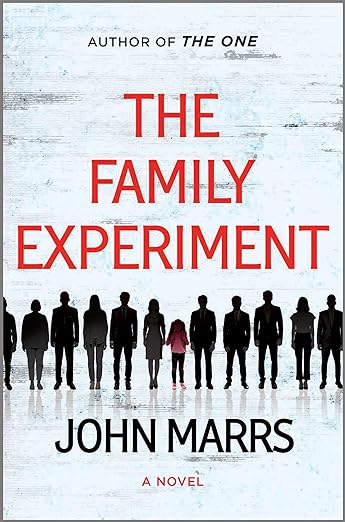
The Family Experiment PDF - John Marrs
John Marrs • Drama novels • 384 Pages
(0)
Author
John MarrsCategory
literatureSection
Number Of Downloads
1
Number Of Reads
53
File Size
4.63 MB
Views
67
Quate
Review
Save
Share
Book Description
The Family Experiment by John Marrs is a dark, high-concept speculative thriller that turns one of the most intimate human desires—the wish to become a parent—into a disturbing public spectacle shaped by technology, money, social pressure, and artificial intelligence. Set in a near-future Britain strained by rising population, overcrowded cities, and an economic crisis that makes family life increasingly difficult to afford, the novel imagines a world where parenthood itself has become something that can be simulated, subscribed to, judged, and televised. John Marrs’s official synopsis presents the story around ten couples competing on a reality TV show as they raise a Virtual Child from birth to eighteen in only nine months, with the prize offering the chance to keep that child or risk everything for a real baby. (John Marrs - Author)
A Near-Future Thriller About Parenthood, Technology, and Control
At the heart of The Family Experiment is a chillingly simple idea: if real parenthood becomes too expensive, too uncertain, or too inaccessible, what kind of alternative will society create? Marrs answers with MetaChildren, virtual children designed from scratch and accessed through the Metaverse and VR technology. For a monthly fee, people can experience a version of parenthood without the physical, financial, and biological realities of raising a real child. The concept feels futuristic, but the fears behind it are deeply recognizable: economic insecurity, infertility, loneliness, social comparison, and the pressure to build a perfect family in an imperfect world.
The novel uses this premise to explore the emotional difference between caring for something programmed to need you and loving someone who exists beyond your control. A virtual child can be designed, monitored, and adjusted, but Marrs is interested in what happens when simulated attachment begins to feel real. The contestants are not simply playing a game; they are exposing grief, longing, ambition, shame, and desperation to a watching audience. That makes The Family Experiment more than a dystopian thriller about artificial intelligence. It is also a story about how far people will go to be seen as loving, worthy, successful, and complete.
Reality TV Becomes a Moral Pressure Cooker
The reality show structure gives The Family Experiment its sharp social edge. Marrs combines the addictive mechanics of televised competition with the private vulnerability of family life, creating a scenario where parenting is no longer judged quietly by relatives, neighbors, or inner guilt, but by viewers, producers, algorithms, and public opinion. The contestants must raise children at an unnatural speed, facing the milestones, crises, emotional demands, and difficult choices of an entire childhood compressed into a short span of time.
This format allows the novel to ask uncomfortable questions about performance and authenticity. Are the couples acting like good parents because they truly care, or because they know they are being watched? Can love survive when every decision becomes part of a competition? What happens when the audience rewards drama more than compassion? Marrs understands that reality television thrives on exposure, and he uses that idea to turn parenthood into a stage where every weakness can be exploited. For readers who enjoy psychological suspense, domestic tension, and dystopian social commentary, this setup creates a powerful blend of entertainment and unease.
A Story Set in John Marrs’s Dark Future Universe
The Family Experiment belongs to the same speculative world as John Marrs’s bestselling novels The One and The Marriage Act, connecting it to the author’s wider exploration of technology, relationships, data, and social control. Pan Macmillan describes the novel as set in the same universe as those books and identifies it as a dark thriller about a virtual baby, while Marrs’s official site lists it among his Dark Future Books. (Pan Macmillan)
Readers do not need to have read the earlier books to understand this story, but fans of The One, The Passengers, The Minders, and The Marriage Act will recognize Marrs’s signature approach. He takes a technological development that appears efficient, useful, or even compassionate, then follows its consequences into morally dangerous territory. In The Family Experiment, the invention is not simply a gadget or service; it enters the emotional center of human life. By turning family into a product and parenting into a competition, Marrs creates a world that feels exaggerated yet alarmingly plausible.
Why The Family Experiment Appeals to Thriller Readers
This novel is built for readers who want a fast-paced thriller with a strong premise and unsettling ideas. Marrs is known for short chapters, multiple perspectives, and carefully timed reveals, and The Family Experiment uses those strengths to keep the story moving while gradually deepening the ethical conflict. The book’s appeal lies not only in finding out who wins the competition, but in watching what the competition reveals about each participant. Every couple brings different motives, wounds, expectations, and secrets into the experiment, and the pressure of the show forces those hidden truths closer to the surface.
The story also works well for readers interested in AI fiction, metaverse thrillers, and near-future dystopian novels that examine where current social trends might lead. Marrs does not treat technology as purely evil; instead, he shows how a tool created to answer real human needs can become dangerous when shaped by profit, spectacle, and public judgment. The virtual children are designed to offer connection, but the system surrounding them raises troubling questions about ownership, attachment, emotional manipulation, and the commercialization of love.
Themes of Family, Identity, and the Cost of Desire
The title The Family Experiment captures the novel’s central tension. The experiment is technological, but it is also emotional and social. It tests what people believe a family is, what makes a parent real, and whether love depends on biology, daily care, memory, sacrifice, or choice. Marrs invites readers to think about families that are created, performed, repaired, or broken under pressure. The book does not reduce parenthood to sentiment; it shows it as a complicated bond shaped by longing, fear, responsibility, and sometimes selfishness.
One of the most compelling aspects of the novel is the way it challenges the fantasy of perfection. A virtual family might seem easier to manage than a real one, but Marrs suggests that the desire for a controlled child, a controlled home, or a controlled future may reveal more about adults than about children. The more the contestants try to prove themselves, the more the story exposes the fragility beneath their choices. This makes the novel especially effective for readers who enjoy thrillers where the danger is psychological as much as external.
John Marrs’s Distinctive Blend of Domestic Suspense and Speculative Fiction
John Marrs has built a strong reputation for combining accessible thriller pacing with bold social questions. Before becoming a full-time writer in 2016, he worked as a freelance journalist, and his official biography notes that he began as a self-published author before gaining major attention with The One, which was translated into thirty-five languages, sold more than a million copies, and became a Netflix series. His work spans psychological thrillers and speculative fiction, both of which often explore the darker sides of human behavior. (John Marrs - Author)
In The Family Experiment, those two sides of his writing meet especially well. The speculative concept gives the book its originality, while the psychological tension gives it emotional force. Marrs understands that the most frightening futures are not always built from monsters or disasters; sometimes they are built from ordinary desires pushed through systems that promise convenience, fairness, or happiness. His future is disturbing because it does not feel impossible. It feels like a world only a few choices away.
A Dark and Thought-Provoking Speculative Thriller
The Family Experiment by John Marrs is a gripping choice for readers who enjoy dark speculative fiction, psychological thrillers, dystopian family drama, and novels about the ethical dangers of technology. It offers a compelling blend of reality TV suspense, artificial intelligence, virtual parenting, social criticism, and emotional mystery. The book’s central idea is instantly intriguing, but its lasting impact comes from the questions it leaves behind: what makes a child real, what makes a parent worthy, and what happens when society turns love into something that can be bought, tested, watched, and judged?
For fans of The One and The Marriage Act, this novel expands John Marrs’s near-future universe with another unsettling vision of how technology can reshape human relationships. For new readers, it is an accessible and provocative entry point into his fiction: tense, imaginative, morally uncomfortable, and designed to keep the pages turning while making the reader question the world just beyond the present.
John Marrs
John Marrs is a British author best known for psychological thrillers and speculative fiction that turn ordinary fears into gripping, high-concept stories. His novels often begin with a question that feels simple, almost irresistible, and then push that question into darker emotional and ethical territory. What if science could identify the person you were genetically meant to love? What if driverless cars had to choose who lives and who dies? What if marriage became a monitored social institution with rewards, punishments, and state-approved rules? This is the kind of imaginative pressure that defines Marrs’s work: he takes familiar parts of modern life, moves them a few steps forward, and reveals how easily convenience, technology, and desire can become dangerous.
Before becoming a full-time author in 2016, Marrs worked as a freelance journalist, interviewing figures from television, film, and music for major national publications. He began as a self-published writer, drafting his first three books during his daily train commute. His debut novel, The Wronged Sons, was released in 2013, followed by Welcome to Wherever You Are in 2015. His breakthrough came with The One, released in 2017, which became a major bestseller, was translated into thirty-five languages, sold more than a million copies, and was adapted into a popular streaming series. His official biography separates his work into two broad strands: psychological thrillers such as When You Disappeared, The Good Samaritan, Her Last Move, What Lies Between Us, Keep It In The Family, The Stranger In Her House, and You Killed Me First; and speculative novels such as The One, The Passengers, The Minders, The Marriage Act, and The Family Experiment.
Marrs’s appeal lies in the way he combines commercial pace with unsettling moral questions. His chapters are usually short, sharp, and designed to keep the reader moving, but the best of his fiction is not only about twists. It is about pressure: pressure inside families, pressure inside relationships, pressure created by secrets, technology, class, ambition, shame, and fear. He writes characters who may seem ordinary at first, then gradually exposes the compromises, lies, and private wounds that shape their decisions. This makes his books especially attractive to readers who enjoy thrillers that are easy to enter but difficult to forget.
In his psychological suspense novels, Marrs often explores domestic spaces as places of danger. Homes, marriages, friendships, and family histories are not simply backgrounds; they become emotional battlegrounds. A locked room may matter less than a locked memory, and a crime may be less frightening than the relationship that made it possible. His speculative novels, by contrast, widen the lens. They examine social systems, scientific promises, and technological progress, but they remain grounded in human behavior. Even when the concept is futuristic, the emotions are recognizable: jealousy, loneliness, ambition, grief, love, and the need to belong.
This balance between the personal and the conceptual helps explain why John Marrs appeals to different kinds of readers. Fans of domestic noir can find betrayal, manipulation, and hidden motives in his thrillers. Readers of near-future fiction can find provocative ideas about data, artificial intelligence, relationships, and state control. Readers who simply want a page-turner can enjoy the pace, reversals, and cliffhangers. Yet beneath the entertainment value, Marrs repeatedly asks whether people become more honest when given better tools, or whether new systems merely give old impulses more power.
As an author, John Marrs has built a recognizable identity around accessible prose, bold premises, emotional tension, and dark social imagination. His work is popular because it understands a central anxiety of contemporary life: the things designed to protect, connect, or improve us may also expose what is most selfish, fearful, and fragile within us. For readers looking for modern thrillers with strong hooks, morally complicated characters, and ideas that linger after the final chapter, John Marrs is a distinctive and highly readable voice.
Earn Rewards While Reading!
Every 10 pages you read and spent 30 seconds on every page, earns you 5 reward points! Keep reading to unlock achievements and exclusive benefits.
Read
Rate Now
5 Stars
4 Stars
3 Stars
2 Stars
1 Stars
The Family Experiment Quotes
Top Rated
Latest
Quate
Be the first to leave a quote and earn 10 points
instead of 3
'%20/%3e%3c/svg%3e "The One")
Comments
Be the first to leave a comment and earn 5 points
instead of 3