

The source of the book
This book is published for the public benefit under a Creative Commons license, or with the permission of the author or publisher. If you have any objections to its publication, please contact us.
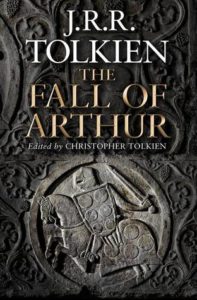
The Fall of Arthur PDF - J. R. R. Tolkien
J. R. R. Tolkien • Fantasy novels • 144 Pages
(0)
Quate
Review
Save
Share
Book Description
The Fall of Arthur by J. R. R. Tolkien
The Fall of Arthur is one of the most intriguing and lesser-known literary works associated with J. R. R. Tolkien, offering readers a rare glimpse into his deep fascination with medieval legend, heroic poetry, and the mythic foundations of European storytelling. Written in the style of Old English alliterative verse, this unfinished epic reimagines the final campaigns of King Arthur, blending mythic grandeur with Tolkien’s unmistakable linguistic craftsmanship.
Although Tolkien is best known worldwide for The Hobbit and The Lord of the Rings, this work reveals another dimension of his creative vision: his lifelong engagement with Arthurian legend. Unlike modern retellings that often focus on romance or chivalric courtly intrigue, The Fall of Arthur leans heavily into the somber tone of ancient epic poetry, emphasizing fate, war, loyalty, and the inevitable decline of great kingdoms.
A Fragment of an Epic Vision
The Fall of Arthur was never completed, yet what remains is powerful in its fragmentary form. The poem follows King Arthur as he sets out on a final military campaign against rebellious forces in the North, while tensions rise in his kingdom due to the betrayal of Mordred and the departure of Lancelot. Tolkien’s approach is not to retell the entire Arthurian saga but to capture a pivotal moment of collapse—where heroic glory is overshadowed by impending tragedy.
The narrative is deliberately sparse, echoing the structure of Anglo-Saxon heroic literature such as Beowulf. Rather than focusing on detailed dialogue or romantic subplots, the poem emphasizes action, landscape, and the moral weight of leadership. Readers encounter Arthur not as a distant legend polished by later medieval romance, but as a war-leader facing the harsh realities of political fragmentation and personal loss.
Language, Form, and Literary Craftsmanship
One of the most striking aspects of this work is its language. Tolkien employs alliterative verse, a poetic form rooted in Old English tradition. This style relies on rhythm, sound patterns, and strong stresses rather than rhyme, creating a sense of ancient oral storytelling. The result is a text that feels archaic yet vivid, as though it has been preserved from a forgotten manuscript.
This linguistic choice is not accidental. Tolkien was a professor of Anglo-Saxon at Oxford, and much of his academic work influenced his creative writing. In The Fall of Arthur, he reconstructs the atmosphere of early medieval poetry with remarkable precision. The language is dense, elevated, and richly symbolic, requiring readers to engage slowly and attentively.
For modern readers, this stylistic approach can feel challenging, but it also offers a unique reward. The poem immerses the reader in a soundscape of heroism and doom, where every line carries weight and resonance. It is less a fast-paced story and more a literary experience shaped by rhythm and atmosphere.
Arthurian Legend Reimagined Through Tolkien’s Lens
Arthurian mythology has been retold countless times across centuries, but Tolkien’s interpretation stands apart due to its tonal restraint and mythic seriousness. Rather than emphasizing magical spectacle or romantic ideals, he focuses on the underlying sense of fate that permeates the legend.
In Tolkien’s vision, Arthur’s world is not one of polished medieval chivalry but of fading heroic ages. The kingdom is fractured, alliances are unstable, and betrayal looms over the narrative. This aligns closely with Tolkien’s broader literary philosophy, where great ages of the world rise and fall, leaving behind echoes in myth and memory.
The absence of completion also adds a layer of poignancy. The fragmentary nature of the text mirrors the collapse it describes, making the work feel like a surviving shard of a larger lost epic. Readers are left with a sense of unfinished destiny, which paradoxically enhances its emotional impact.
Themes of Fate, Decline, and Heroic Tragedy
At its core, The Fall of Arthur explores themes that are central to Tolkien’s entire body of work: the inevitability of decline, the fragility of human achievement, and the burden of leadership in times of collapse. Arthur is portrayed as a figure caught between duty and destiny, unable to escape the downward trajectory of his realm.
The poem also reflects on loyalty and betrayal, particularly through the strained relationships within Arthur’s court. These tensions are not merely political but deeply personal, highlighting the emotional cost of fractured trust. In this sense, the work resonates with broader mythological traditions where great heroes are undone not only by enemies but by internal division.
Nature imagery plays a significant role as well. The landscapes described in the poem often mirror the emotional state of the narrative—dark forests, stormy seas, and distant horizons all contribute to a sense of looming catastrophe. This alignment between environment and emotion is a hallmark of Tolkien’s literary style.
Why Readers Continue to Seek This Work
Modern readers are drawn to The Fall of Arthur for several reasons. For fans of Tolkien, it provides insight into his creative evolution beyond Middle-earth. For lovers of medieval literature, it offers a rare modern attempt to revive Old English poetic traditions in a meaningful artistic form.
It also appeals to readers interested in Arthurian legend, especially those seeking versions that emphasize historical myth over romantic reinterpretation. The poem’s tone is closer to ancient epic traditions than to modern fantasy storytelling, making it a distinctive entry in the broader Arthurian canon.
Additionally, the unfinished nature of the work invites interpretation. Readers are not simply consuming a complete narrative but engaging with a literary artifact that encourages reflection on what might have been had Tolkien completed it.
Reading Experience and Literary Value
Reading The Fall of Arthur is less about following a conventional plot and more about immersing oneself in atmosphere, language, and mythic structure. The alliterative verse requires attention, but it rewards readers with a deep sense of historical continuity and poetic intensity.
It is best approached slowly, allowing the rhythm of the language to guide comprehension. Readers familiar with Tolkien’s academic background in philology will especially appreciate the precision with which he reconstructs ancient poetic forms.
For those new to this style, the experience may initially feel dense, but it gradually opens into a richly textured world of heroic imagination. The poem stands as both a creative work and a scholarly homage to early English literature.
A Lasting Fragment of Mythic Storytelling
Ultimately, The Fall of Arthur remains a powerful fragment of a larger vision. It captures Tolkien’s enduring fascination with the cycles of rise and decline that shape mythic history. Even in its unfinished state, it demonstrates his extraordinary ability to bridge scholarship and storytelling.
Rather than diminishing its value, the incomplete nature of the poem enhances its mystique. It feels like a surviving piece of a forgotten epic tradition, preserved through time and rediscovered by modern readers.
For anyone interested in myth, language, or the deeper layers of Arthurian legend, this work offers a unique and immersive experience—one that reflects both the brilliance and the unfinished ambition of its creator.
J. R. R. Tolkien
John Ronald Reuel Tolkien (1892-1973) was an English writer, poet, and philologist best known for his works of high fantasy, including The Hobbit, The Lord of the Rings, and The Silmarillion. He was born in South Africa and raised in England, where he studied at Oxford University and later became a professor of Anglo-Saxon and English at the same institution.
Tolkien began writing stories as a child, and his love of language and mythology would later influence his fictional works. His first published work was a poem called "Goblin Feet" in the literary magazine Oxford Poetry in 1915. During World War I, Tolkien served in the British Army and later returned to academia.
In the 1930s, Tolkien began working on The Hobbit, a children's book that would eventually become a classic of fantasy literature. Published in 1937, The Hobbit tells the story of a hobbit named Bilbo Baggins who embarks on a quest to help a group of dwarves reclaim their treasure from a dragon.
Tolkien's next major work was The Lord of the Rings, a trilogy published in the mid-1950s that continues the story of Middle-earth, the setting of The Hobbit. The books follow the quest of hobbit Frodo Baggins to destroy the One Ring, a powerful artifact created by the dark lord Sauron to conquer Middle-earth.
Tolkien also worked on other stories set in Middle-earth, including The Silmarillion, which tells the history of the world and the creation of the first elves, and various unfinished tales collected in Unfinished Tales of Númenor and Middle-earth.
Tolkien's work has had a significant impact on the fantasy genre, with many authors citing him as a major influence. The popularity of his works has also led to adaptations in other media, including films, television series, and video games.
In addition to his writing, Tolkien was a respected scholar of language and literature, with a particular interest in Old English and Norse mythology. His academic work includes editions of medieval texts and a seminal lecture series on Beowulf, which has been published as a book.
Earn Rewards While Reading!
Every 10 pages you read and spent 30 seconds on every page, earns you 5 reward points! Keep reading to unlock achievements and exclusive benefits.
Read
Rate Now
5 Stars
4 Stars
3 Stars
2 Stars
1 Stars
The Fall of Arthur Quotes
Top Rated
Latest
Quate
Be the first to leave a quote and earn 10 points
instead of 3
Other books by J. R. R. Tolkien
Other books like The Fall of Arthur
'%20/%3e%3c/svg%3e "Fantastic Beasts: The Crimes of Grindelwald - the Original Screenplay")
J. K. Rowling.
Fantasy novels
(0)
7570
English
Comments
Be the first to leave a comment and earn 5 points
instead of 3