

The source of the book
This book is published for the public benefit under a Creative Commons license, or with the permission of the author or publisher. If you have any objections to its publication, please contact us.
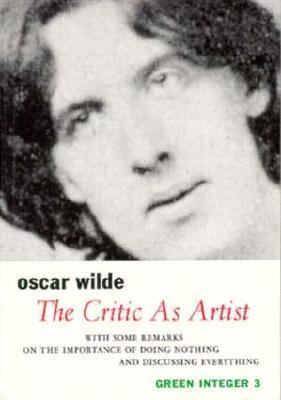
The Critic as Artist PDF - Oscar Wilde
Oscar Wilde • literature • 518 Pages
(0)
Quate
Review
Save
Share
Book Description
The Critic as Artist is one of the most intellectually rich and provocative essays in the celebrated collection Intentions by the Irish writer and playwright Oscar Wilde. Written in the late Victorian period, this work takes the form of a philosophical dialogue between two characters, Gilbert and Ernest, as they explore the nature of criticism, creativity, and the role of the artist in society. Rather than offering a conventional essay, Wilde transforms literary criticism itself into an art form, blending wit, paradox, and aesthetic theory into a seamless and engaging conversation.
At its core, the text challenges traditional assumptions about art and interpretation. Instead of treating criticism as a secondary or inferior activity, Wilde elevates it to the level of creative expression. In doing so, he reshapes the boundaries between the creator and the interpreter, suggesting that the critic is not merely a passive observer but an active participant in the creation of meaning.
Oscar Wilde and the Aesthetic Philosophy Behind the Work
Oscar Wilde was one of the most influential voices of the Aesthetic Movement, a late 19th-century cultural current that promoted the idea of “art for art’s sake.” His writing consistently challenges moralistic readings of art and instead emphasizes beauty, style, and intellectual pleasure as the highest artistic values.
In The Critic as Artist, Wilde expands this philosophy into the realm of criticism. He argues that the most profound form of criticism does not judge art by external moral or social standards, but instead engages with it creatively, transforming it through interpretation. This idea was radical in its time, as Victorian criticism often focused on moral instruction, realism, and didactic value.
Wilde’s dialogue form allows him to dramatize competing perspectives, but ultimately it becomes a vehicle for asserting that criticism itself is a form of artistic creation—sometimes even superior to original production in its intellectual depth.
The Central Dialogue: Gilbert and Ernest
The structure of the essay is built around a conversation between Gilbert and Ernest, two voices representing different stages of understanding. Ernest initially holds a more conventional view of criticism, seeing it as secondary to artistic creation. Gilbert, however, gradually persuades him otherwise, unfolding Wilde’s philosophy through eloquent paradoxes and layered reasoning.
This dialogue format is essential to the work’s impact. Rather than presenting rigid arguments, Wilde allows ideas to evolve organically through conversation. The result is a fluid exploration of aesthetics that mirrors the very creativity it describes. The reader is invited not only to follow the argument but to participate in the intellectual play of ideas.
Criticism as a Creative Act
One of the most important ideas in The Critic as Artist is that criticism is not merely interpretive but generative. Wilde suggests that when a critic engages deeply with a work of art, they inevitably reshape it in their mind, producing new meanings, associations, and emotional responses. In this sense, criticism becomes an act of creation.
Rather than diminishing the original artwork, this process enriches it. A single painting, poem, or novel can give rise to countless interpretations, each reflecting the sensibility of the critic. Wilde’s argument anticipates later developments in literary theory, including reader-response criticism and interpretive philosophy, where meaning is seen as dynamic rather than fixed.
He also suggests that the greatest critics are those who bring their own artistic sensibility to their readings, transforming analysis into a form of imaginative expression.
Beauty, Individualism, and Intellectual Freedom
A recurring theme in Wilde’s essay is the celebration of individual perception. For Wilde, there is no single correct interpretation of a work of art. Instead, meaning is plural, shifting, and deeply personal. This aligns with his broader aesthetic belief that individuality is the highest artistic value.
The essay also emphasizes beauty as an intellectual and emotional experience rather than a moral or utilitarian one. Wilde separates art from ethical judgment, arguing that the purpose of art is not to teach lessons or improve society, but to enrich human experience through beauty and thought.
In this framework, criticism becomes a way of extending beauty rather than evaluating it. The critic, therefore, is not a judge but a co-creator of aesthetic experience.
The Intellectual Style of Oscar Wilde
Wilde’s writing style in The Critic as Artist is as important as its philosophical content. His prose is characterized by paradox, epigrammatic wit, and rhythmic elegance. He often uses contradiction deliberately, not to confuse but to deepen understanding. Through paradox, Wilde reveals the complexity of artistic truth, suggesting that beauty and meaning cannot be reduced to simple statements.
This stylistic brilliance makes the essay both intellectually challenging and highly engaging. Readers encounter not only philosophical arguments but also a performance of language itself. Wilde’s sentences are crafted to delight as much as to inform, reinforcing his belief that style is inseparable from substance.
Relevance in Literary Theory and Modern Thought
Although written in the 19th century, The Critic as Artist continues to resonate strongly in modern discussions of literary theory, aesthetics, and cultural criticism. Its ideas anticipate many 20th-century intellectual movements, including structuralism, post-structuralism, and deconstruction, all of which question the stability of meaning and emphasize the role of interpretation.
The essay also remains relevant in contemporary debates about the role of critics in media, literature, film, and art. In a world where interpretation is often shaped by subjective experience and cultural context, Wilde’s claim that criticism is a creative act feels especially modern.
Readers interested in Victorian literature, aesthetic philosophy, and the history of literary criticism will find this work a foundational text that bridges artistic creativity and intellectual analysis.
Why Readers Still Engage with The Critic as Artist
Modern readers are drawn to The Critic as Artist not only for its ideas but also for its voice. Wilde’s unique ability to combine intellectual depth with playful elegance makes the essay accessible despite its philosophical density. It invites readers to rethink their assumptions about art, encouraging them to see interpretation as an active and imaginative process.
For students of literature, the essay provides a rich exploration of aesthetic theory and critical thought. For general readers, it offers a captivating conversation about the meaning of art and the role of the observer in shaping cultural value.
The enduring appeal of the work lies in its refusal to separate thinking from beauty. It suggests that to truly understand art, one must also participate in its creation through interpretation, imagination, and intellectual engagement.
Conclusion: A Celebration of Interpretation as Art
The Critic as Artist stands as one of Oscar Wilde’s most important contributions to aesthetic philosophy. It challenges rigid distinctions between creator and critic, proposing instead a fluid relationship in which both participate in the ongoing creation of meaning.
By transforming criticism into an art form, Wilde redefines how we engage with literature and visual culture. His ideas continue to influence modern critical thought, reminding readers that interpretation is not a passive act but a deeply creative one.
Ultimately, the essay is not only about art—it is itself a work of art, demonstrating through its style and structure the very principles it advocates.
Oscar Wilde
Oscar Wilde (1854-1900) was an Irish playwright, poet, and novelist who is widely regarded as one of the greatest writers of the Victorian era. He was born in Dublin, Ireland, and educated at Trinity College, Dublin, and Magdalen College, Oxford. Wilde was a flamboyant figure in Victorian society, known for his wit, dandyism, and homosexuality, which was then considered a crime.
Wilde's literary career began in the 1880s, when he gained popularity with his comedic plays, including "Lady Windermere's Fan," "A Woman of No Importance," and "The Importance of Being Earnest." These plays were known for their clever wordplay, social commentary, and satirical portrayal of Victorian society.
In addition to his plays, Wilde also wrote novels, including "The Picture of Dorian Gray," which tells the story of a beautiful young man who makes a Faustian pact to remain young and beautiful while his portrait ages and becomes ugly. The novel caused controversy when it was first published in 1890 because of its decadent themes and homoerotic undertones.
Despite his literary success, Wilde's personal life was tumultuous. In 1895, he was convicted of homosexual acts and sentenced to two years of hard labor. The trial and subsequent imprisonment destroyed his reputation and health, and he died in Paris in 1900, at the age of 46.
Wilde's legacy lives on through his works, which continue to be celebrated for their wit, humor, and social commentary. His writing has influenced generations of writers, and his plays continue to be performed and adapted for film and television. Today, Wilde is remembered not only as a great writer, but also as a symbol of resistance against Victorian moralism and hypocrisy.
Earn Rewards While Reading!
Every 10 pages you read and spent 30 seconds on every page, earns you 5 reward points! Keep reading to unlock achievements and exclusive benefits.
Read
Rate Now
5 Stars
4 Stars
3 Stars
2 Stars
1 Stars
The Critic as Artist Quotes
Top Rated
Latest
Quate
Be the first to leave a quote and earn 10 points
instead of 3
Other books by Oscar Wilde
Other books like The Critic as Artist
'%20/%3e%3c/svg%3e "The Missionary Position: Mother Teresa in Theory and Practice")
3615
English
Comments
Be the first to leave a comment and earn 5 points
instead of 3