

The source of the book
This book is published for the public benefit under a Creative Commons license, or with the permission of the author or publisher. If you have any objections to its publication, please contact us.
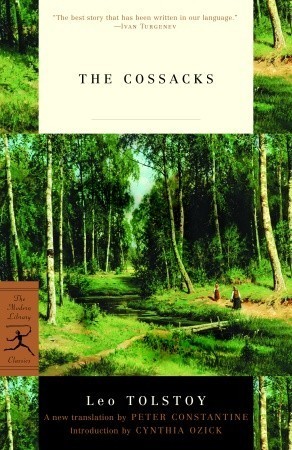
The Cossacks PDF - Leo Tolstoy
Leo Tolstoy • romantic novels • 161 Pages
(0)
Quate
Review
Save
Share
Book Description
The Cossacks by Leo Tolstoy: A Classic Novel of Freedom, Nature, and the Search for Meaning
The Cossacks by Leo Tolstoy is a powerful early work from one of the greatest writers in world literature, a novel that combines psychological insight, vivid landscape writing, and a searching exploration of identity, desire, and moral awakening. First published in 1863, the novel follows Dmitry Andreich Olenin, a young Russian aristocrat who leaves behind the emptiness of privileged society and travels to the Caucasus as a military cadet, hoping to discover a more authentic way of life among the Cossacks. (Encyclopedia Britannica)
Set against the striking backdrop of the Caucasus, The Cossacks captures a world of mountains, forests, hunting, village customs, military outposts, and intense emotional discovery. Olenin arrives with romantic expectations, imagining that distance from Moscow society will allow him to remake himself. Yet Tolstoy turns this journey into something deeper than an escape story. The novel becomes a study of how difficult it is to cross the invisible boundaries between classes, cultures, and ways of living, even when the desire for change is sincere.
A Story of Escape from Privilege and the Desire for Authentic Life
At the heart of The Cossacks is Olenin’s dissatisfaction with the artificial manners, social vanity, and moral exhaustion of the world he has known. He is young, wealthy, restless, and uncertain of his purpose. By joining the army and heading south, he believes he can leave behind a life that feels spiritually empty and discover truth in a place he imagines as simpler, stronger, and closer to nature.
Tolstoy presents this desire with sympathy but also with clear-eyed realism. Olenin is not simply a heroic seeker of freedom; he is also naïve, self-conscious, and shaped by the very society he hopes to escape. His attraction to Cossack life is genuine, but it is also filtered through fantasy. This tension gives the novel much of its lasting power. The Cossacks by Leo Tolstoy is not only a story about a man entering a new landscape, but about the limits of self-reinvention and the painful distance between admiration and belonging.
The Caucasus as Landscape, Symbol, and Living World
One of the most memorable qualities of The Cossacks is Tolstoy’s depiction of the Caucasus. The natural world is not a decorative background; it is central to the novel’s emotional and philosophical force. The forests, rivers, mountains, animals, and open spaces create an atmosphere of freedom that contrasts sharply with Olenin’s memories of urban aristocratic life. Hunting scenes, village routines, and descriptions of the land reveal Tolstoy’s gift for making physical experience feel immediate and meaningful.
For readers interested in classic Russian literature, this novel offers an important early example of Tolstoy’s realism. The details of daily life are precise and grounded, yet they also carry symbolic weight. Nature in the novel suggests vitality, simplicity, danger, and moral clarity, but Tolstoy never reduces it to a simple ideal. The beauty of the Caucasus is powerful, but it does not automatically solve Olenin’s inner conflicts. The landscape invites transformation, while reminding the reader that transformation cannot be achieved through scenery alone.
Cossack Life, Cultural Distance, and Human Complexity
The Cossack community in the novel represents a way of life that appears direct, physical, communal, and deeply connected to the land. Olenin observes their customs, joins in hunting and drinking, and becomes fascinated by their independence. He is especially drawn to figures such as the old hunter Eroshka and the young Cossack woman Maryanka, whose confidence and rootedness seem to embody everything he lacks.
Yet The Cossacks is most compelling because it does not turn this community into a simple fantasy of purity. Tolstoy shows the strength, vitality, pride, harshness, and emotional complexity of Cossack life. Olenin’s admiration does not make him one of them. His education, wealth, habits, and expectations separate him from the people he wants to understand. This makes the novel especially rich for readers interested in themes of cultural encounter, outsider identity, and the gap between romantic longing and social reality.
Love, Desire, and the Limits of Possession
Olenin’s feelings for Maryanka form one of the central emotional threads of the novel. She is not presented as a passive romantic figure but as a strong, self-contained presence whose life belongs to her own community and future. Through Olenin’s attraction to her, Tolstoy explores the connection between love, idealization, and the desire to possess what one does not fully understand.
This romantic tension gives The Cossacks its intimate human drama. Olenin’s love is tied to his broader longing for renewal. He imagines that union with Maryanka and immersion in Cossack life might complete his transformation. But Tolstoy resists easy fulfillment. The novel examines how love can be sincere and self-deceptive at the same time, and how another person can become the focus of dreams that are really about the self. In this way, The Cossacks anticipates the psychological depth that would later define Tolstoy’s greatest novels.
An Essential Early Work by Leo Tolstoy
Although Leo Tolstoy is best known for monumental works such as War and Peace and Anna Karenina, The Cossacks is an essential book for understanding his development as a novelist. It already contains many of the qualities that made him one of the major figures in world literature: moral seriousness, realistic detail, emotional honesty, and a deep interest in the conflict between social convention and authentic living. Britannica notes Tolstoy’s stature as a master of realistic fiction, and this novel shows that mastery emerging with remarkable confidence. (Encyclopedia Britannica)
The novel is also closely associated with Tolstoy’s own experiences in the Caucasus, which influenced several of his early works. This background gives the book a sense of lived observation, especially in its descriptions of military life, landscape, and encounters between Russian officers and local communities. Readers do not need to know Tolstoy’s biography to appreciate the novel, but awareness of that context adds depth to its themes of youth, restlessness, self-judgment, and the search for moral direction. (Encyclopedia Britannica)
Why Readers Still Return to The Cossacks
Modern readers continue to find The Cossacks by Leo Tolstoy compelling because its central questions remain deeply recognizable. What does it mean to live honestly? Can a person leave behind privilege, habit, and social identity? Is a “simple life” truly simple, or is it often a dream created by those who stand outside it? How do love and admiration become entangled with illusion? These questions give the novel a lasting relevance beyond its historical setting.
For readers searching for a classic novel about self-discovery, Russian literature set in the Caucasus, or an accessible entry point into Tolstoy’s early fiction, The Cossacks offers a rewarding and atmospheric reading experience. It is shorter and more concentrated than Tolstoy’s later masterpieces, yet it carries a remarkable emotional and philosophical richness. Its beauty lies in the way it combines adventure, romance, social observation, and inward reflection without reducing any of them to a simple message.
A Thoughtful Classic for Readers of Russian Literature
The Cossacks is ideal for readers who appreciate literary fiction that blends landscape, character, and moral inquiry. It will appeal to those interested in Tolstoy’s novels, nineteenth-century Russian writing, stories of travel and exile, and fiction about the search for a meaningful life. It is also a valuable choice for readers who want to see the early formation of themes Tolstoy would continue to explore throughout his career: the conflict between artificial society and natural existence, the hunger for moral clarity, and the difficulty of living according to one’s highest ideals.
More than a historical or regional novel, The Cossacks by Leo Tolstoy is a subtle and moving exploration of longing. Olenin’s journey into the Caucasus is also a journey into the illusions and hopes of youth, where the desire to become someone new meets the stubborn reality of the self. Through this beautifully observed story, Tolstoy offers a classic work about freedom, belonging, love, and the human need to find a life that feels true.
Leo Tolstoy
Leo Tolstoy is one of the most influential writers in world literature, a Russian novelist, moral thinker, and social critic whose work helped define the possibilities of the modern novel. Born into an aristocratic family in Russia, he grew up close to the rural estate life that later became central to his imagination, his ethical concerns, and his understanding of class, labor, family, faith, and personal responsibility. Tolstoy is best known for the monumental novels War and Peace and Anna Karenina, two works that continue to stand among the highest achievements of literary realism. His fiction is celebrated not merely for its scale, but for its extraordinary ability to portray human consciousness, social pressure, moral confusion, and the hidden movement of history through the lives of individuals. In War and Peace, Tolstoy transforms the historical novel into a vast meditation on war, fate, leadership, memory, and ordinary human experience. He portrays the Napoleonic era not as a simple sequence of heroic decisions, but as a complex web of personal choices, accidents, social customs, emotions, and forces beyond the control of any single ruler or general. In Anna Karenina, he offers one of literature’s most penetrating studies of love, marriage, desire, jealousy, social judgment, and spiritual hunger, creating characters whose inner lives feel immediate, contradictory, and painfully human. Tolstoy’s narrative style combines simplicity with depth: he can describe a ballroom, a battlefield, a family quarrel, a harvest, or a moment of private doubt with such precision that each scene becomes a window into moral and psychological truth. His characters are memorable because they are never reduced to symbols; they change, hesitate, deceive themselves, seek forgiveness, suffer, and grow. Beyond his novels, Tolstoy wrote short fiction, essays, autobiographical works, religious reflections, and educational writings that reveal a lifelong struggle to reconcile art, conscience, and everyday life. In his later years, he became increasingly concerned with questions of nonviolence, poverty, property, organized religion, and the ethical meaning of Christianity. His critique of violence and his insistence on moral self-examination influenced readers far beyond Russia and helped shape later discussions of peaceful resistance, social reform, and spiritual simplicity. As an author for book lovers, Tolstoy remains essential because his works speak to both private feeling and public history. He examines the intimate life of families while also asking how nations move toward war, how societies punish those who break their rules, and how individuals can live truthfully in a world built on pride, ambition, and illusion. His influence can be felt in modern realism, psychological fiction, historical narrative, philosophical literature, and moral essays. Readers return to Tolstoy because his books do not offer easy answers; they invite deep attention to life itself. He writes about birth, death, love, work, faith, conflict, and forgiveness with a seriousness that makes ordinary experience feel immense. Leo Tolstoy’s legacy endures because he created literature that is both artistically powerful and ethically demanding, literature that asks every generation to reconsider what it means to live honestly, love responsibly, and search for meaning in a complicated world.
Earn Rewards While Reading!
Every 10 pages you read and spent 30 seconds on every page, earns you 5 reward points! Keep reading to unlock achievements and exclusive benefits.
Read
Rate Now
5 Stars
4 Stars
3 Stars
2 Stars
1 Stars
The Cossacks Quotes
Top Rated
Latest
Quate
Be the first to leave a quote and earn 10 points
instead of 3
'%20/%3e%3c/svg%3e "War and Peace")
Comments
Be the first to leave a comment and earn 5 points
instead of 3