

The source of the book
This book is published for the public benefit under a Creative Commons license, or with the permission of the author or publisher. If you have any objections to its publication, please contact us.
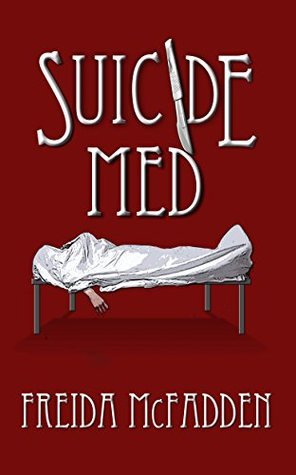
Suicide Med PDF - Freida McFadden
Freida McFadden • Drama novels • 523 Pages
(0)
Author
Freida McFaddenCategory
literatureSection
Number Of Downloads
1
Number Of Reads
50
File Size
1.80 MB
Views
73
Quate
Review
Save
Share
Book Description
Suicide Med by Freida McFadden is a tense medical thriller and psychological suspense novel set inside the highly pressured world of medical school, where ambition, exhaustion, fear, and secrecy collide with deadly consequences. The book follows Heather McKinley, a student who has always dreamed of becoming a doctor, only to find that the reality of medical training is far more brutal than the hopeful image she once carried. At Southside Medical School, the academic demands are relentless, the anatomy labs are intimidating, and the atmosphere is shadowed by a disturbing reputation: the school has been nicknamed Suicide Med because of a tragic pattern connected to student deaths. The premise immediately places the reader inside a setting where pressure is not only emotional but physical, social, and psychological, creating the kind of claustrophobic tension that Freida McFadden’s readers often seek in a fast-paced thriller. The original Suicide Med was published in 2014, and McFadden has since stated that it was later rewritten as Dead Med, with the revised version containing substantial new material and the original edition taken out of print.
A Medical Thriller Built on Pressure, Fear, and Suspicion
At the heart of Suicide Med is the question of how far a person can be pushed before something breaks. Heather enters medical school with an idealistic vision of helping children and building a meaningful career, but the dream quickly becomes complicated by sleepless nights, difficult exams, personal heartbreak, and the constant fear of failure. When her longtime boyfriend leaves her and she begins struggling in anatomy, the pressures surrounding her intensify. McFadden uses this academic environment as more than a background; medical school becomes a pressure chamber where every grade feels consequential, every weakness can be noticed, and every student is fighting to prove they belong. That atmosphere gives the story its psychological force, because the threat does not come only from a single villain or a single mystery. It also comes from the system itself, from the exhaustion of competition, and from the way stress can distort judgment.
The novel’s suspense grows from uncertainty. The school’s grim history raises a frightening possibility: are the deaths truly suicides, or is something more deliberate taking place? This central question gives Suicide Med its dark momentum. Heather knows that one student may die, but she cannot know whether the danger is coming from inside her own mind, from someone around her, or from a pattern that has been misunderstood for years. The story plays with the uneasy boundary between personal breakdown and external threat, making the reader question every motive, every coincidence, and every act of apparent kindness. For readers who enjoy medical suspense, campus thrillers, psychological thrillers, and stories filled with hidden danger, this book offers a disturbing and immersive reading experience.
Heather McKinley and the Anatomy of a Breaking Point
Heather McKinley is central to the emotional pull of Suicide Med because she represents a familiar kind of ambition: the desire to succeed in a demanding profession even when the cost becomes overwhelming. She does not arrive at medical school expecting to become part of its darkest story. She wants to survive anatomy, build a future, and hold onto the version of herself that believed hard work would be enough. As the story develops, her confidence begins to erode, and McFadden uses that erosion to explore the emotional reality behind achievement. The book is not simply about exams or institutional pressure; it is about identity, fear, shame, and the private panic of realizing that the life you fought to enter may be destroying you.
This makes Heather a compelling figure for readers who like protagonists under extreme pressure. She is vulnerable without being passive, frightened without being simple, and increasingly aware that the people around her may be hiding more than ordinary insecurities. In a medical school where everyone is exhausted and everyone has something to lose, trust becomes dangerous. A professor’s concern may be genuine, or it may hide something darker. A classmate’s friendship may offer comfort, or it may become part of a larger pattern. A failure may be academic, emotional, or fatal. Through Heather’s perspective, Suicide Med turns the medical training experience into a psychological maze where the reader must constantly ask who is at risk, who is telling the truth, and who benefits when another student falls.
Freida McFadden’s Signature Suspense in an Early Medical Setting
Suicide Med is especially interesting for readers of Freida McFadden because it connects her later reputation for twist-filled psychological thrillers with her professional knowledge of medicine and human vulnerability. McFadden is a physician as well as a bestselling author, and her official biography describes her as a writer of psychological thrillers and medical humor novels whose work has reached bestseller lists and been translated into many languages. That medical background gives Suicide Med a distinctive edge. The novel understands the atmosphere of hospital-adjacent training, the emotional burden of anatomy labs, and the competitive intensity that can shape young doctors before they ever treat patients independently.
Readers familiar with McFadden’s later books will recognize several elements that have become part of her appeal: short, gripping scenes; a premise that is easy to enter; characters who may not be what they seem; and a story that keeps the reader searching for the hidden design beneath the surface. Unlike a traditional detective story, Suicide Med is not built only around solving a crime. It is built around dread. The reader feels the danger before fully understanding it, and that dread gives the novel its page-turning quality. The setting is realistic enough to feel grounded, but the unfolding mystery creates the heightened tension expected from a psychological thriller.
Themes of Ambition, Competition, and Hidden Darkness
One of the strongest themes in Suicide Med is the danger of environments where success is treated as survival. Medical school is often associated with intelligence, discipline, and sacrifice, but McFadden focuses on the emotional underside of that world. Her students are not simply learning anatomy; they are measuring themselves against impossible expectations. They are trying to maintain relationships, protect their pride, hide weakness, and survive the fear that they may not be good enough. This makes the novel appealing not only as a thriller but also as a story about performance, burnout, and the private cost of ambition.
The book also explores how institutions develop reputations and how those reputations can become part of the danger. Once a school is known for death, every new crisis becomes part of a pattern. Rumor and fear begin to shape the way students interpret events. A tragedy may be explained away as stress, but too many tragedies create suspicion. Suicide Med uses this tension effectively, asking whether people accept convenient explanations because they are true, or because the alternative is too horrifying to face. That question gives the novel a deeper psychological layer and makes the medical school setting feel both specific and symbolic.
Reading Experience and Audience Appeal
Suicide Med is a strong choice for readers who enjoy psychological thrillers with a medical setting, campus suspense, intense academic environments, and mysteries driven by secrets rather than simple action. It will appeal to fans of Freida McFadden’s darker, faster-paced storytelling, especially readers who like books that begin with an unsettling premise and build toward revelations that change the meaning of earlier events. The novel’s appeal also lies in its blend of professional setting and emotional instability. Medical training already carries built-in tension, but McFadden heightens that tension by adding a history of unexplained deaths and a heroine whose own life begins to unravel at the worst possible time.
Because of its subject matter, the book deals with sensitive themes, including student death, psychological distress, and the darker consequences of pressure. Readers who prefer light suspense may find the atmosphere intense, while readers drawn to medical thrillers and psychological suspense will likely appreciate the way the story uses discomfort as part of its design. The official content guidance for the rewritten version, Dead Med, identifies murder and substance abuse as key warnings, and McFadden’s official page notes that Dead Med is the revised form of Suicide Med with new material. This context is useful for readers searching for Suicide Med today, since the original edition may be difficult to find, while the revised version remains available under its newer title.
Why Suicide Med Remains Important for Freida McFadden Readers
Suicide Med holds a notable place in Freida McFadden’s body of work because it shows an early version of the qualities that later made her a major name in psychological suspense. It combines a high-concept premise, a vulnerable protagonist, a closed and stressful environment, and a mystery that keeps the reader questioning whether the explanation is psychological, criminal, or something hidden in the history of the school. The book also highlights McFadden’s ability to turn professional pressure into narrative suspense. Instead of treating medical school as a simple backdrop, she makes it the engine of the story, using its intensity to expose fear, rivalry, weakness, and danger.
For readers looking for a Freida McFadden book that blends medical thriller, psychological suspense, campus mystery, and dark academic pressure, Suicide Med offers a gripping and unsettling experience. It is a story about a dream that becomes a threat, a school whose reputation may be more than rumor, and a student who must confront the possibility that survival requires more than passing an exam. With its medical setting, tense atmosphere, and central question of whether the tragedies are truly what they appear to be, Suicide Med remains a compelling title for anyone interested in the darker side of ambition, the fragility of the human mind, and the secrets that can hide behind even the most respected institutions.
Freida McFadden
Freida McFadden is an American author best known for psychological thrillers, domestic suspense, mystery fiction, and fast-paced novels built around secrets, deception, and startling twists. She writes under the name Freida McFadden, while her real name, Sara Cohen, became public after years of reader curiosity about the identity behind the bestselling pen name. Her background is unusually distinctive because she is not only a novelist but also a physician who specializes in brain injury and brain disorders, a professional experience that gives many of her stories a sharp awareness of fear, memory, perception, and the fragile line between trust and suspicion. Her official biography and publisher profiles describe her as a number one bestselling author whose books have appeared on major bestseller lists, won the International Thriller Writers Award for Best Paperback Original and the Goodreads Choice Award for Best Thriller, and have been translated into more than forty languages.
What makes Freida McFadden especially recognizable is her ability to turn ordinary places into sources of dread. Her novels often begin with situations that feel familiar: a new job, a marriage, a locked room, a suburban home, a patient, a colleague, a neighbor, or a person trying to start over. From that accessible beginning, she gradually reveals layers of manipulation, hidden motives, buried trauma, and moral uncertainty. This approach has made her a favorite among readers who enjoy psychological suspense, twisty thrillers, domestic secrets, unreliable narrators, and stories where every chapter raises a new question. Her books are not usually slow literary mysteries; they are designed to pull the reader forward, making each page feel connected to a larger secret waiting to be exposed.
Among her most widely known works are The Housemaid, The Housemaid’s Secret, The Housemaid Is Watching, Never Lie, The Locked Door, The Inmate, Ward D, The Coworker, The Teacher, The Boyfriend, The Tenant, and The Intruder. The Housemaid became a defining title in her career because it introduced many readers to her signature blend of claustrophobic setting, social tension, domestic unease, and dramatic reversal. The success of that novel helped establish her as a major name in contemporary commercial thriller fiction, especially among readers who want accessible storytelling, short chapters, fast escalation, and endings that force them to reconsider what they believed about the characters.
McFadden’s style is direct, energetic, and intensely readable. She tends to favor clear sentences, quick scenes, and narrative momentum over dense description. This gives her books a strong page-turning quality and makes them especially appealing to readers who want suspense that begins quickly and keeps moving. At the same time, her stories often explore deeper anxieties: the fear of not being believed, the danger of trusting the wrong person, the pressure of secrets inside families, the social masks people wear, and the psychological consequences of being trapped in a situation with no obvious escape. Her medical background adds another layer to this tension, particularly in books involving hospitals, memory, mental instability, or the unsettling uncertainty of whether a character can trust their own mind.
A key part of her appeal is her understanding of reader expectation. Freida McFadden knows that fans of psychological thrillers want surprise, but they also want emotional stakes. Her plots often work because the suspense is tied to recognizable human fears: losing a home, losing a child, being framed, being watched, being lied to, or discovering that the person closest to you is not who they appeared to be. She writes stories that can be enjoyed for entertainment, but they also tap into the discomfort of modern life, where safety, identity, and truth can all feel unstable. This balance between entertainment and unease has helped her books spread widely through book clubs, online recommendations, audiobook platforms, and reader communities.
In the larger landscape of contemporary thrillers, Freida McFadden stands out as an author who combines professional discipline, medical insight, and a precise instinct for suspense. Her novels are popular because they are easy to enter, difficult to put down, and structured around the pleasure of discovery. She gives readers the feeling that every detail might matter, every character might be hiding something, and every calm scene might be preparing the next shock. For anyone looking for modern psychological thrillers with domestic tension, fast pacing, readable prose, and memorable twists, Freida McFadden has become one of the most important and widely read names in the genre.
Earn Rewards While Reading!
Every 10 pages you read and spent 30 seconds on every page, earns you 5 reward points! Keep reading to unlock achievements and exclusive benefits.
Read
Rate Now
5 Stars
4 Stars
3 Stars
2 Stars
1 Stars
Suicide Med Quotes
Top Rated
Latest
Quate
Be the first to leave a quote and earn 10 points
instead of 3
'%20/%3e%3c/svg%3e "The Housemaid")
Comments
Be the first to leave a comment and earn 5 points
instead of 3