

The source of the book
This book is published for the public benefit under a Creative Commons license, or with the permission of the author or publisher. If you have any objections to its publication, please contact us.
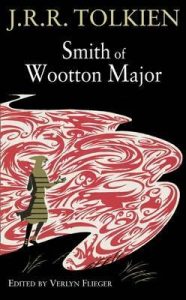
Smith of Wootton Major PDF - J. R. R. Tolkien
J. R. R. Tolkien • short stories • 33 Pages
(0)
Quate
Review
Save
Share
Book Description
Smith of Wootton Major by J. R. R. Tolkien
Smith of Wootton Major is one of the most lyrical, reflective, and quietly magical works written by J. R. R. Tolkien, the legendary author behind The Hobbit and The Lord of the Rings. First published in 1967, this short fantasy novella offers a deeply imaginative exploration of wonder, creativity, maturity, and the mysterious relationship between ordinary life and the hidden world of Faery. Though much shorter than Tolkien’s epic novels, the story carries extraordinary emotional depth and philosophical richness, making it an essential read for lovers of classic fantasy literature and literary fairy tales. (Wikipedia)
Set in the peaceful village of Wootton Major, the novella begins with a celebrated tradition known as the Feast of Good Children, an event held only once every twenty-four years. At the center of the feast is the Great Cake, prepared by the village’s Master Cook. Hidden within the cake is a magical star that unexpectedly changes the life of a young boy named Smith. After swallowing the star as a child, Smith discovers that he can travel freely into the mysterious Land of Faery, a realm of beauty, danger, enchantment, and timeless wonder. From this deceptively simple premise, Tolkien crafts a story that feels both intimate and mythic, blending fairy-tale atmosphere with profound emotional resonance. (Wikipedia)
A Mature and Reflective Fantasy Tale
Unlike Tolkien’s larger adventures filled with wars, quests, and kingdoms, Smith of Wootton Major is quiet and contemplative. The novella focuses less on external conflict and more on inner transformation, imagination, and the bittersweet passage of time. Many readers and scholars consider it one of Tolkien’s most personal works, written during the later years of his life when themes of aging, memory, artistic inspiration, and loss had become increasingly meaningful to him. (Wikipedia)
The story captures the feeling of encountering something truly magical that cannot be fully explained in words. Tolkien’s concept of “Faery” is not merely a land of fantasy creatures or children’s entertainment; it represents a deeper encounter with mystery, beauty, creativity, and the unknown. Through Smith’s journeys, readers experience fleeting moments of transcendence and emotional clarity that reflect Tolkien’s lifelong fascination with myth, folklore, and the power of imagination itself. (The Tolkien Estate)
Themes of Wonder, Creativity, and Human Experience
One of the most compelling aspects of Smith of Wootton Major is its exploration of how wonder shapes a person’s life. Smith’s travels to Faery influence his character, his craftsmanship, and the way he understands the world around him. Tolkien presents fantasy not as an escape from reality, but as a way of seeing reality more deeply and more truthfully. The novella reflects ideas that Tolkien also discussed in his famous essay On Fairy-Stories, especially the importance of imagination, enchantment, and “recovery” — the ability to rediscover beauty in ordinary things. (The Tolkien Estate)
The book also explores themes of wandering, personal growth, generosity, humility, and acceptance. Smith’s experiences in Faery gradually shape him into a wiser and kinder person, while also teaching him that magical gifts are temporary and must eventually be passed on. Readers often describe the novella as bittersweet because it recognizes both the joy and the sadness that come with change, aging, and letting go. (GradeSaver)
Another notable feature of the novella is its subtle ambiguity. Tolkien intentionally leaves many aspects of Faery unexplained, allowing the story to maintain a sense of mystery and symbolic depth. Some critics interpret the novella as an allegory about artistic inspiration or Tolkien’s own literary career, while others view it as a spiritual meditation on grace, imagination, and mortality. Tolkien himself resisted strict allegorical readings, which allows the story to remain open, personal, and endlessly interpretable for different readers. (Wikipedia)
Tolkien’s Literary Style at Its Most Elegant
Readers familiar with Tolkien’s grand epic style may be surprised by the elegance and simplicity of Smith of Wootton Major. The prose is restrained yet poetic, filled with gentle rhythms, vivid imagery, and an atmosphere of timeless folklore. Every sentence feels carefully crafted, and even the smallest details contribute to the enchanting mood of the story.
The novella reflects Tolkien’s deep knowledge of mythology, medieval literature, and fairy tradition, but it never feels academic or inaccessible. Instead, it reads like an ancient tale passed down through generations — familiar, comforting, and mysterious all at once. This balance between simplicity and depth is one of the reasons why the book continues to attract readers decades after its publication. (Wikipedia)
Because the story is relatively short, it is often recommended to readers who want to experience Tolkien’s philosophical and mythic imagination without committing to a lengthy epic series. At the same time, longtime Tolkien fans frequently return to this novella later in life, discovering new emotional layers and meanings with each reading.
Ideal for Readers of Literary Fantasy and Fairy Tales
Smith of Wootton Major appeals to readers who enjoy classic fantasy literature, mythic storytelling, fairy tales for adults, and reflective literary fiction. Fans of authors such as George MacDonald, Ursula K. Le Guin, C. S. Lewis, and Patricia McKillip may especially appreciate the novella’s dreamlike atmosphere and emotional subtlety. The book is also highly valued among readers interested in Tolkien’s philosophy of fantasy and the deeper ideas behind his literary works. (The Tolkien Estate)
Despite its gentle tone, the novella is emotionally sophisticated and best appreciated by readers who enjoy thoughtful, symbolic storytelling rather than fast-paced action. It is particularly rewarding for those interested in themes of imagination, craftsmanship, beauty, artistic inspiration, and the fading yet enduring presence of wonder in everyday life.
Why Smith of Wootton Major Remains Important
Although often overshadowed by Tolkien’s more famous Middle-earth novels, Smith of Wootton Major has become increasingly admired as one of his most profound and personal works. Many readers consider it a hidden gem within Tolkien’s bibliography — a story that distills many of his lifelong ideas about fantasy, art, myth, and human longing into a concise and deeply moving narrative. (Reddit)
The novella invites readers into a world where magic exists quietly beside ordinary life, where beauty cannot always be possessed or explained, and where imagination remains a vital part of being human. Its emotional power lies not in spectacle, but in its ability to awaken a sense of wonder that lingers long after the final page.
J. R. R. Tolkien
J. R. R. Tolkien is widely regarded as one of the most influential authors of the twentieth century and the foundational figure of modern high fantasy literature. Best known for his masterpieces The Hobbit and The Lord of the Rings, Tolkien was not only a novelist but also a distinguished philologist and professor at the University of Oxford. His academic expertise in ancient languages, medieval literature, and linguistic structures profoundly shaped his creative work, giving his fictional world of Middle-earth an unprecedented depth and realism.
Born in 1892 in Bloemfontein, South Africa, Tolkien moved to England after the death of his father and was raised in the English countryside. From an early age, he developed a fascination with language, mythology, and storytelling. His academic career at Oxford focused on Old English literature, particularly texts such as Beowulf, which he both studied and helped reinterpret for modern scholarship.
Tolkien’s experience in World War I had a lasting impact on his worldview. The themes of loss, camaraderie, and the struggle between good and evil that appear throughout his writings are often connected to his wartime experiences. After the war, he began developing stories that would eventually become The Hobbit, published in 1937. Its success led to the creation of his epic legendarium, The Lord of the Rings, published in three volumes between 1954 and 1955.
What distinguishes Tolkien’s work is his meticulous world-building. He created not only stories but entire civilizations, complete with histories, genealogies, languages, and mythologies. His constructed languages, such as Quenya and Sindarin, remain among the most sophisticated fictional languages ever created.
Tolkien passed away in 1973, but his legacy continues to shape literature, film, and popular culture. His works have inspired countless authors and remain central to the fantasy genre.
Earn Rewards While Reading!
Every 10 pages you read and spent 30 seconds on every page, earns you 5 reward points! Keep reading to unlock achievements and exclusive benefits.
Read
Rate Now
5 Stars
4 Stars
3 Stars
2 Stars
1 Stars
Smith of Wootton Major Quotes
Top Rated
Latest
Quate
Be the first to leave a quote and earn 10 points
instead of 3
'%20/%3e%3c/svg%3e "The Children of Hurin")
Comments
Be the first to leave a comment and earn 5 points
instead of 3