

The source of the book
This book is published for the public benefit under a Creative Commons license, or with the permission of the author or publisher. If you have any objections to its publication, please contact us.
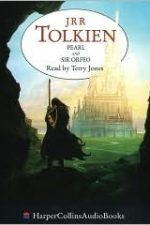
Pearl and Sir Orfeo PDF - J. R. R. Tolkien
J. R. R. Tolkien • Fantasy novels • 215 Pages
(0)
Quate
Review
Save
Share
Book Description
PEARL AND SIR ORFEO BY J. R. R. TOLKIEN J. R. R. Tolkien
Pearl and Sir Orfeo is a remarkable modern presentation of two of the most important and beautiful works of early English literature, carefully translated and edited by J. R. R. Tolkien. This collection brings together two medieval poems that reflect the depth, imagination, and linguistic richness of Middle English storytelling. Through Tolkien’s scholarly yet highly readable approach, these texts become accessible to contemporary readers while preserving their original poetic power, emotional resonance, and historical significance.
This book is not simply a translation; it is a literary bridge between worlds. It connects modern readers with the medieval imagination, where allegory, romance, faith, loss, and myth are interwoven into lyrical narrative forms. The poems “Pearl” and “Sir Orfeo” stand as masterpieces of early English verse, and Tolkien’s contribution as a philologist and literary artist ensures that their beauty is not lost in time.
Overview of Pearl and Sir Orfeo
The collection includes two distinct but thematically connected medieval poems. “Pearl” is a deeply symbolic and emotional elegy, while “Sir Orfeo” is a retelling of a classical myth reshaped through medieval English romance traditions. Both works explore themes of loss, transcendence, and the relationship between the earthly and the otherworldly.
Readers approaching this book often seek not only literary history but also spiritual and philosophical reflection. The language, imagery, and structure of these poems reflect a worldview where morality, faith, and imagination are tightly intertwined. Tolkien’s careful editorial work ensures that the poems retain their poetic rhythm and narrative clarity while becoming readable for a modern audience.
Pearl: A Vision of Loss, Faith, and Eternity
“Pearl” is one of the most profound and complex poems in medieval English literature. It is an elegy that expresses the grief of a father mourning the death of his young daughter. However, it is not simply a lament; it transforms grief into a visionary journey that explores the nature of divine grace, salvation, and eternal life.
The poem is structured as a dream vision, a common literary form in medieval writing. The narrator falls asleep in a garden and enters a dreamlike realm where he encounters a radiant, otherworldly figure—his lost daughter, now transformed into a glorious being. Through their dialogue, the poem unfolds as a theological and philosophical exploration of faith, divine justice, and the promise of heaven.
One of the most striking aspects of “Pearl” is its intricate structure and poetic craftsmanship. The original Middle English poem uses a complex pattern of alliteration, repetition, and symbolic imagery. Tolkien’s edition carefully preserves these qualities while guiding the reader through its linguistic challenges.
For modern readers, “Pearl” offers a deeply emotional experience. It speaks to universal human themes: grief, longing, and the search for meaning beyond suffering. At the same time, it reflects the medieval Christian worldview, where earthly pain is understood within a larger spiritual narrative of redemption and eternal harmony.
Sir Orfeo: A Medieval Retelling of Myth and Rescue
“Sir Orfeo” is a captivating medieval romance that reimagines the classical myth of Orpheus and Eurydice. In this version, the story is transformed into a fairy-tale-like narrative set in a medieval English context, blending myth, folklore, and romance traditions.
The story follows King Orfeo, whose beloved wife Heurodis is abducted by the king of the fairies. Devastated by loss, Orfeo abandons his kingdom and lives in exile in the wilderness, where he wanders as a minstrel. His music and devotion eventually lead him to the fairy realm, where he confronts the supernatural forces that took his wife.
Unlike the tragic ending of the classical myth, “Sir Orfeo” concludes with restoration and reunion. Orfeo successfully rescues his wife and returns to his kingdom, restoring order and justice. This transformation of the original myth reflects medieval narrative preferences for resolution, harmony, and moral closure.
The poem is rich in symbolic meaning. The fairy world represents the unknown, the otherworldly, and the unpredictable forces of fate. Orfeo’s journey symbolizes resilience, loyalty, and the power of art and music as transformative forces. Tolkien’s translation captures the lyrical beauty of the original text, allowing readers to experience its rhythm and storytelling power.
Tolkien’s Scholarly and Literary Approach
One of the most important aspects of this book is Tolkien’s unique dual identity as both scholar and storyteller. His deep expertise in Old and Middle English literature allowed him to approach these texts with exceptional precision and sensitivity.
Rather than modernizing the poems excessively, Tolkien preserves their medieval character while making them understandable. His translation choices reflect a respect for original meter, vocabulary, and poetic structure. At the same time, he provides clarity that allows non-specialist readers to engage with the texts meaningfully.
This approach makes Pearl and Sir Orfeo a valuable resource not only for literature enthusiasts but also for students of medieval studies, mythology, and comparative literature. It stands as an example of how academic scholarship can also produce deeply engaging literary experiences.
Themes and Literary Significance
Across both poems, several powerful themes emerge. Loss and grief are central, yet they are always accompanied by transformation and resolution. The idea of journeys—whether spiritual, emotional, or physical—plays a crucial role in both narratives.
The contrast between the human world and the supernatural realm is another recurring motif. In “Pearl,” this appears as the boundary between earthly life and heaven. In “Sir Orfeo,” it is expressed through the division between the mortal kingdom and the fairy underworld.
These themes are not merely historical curiosities; they remain relevant to modern readers. Questions about suffering, meaning, love, and the unknown continue to resonate across time. Tolkien’s presentation ensures that these medieval voices can still speak clearly to contemporary audiences.
Reading Experience and Audience Appeal
Pearl and Sir Orfeo appeals to a wide range of readers. It is particularly valued by those interested in classic literature, medieval history, mythology, and linguistic studies. Readers who enjoy poetic storytelling, symbolic narratives, and philosophical themes will find this book especially rewarding.
The reading experience is both intellectually engaging and emotionally rich. While the language may initially feel unfamiliar, Tolkien’s careful editing makes the poems approachable. The rhythm and imagery gradually immerse the reader in a world that is both ancient and surprisingly modern in its emotional depth.
For students and scholars, this edition serves as an important reference point for understanding Middle English poetry. For general readers, it offers a rare opportunity to experience foundational texts of English literary heritage in a form that remains faithful to their original artistry.
A Timeless Bridge Between Eras
Ultimately, Pearl and Sir Orfeo stands as a testament to the enduring power of storytelling. Through Tolkien’s dedicated scholarship, two medieval masterpieces are brought into the modern literary landscape without losing their authenticity or emotional force.
The book invites readers into a world where myth and faith coexist, where language is musical and symbolic, and where human experience is expressed through timeless poetic forms. It is not only a work of translation but also a preservation of cultural memory, ensuring that these extraordinary poems continue to be read, studied, and appreciated across generations.
J. R. R. Tolkien
John Ronald Reuel Tolkien (1892-1973) was an English writer, poet, and philologist best known for his works of high fantasy, including The Hobbit, The Lord of the Rings, and The Silmarillion. He was born in South Africa and raised in England, where he studied at Oxford University and later became a professor of Anglo-Saxon and English at the same institution.
Tolkien began writing stories as a child, and his love of language and mythology would later influence his fictional works. His first published work was a poem called "Goblin Feet" in the literary magazine Oxford Poetry in 1915. During World War I, Tolkien served in the British Army and later returned to academia.
In the 1930s, Tolkien began working on The Hobbit, a children's book that would eventually become a classic of fantasy literature. Published in 1937, The Hobbit tells the story of a hobbit named Bilbo Baggins who embarks on a quest to help a group of dwarves reclaim their treasure from a dragon.
Tolkien's next major work was The Lord of the Rings, a trilogy published in the mid-1950s that continues the story of Middle-earth, the setting of The Hobbit. The books follow the quest of hobbit Frodo Baggins to destroy the One Ring, a powerful artifact created by the dark lord Sauron to conquer Middle-earth.
Tolkien also worked on other stories set in Middle-earth, including The Silmarillion, which tells the history of the world and the creation of the first elves, and various unfinished tales collected in Unfinished Tales of Númenor and Middle-earth.
Tolkien's work has had a significant impact on the fantasy genre, with many authors citing him as a major influence. The popularity of his works has also led to adaptations in other media, including films, television series, and video games.
In addition to his writing, Tolkien was a respected scholar of language and literature, with a particular interest in Old English and Norse mythology. His academic work includes editions of medieval texts and a seminal lecture series on Beowulf, which has been published as a book.
Earn Rewards While Reading!
Every 10 pages you read and spent 30 seconds on every page, earns you 5 reward points! Keep reading to unlock achievements and exclusive benefits.
Read
Rate Now
5 Stars
4 Stars
3 Stars
2 Stars
1 Stars
Pearl and Sir Orfeo Quotes
Top Rated
Latest
Quate
Be the first to leave a quote and earn 10 points
instead of 3
Other books by J. R. R. Tolkien
Other books like Pearl and Sir Orfeo
'%20/%3e%3c/svg%3e "Fantastic Beasts: The Crimes of Grindelwald - the Original Screenplay")
J. K. Rowling.
Fantasy novels
(0)
7570
English
Comments
Be the first to leave a comment and earn 5 points
instead of 3