

The source of the book
This book is published for the public benefit under a Creative Commons license, or with the permission of the author or publisher. If you have any objections to its publication, please contact us.
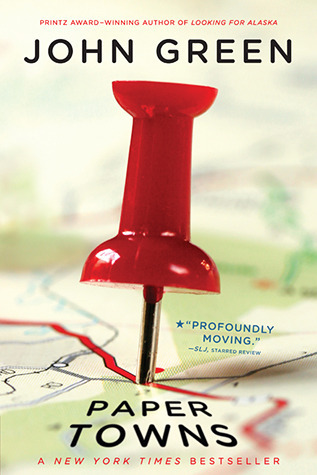
Paper Towns PDF - John Green
John Green • romantic novels • 422 Pages
(0)
Quate
Review
Save
Share
Book Description
Paper Towns by John Green is a sharply written young adult mystery novel that combines coming-of-age emotion, clever humor, friendship, romance, and a deeper reflection on how people imagine one another. Centered on Quentin “Q” Jacobsen and the unforgettable Margo Roth Spiegelman, the novel begins with the kind of teenage longing that feels familiar: Quentin has spent years admiring Margo from a distance, seeing her as adventurous, mysterious, fearless, and almost larger than life. When she unexpectedly appears at his window one night and pulls him into an elaborate late-night adventure, Quentin believes he has finally stepped into the extraordinary world he has always associated with her. But the next morning, Margo disappears, leaving behind clues that seem meant for him to follow.
As Quentin tries to understand where Margo has gone and what she wants him to discover, Paper Towns becomes much more than a search story. It is a novel about perception, projection, friendship, obsession, and the painful process of realizing that the people we admire are not always the people we have invented in our minds. John Green uses the mystery of Margo’s disappearance to explore the difference between loving an idea of someone and truly seeing them as a complicated human being. This makes the book a strong choice for readers looking for young adult fiction with emotional depth, a coming-of-age mystery, and a story that balances wit with serious questions about identity and connection.
A Coming-of-Age Story Built Around a Mystery
At the heart of Paper Towns is Quentin Jacobsen, a high school senior whose life is predictable, safe, and carefully organized. He is intelligent, observant, and loyal, but he is also deeply attached to a version of Margo that may not fully exist. Margo, by contrast, seems to represent everything Quentin thinks he lacks: boldness, freedom, spontaneity, and the courage to break the rules. Their night together feels thrilling because it briefly collapses the distance between ordinary life and the romanticized adventure Quentin has imagined for years.
When Margo vanishes, the novel shifts into a mystery driven by clues, maps, hidden meanings, and the emotional urgency of unanswered questions. Yet John Green’s approach is not simply about solving a puzzle. The real mystery is not only where Margo has gone, but who she actually is. Quentin’s search becomes an inward journey as much as an outward one, forcing him to examine his assumptions and reconsider the way he has turned Margo into a symbol rather than seeing her as a person. This gives the book its lasting emotional weight and makes it stand out among teen mystery novels and young adult coming-of-age books.
Margo Roth Spiegelman and the Problem of Being Misunderstood
Margo Roth Spiegelman is one of the most memorable figures in Paper Towns because she is presented through layers of reputation, rumor, admiration, and misunderstanding. To Quentin, she is almost mythical. To others at school, she is popular, unpredictable, and impossible to fully explain. But the novel gradually questions the fairness of these images. Margo is not merely a dream girl, a mystery to be solved, or a symbol of escape. She is a young woman resisting the roles people keep assigning to her.
This theme gives the novel a thoughtful and sometimes challenging edge. Paper Towns asks readers to consider how often people become trapped inside the stories others tell about them. Quentin’s journey is compelling because it requires him to move beyond fantasy and confront the limits of his own imagination. The book’s title connects beautifully to this idea: paper towns can suggest places that appear on maps but may not exist as expected, just as people can appear fixed and knowable in someone else’s mind while remaining far more complex in reality. For readers interested in books about identity, books about self-discovery, and YA novels about seeing people clearly, this theme is one of the novel’s strongest qualities.
Friendship, Humor, and the Energy of Senior Year
Although Paper Towns carries mystery and emotional seriousness, it is also filled with the humor, awkwardness, loyalty, and chaotic energy of teenage friendship. Quentin’s relationships with his friends bring warmth and movement to the story, keeping the novel from becoming only introspective. The conversations, jokes, road-trip energy, school routines, and senior-year anxieties all help create a vivid portrait of adolescence on the edge of change.
This balance is one of John Green’s recognizable strengths. His characters are often funny and intelligent, but they are also uncertain, flawed, and emotionally exposed. In Paper Towns, the humor does not weaken the novel’s deeper themes; instead, it makes the characters feel more alive. The friendship dynamics give readers moments of lightness while also showing how much people rely on one another during periods of confusion and transition. Readers who enjoy John Green books, YA contemporary fiction, and novels about the final stretch of high school will find this combination especially engaging.
The Meaning Behind “Paper Towns”
The phrase paper towns gives the novel one of its most important metaphors. It points toward questions of maps, reality, invention, and the distance between representation and truth. In the story, physical places matter, but so do emotional landscapes: the imagined versions of people, the false certainty of appearances, and the fragile identities built from expectations. John Green uses this concept to deepen the novel beyond a simple search for a missing girl.
For Quentin, the idea of paper towns becomes connected to the way he has mapped Margo in his mind. He believes he knows what she means, what she wants, and what her clues are trying to say. But as the novel progresses, he learns that human beings cannot be reduced to symbols, fantasies, or neat explanations. This is one of the reasons Paper Towns remains meaningful for many readers: it speaks to the universal experience of misunderstanding others and being misunderstood in return. It captures the painful but necessary realization that love, friendship, and empathy require more than admiration; they require attention, humility, and a willingness to see beyond the surface.
A John Green Novel for Readers Who Like Wit With Emotional Depth
Readers who come to Paper Towns after discovering The Fault in Our Stars, Looking for Alaska, or other works by John Green will recognize his interest in intelligent teenage characters, philosophical questions, emotional honesty, and stories that examine how young people make meaning out of uncertainty. The novel is accessible and entertaining, but it also rewards readers who enjoy symbolism, layered themes, and character-driven storytelling. It has also been recognized widely, including as a winner of the Edgar Award for Best Young Adult Mystery, and it has reached broad audiences as a bestselling novel and a major motion picture adaptation.
The book is especially suitable for readers searching for young adult mystery romance, coming-of-age fiction, books about friendship and identity, or contemporary YA novels with a road trip element. It offers suspense without becoming a conventional thriller, romance without becoming only a love story, and humor without losing sight of emotional seriousness. Its appeal lies in the way these elements work together, creating a novel that feels entertaining on the surface while raising questions that stay with the reader after the final page.
Why Paper Towns Continues to Resonate
Paper Towns continues to resonate because it understands a common but difficult truth: people are often most mysterious when we think we already know them. Quentin’s search for Margo becomes a story about growing up, not because he finds easy answers, but because he begins to understand the danger of turning another person into a dream. The novel captures the intensity of adolescence, the beauty of friendship, the pull of escape, and the moment when idealization gives way to something more honest.
For readers looking for a thoughtful young adult novel by John Green, Paper Towns offers an engaging blend of mystery, humor, emotional reflection, and literary symbolism. It is a story about clues and distance, but also about empathy and imagination. Most importantly, it is a novel about learning that real people are never as simple as the maps we draw of them.
John Green
John Green is an acclaimed American author, educator, and YouTube creator best known for his young adult novels that blend emotional depth with humor, intellect, and honesty. Born on August 24, 1977, in Indianapolis, Indiana, Green developed an early love for reading and storytelling, later graduating from Kenyon College with a degree in English and Religious Studies. His academic background and personal curiosity about life’s big questions shaped the themes that define his writing: love, loss, meaning, and the human experience.
Green’s debut novel, Looking for Alaska (2005), won the Michael L. Printz Award and quickly established him as a fresh voice in young adult literature. He followed this with other highly praised works such as An Abundance of Katherines (2006) and Paper Towns (2008), the latter of which was adapted into a successful film. However, it was The Fault in Our Stars (2012) that catapulted him to international fame. The novel, inspired by Green’s time as a student chaplain in a children’s hospital, tells the story of two teenagers with cancer and has sold millions of copies worldwide, later adapted into a hit movie.
Beyond writing, Green is also widely recognized for co-creating the YouTube channel Vlogbrothers with his brother, Hank Green. Together, they launched educational platforms like CrashCourse and SciShow, which have made learning more accessible to millions of viewers. This dual career as both a novelist and digital educator reflects his passion for connecting with audiences through multiple mediums.
John Green’s novels are celebrated for their witty dialogue, memorable characters, and thought-provoking themes that resonate with both young adults and older readers. Through his books and online presence, he has built a community of readers and learners who appreciate his ability to address life’s complexities with compassion and insight.
Earn Rewards While Reading!
Every 10 pages you read and spent 30 seconds on every page, earns you 5 reward points! Keep reading to unlock achievements and exclusive benefits.
Read
Rate Now
5 Stars
4 Stars
3 Stars
2 Stars
1 Stars
Paper Towns Quotes
Top Rated
Latest
Quate
Be the first to leave a quote and earn 10 points
instead of 3
'%20/%3e%3c/svg%3e "The Fault in Our Stars")
Comments
Be the first to leave a comment and earn 5 points
instead of 3