

The source of the book
This book is published for the public benefit under a Creative Commons license, or with the permission of the author or publisher. If you have any objections to its publication, please contact us.
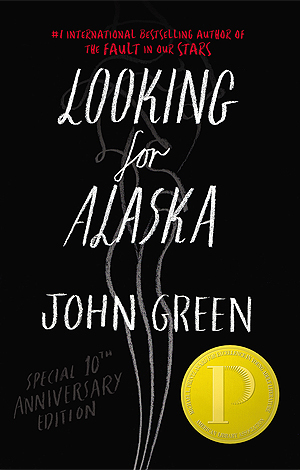
Looking for Alaska PDF - John Green
John Green • romantic novels • 305 Pages
(0)
Quate
Review
Save
Share
Book Description
Looking for Alaska by John Green is a memorable young adult contemporary novel that explores friendship, identity, longing, grief, and the difficult search for meaning during the intense years between adolescence and adulthood. First published as John Green’s debut novel, the book introduced readers to a voice that is thoughtful, funny, emotionally direct, and deeply interested in the questions young people ask when they begin to understand that life is more complicated than they expected. The novel won the 2006 Michael L. Printz Award, one of the most recognized honors in young adult literature, and remains one of Green’s most widely read and discussed works.
At the center of the story is Miles Halter, a teenager who feels trapped by the quiet predictability of his life. Fascinated by famous last words and hungry for something larger than routine, Miles leaves home for Culver Creek Preparatory School, hoping to find what François Rabelais called the “Great Perhaps.” What he discovers is not a simple adventure, but a complicated new world of friendship, risk, loyalty, first love, and emotional awakening. At Culver Creek, Miles meets a group of students who change the way he sees himself and the world around him, especially Alaska Young, a brilliant, impulsive, mysterious girl whose presence becomes impossible for him to ignore.
A Coming-of-Age Story Filled With Questions That Stay With the Reader
One of the reasons Looking for Alaska continues to resonate with readers is its honest portrayal of growing up as a confusing, exhilarating, and sometimes painful experience. John Green does not present adolescence as a simple stage of rebellion or romance. Instead, he writes about teenagers as people who are already thinking seriously about love, death, guilt, belief, desire, friendship, and the shape of a meaningful life. Miles’s journey is not only about fitting in at boarding school; it is about learning that the people who fascinate us are often more complicated than the versions we create in our imagination.
The novel’s emotional strength comes from the way it balances humor and seriousness. There are pranks, late-night conversations, inside jokes, and moments of sharp teenage energy, but beneath them is a deeper current of uncertainty. The students at Culver Creek are funny, clever, flawed, and vulnerable. They test boundaries, make mistakes, and search for connection in ways that feel recognizably human. For readers looking for a thought-provoking YA novel, Looking for Alaska offers both the immediacy of a school story and the lasting weight of a novel about memory, responsibility, and the questions that cannot be answered easily.
Miles Halter, Alaska Young, and the Mystery of Other People
Miles begins the novel as an observer. He is curious, intelligent, and socially inexperienced, someone who has spent more time reading about famous last words than building deep relationships. His move to Culver Creek gives him the chance to become part of a group, but it also exposes him to the emotional risks that come with caring about others. Through friendships with Chip “The Colonel” Martin, Takumi, Lara, and Alaska, Miles begins to understand that belonging is not just about being accepted; it is also about being changed.
Alaska Young is one of the most memorable figures in John Green’s fiction because she is written as magnetic and unreachable at the same time. She is funny, bold, intelligent, wounded, and unpredictable, and Miles is drawn to her with the intensity of someone experiencing both admiration and infatuation for the first time. Yet the novel carefully shows that fascination is not the same as understanding. Alaska is not simply a romantic ideal or a puzzle to be solved. She is a person with her own pain, contradictions, and inner life, and the gap between how Miles sees her and who she really is becomes one of the book’s most important emotional tensions.
The Boarding School Setting and the Search for Belonging
Culver Creek is more than a backdrop; it is the place where Miles’s old life gives way to a wider, more unpredictable world. The boarding school setting allows the novel to focus closely on friendship, independence, class differences, loyalty, and the private culture students build when they are living away from home. The dorm rooms, classrooms, smoking spots, pranks, and late-night conversations create an atmosphere that feels intimate and enclosed, making every emotional shift feel more immediate.
For readers who enjoy boarding school novels, teen friendship stories, and literary young adult fiction, this setting gives Looking for Alaska much of its distinctive appeal. The world of Culver Creek is full of rituals, rivalries, secrets, and emotional intensity. It captures the feeling of being young and away from home for the first time, when friendships can form quickly, choices can feel enormous, and every experience seems to carry the possibility of transformation. Miles arrives looking for adventure, but what he truly finds is a community that teaches him how complicated love, loyalty, and loss can be.
Themes of Grief, Guilt, Faith, and Meaning
Although Looking for Alaska is often remembered for its wit and romance, its lasting power comes from its deeper themes. The novel asks how people live with uncertainty, how they respond to suffering, and how they make sense of events that resist simple explanation. Miles’s fascination with last words reflects his desire to understand life by looking at its endings, but the story gradually pushes him toward harder questions. What do we owe the people we love? How do we forgive ourselves and others? Can meaning exist even when answers do not?
John Green handles these themes with a style that is accessible but emotionally serious. The novel does not offer easy solutions, and that is part of its appeal. It respects readers enough to let difficult questions remain difficult. This makes Looking for Alaska especially valuable for readers who appreciate YA books about grief, coming-of-age novels about loss, and stories that combine emotional realism with philosophical reflection. The book speaks to the experience of searching for certainty in a world where many of the most important things remain unresolved.
A Novel for Readers Who Want More Than a Simple Teen Romance
Readers who come to Looking for Alaska expecting only a teen love story will find something broader and more layered. The relationship between Miles and Alaska is central to the novel’s emotional force, but the book is equally concerned with friendship, memory, self-discovery, and the difference between loving someone and truly knowing them. Its romantic elements are powerful because they are tied to longing, projection, vulnerability, and the painful process of growing beyond fantasy.
This makes the novel a strong choice for readers who enjoy books such as literary YA fiction, emotional contemporary novels, and character-driven coming-of-age stories. It is written for young adults but has also found a wide audience among adult readers because its questions are not limited to adolescence. The desire for a “Great Perhaps,” the fear of wasting one’s life, the longing to be understood, and the struggle to live after loss are experiences that can speak to readers at many stages of life.
Why Looking for Alaska Remains a Modern YA Classic
Looking for Alaska remains widely read because it combines the energy of teenage life with the seriousness of literary reflection. John Green’s writing is direct, quotable, humorous, and emotionally open, but it is also structured around ideas that invite discussion. The novel has been taught in many school and college settings and has been published in more than thirty languages, reflecting its broad reach and continued relevance among readers around the world.
Its enduring appeal also comes from the way it refuses to simplify young people’s inner lives. The characters are messy, intelligent, selfish, loyal, confused, brave, and afraid. They do not always know how to care for one another well, but they care deeply. That honesty gives the novel its emotional credibility. It captures the feeling of being on the edge of adulthood, when every friendship can feel life-changing and every mistake can feel impossible to undo.
A Moving Story About the Great Perhaps and the Labyrinth of Life
Looking for Alaska by John Green is a powerful and reflective novel for readers who want a story about more than growing up. It is a book about searching for meaning, chasing possibility, confronting pain, and learning that other people can change us in ways we may not understand until much later. Through Miles Halter’s journey at Culver Creek and his unforgettable connection with Alaska Young, the novel explores how friendship and loss can shape a person’s understanding of life.
For readers seeking a John Green novel, a young adult coming-of-age story, a boarding school novel, or an emotional book about love, grief, and self-discovery, Looking for Alaska offers a reading experience that is both intimate and lasting. It is thoughtful without feeling distant, heartbreaking without losing its humor, and philosophical without losing sight of the messy, vivid reality of teenage life. Above all, it is a novel about the search for the “Great Perhaps” and the courage it takes to keep looking for meaning even when life gives no easy answers.
John Green
John Green is an acclaimed American author, educator, and YouTube creator best known for his young adult novels that blend emotional depth with humor, intellect, and honesty. Born on August 24, 1977, in Indianapolis, Indiana, Green developed an early love for reading and storytelling, later graduating from Kenyon College with a degree in English and Religious Studies. His academic background and personal curiosity about life’s big questions shaped the themes that define his writing: love, loss, meaning, and the human experience.
Green’s debut novel, Looking for Alaska (2005), won the Michael L. Printz Award and quickly established him as a fresh voice in young adult literature. He followed this with other highly praised works such as An Abundance of Katherines (2006) and Paper Towns (2008), the latter of which was adapted into a successful film. However, it was The Fault in Our Stars (2012) that catapulted him to international fame. The novel, inspired by Green’s time as a student chaplain in a children’s hospital, tells the story of two teenagers with cancer and has sold millions of copies worldwide, later adapted into a hit movie.
Beyond writing, Green is also widely recognized for co-creating the YouTube channel Vlogbrothers with his brother, Hank Green. Together, they launched educational platforms like CrashCourse and SciShow, which have made learning more accessible to millions of viewers. This dual career as both a novelist and digital educator reflects his passion for connecting with audiences through multiple mediums.
John Green’s novels are celebrated for their witty dialogue, memorable characters, and thought-provoking themes that resonate with both young adults and older readers. Through his books and online presence, he has built a community of readers and learners who appreciate his ability to address life’s complexities with compassion and insight.
Earn Rewards While Reading!
Every 10 pages you read and spent 30 seconds on every page, earns you 5 reward points! Keep reading to unlock achievements and exclusive benefits.
Read
Rate Now
5 Stars
4 Stars
3 Stars
2 Stars
1 Stars
Looking for Alaska Quotes
Top Rated
Latest
Quate
Be the first to leave a quote and earn 10 points
instead of 3
'%20/%3e%3c/svg%3e "The Fault in Our Stars")
Comments
Be the first to leave a comment and earn 5 points
instead of 3