

The source of the book
This book is published for the public benefit under a Creative Commons license, or with the permission of the author or publisher. If you have any objections to its publication, please contact us.
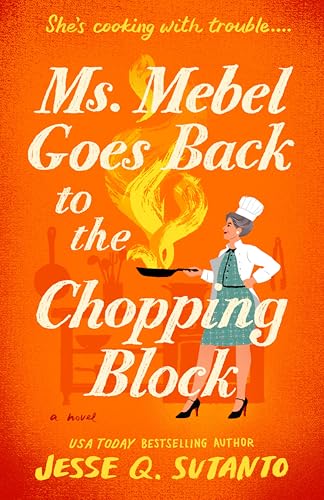
Ms. Mebel Goes Back to the Chopping Block PDF - Jesse Q. Sutanto
Jesse Q. Sutanto • Cooking • 290 Pages
(0)
Quate
Review
Save
Share
Book Description
Ms. Mebel Goes Back to the Chopping Block by Jesse Q. Sutanto is a witty, warm, and sharply observed contemporary women’s fiction novel about marriage, reinvention, food, friendship, and the surprising courage it takes to begin again later in life. Published by Berkley on April 28, 2026, the novel follows sixty-three-year-old Mebel Tanadi, a wealthy Jakarta wife whose carefully arranged life falls apart when her husband of more than forty years announces that he is leaving her for their much younger private chef. Instead of accepting defeat, Mebel decides on a dramatic solution: if her husband wants a woman who can cook, she will become one. What begins as a plan to win him back becomes a funny, tender, and empowering story about self-discovery in the most unexpected setting.
A Fresh Start Disguised as a Rescue Mission
At the beginning of Ms. Mebel Goes Back to the Chopping Block, Mebel does not imagine herself as a woman starting over. She sees herself as a wife trying to restore the life she has spent decades perfecting. Raised and shaped to be the ideal trophy wife, she has built her identity around anticipating her husband’s needs, presenting herself beautifully, and maintaining the elegant image expected of her. When that identity is suddenly rejected, her first instinct is not liberation but strategy. She decides that the best way to reclaim her marriage is to enroll in culinary school, learn to cook, and prove that she can become the kind of woman her husband apparently wants.
This setup gives the novel its comic energy, but Jesse Q. Sutanto uses the premise for more than laughs. Mebel’s plan is both ridiculous and heartbreaking because it reveals how deeply she has measured her worth through another person’s approval. Her journey begins with denial, pride, and wounded vanity, yet those flaws make her feel human rather than simple. She is not a flawless heroine waiting to be admired; she is stubborn, status-conscious, funny, anxious, and painfully unprepared for the world she is about to enter. That complexity makes the book especially appealing for readers who enjoy character-driven women’s fiction, late-life coming-of-age stories, and novels about imperfect women discovering that they are more resilient than they believed.
Culinary School, Culture Shock, and Unexpected Friendship
Mebel believes she is heading to a glamorous culinary school in France, a suitably romantic place for her grand plan of marital recovery. Instead, she discovers that she has enrolled in a sister school located in England, in a small village outside Oxford rather than in glittering Paris. The mistake strips away another layer of fantasy. She is not surrounded by luxury, admiration, or familiar social rules; she is suddenly a beginner among classmates young enough to be her grandchildren, in a competitive culinary environment where her expensive taste and social confidence do not automatically protect her.
The culinary school setting gives Ms. Mebel Goes Back to the Chopping Block its lively sense of transformation. For Mebel, learning to cook is not only about recipes, knives, sauces, or kitchen discipline. It is about entering a space where she cannot rely on the identity that once defined her. She must learn practical skills, accept embarrassment, face younger classmates who do not know what to make of her, and begin to understand herself outside the role of wife. Her friendship with Gemma, one of the program’s standout students, becomes especially important because it opens a door to connection that is not based on wealth, marriage, age, or social performance. Through this unlikely bond, the novel explores intergenerational friendship, female solidarity, and the way women at very different stages of life can recognize strength in one another.
A Funny and Emotional Novel About Reinvention
One of the strongest pleasures of Ms. Mebel Goes Back to the Chopping Block is the way it balances comedy with emotional honesty. Mebel’s situation is full of absurdity: a rich, polished, sixty-three-year-old woman who has never needed to cook suddenly tries to master culinary school because she believes food will repair a broken marriage. Yet the humor never erases the pain beneath the premise. Losing a marriage after more than four decades is not treated as a small inconvenience; it is a crisis of identity. Mebel must ask who she is when she is no longer performing the role she was trained to play.
This makes the novel a strong choice for readers looking for books about second chances, women starting over, and fiction about older female protagonists. Many stories of reinvention focus on young women at the beginning of adulthood, but Sutanto places a woman in her sixties at the center of the narrative and allows her to be funny, vain, vulnerable, romantic, angry, and open to change. Mebel’s age is not a limitation on the story’s energy. Instead, it becomes one of the book’s most refreshing elements, reminding readers that growth does not belong only to the young and that a person can discover a new version of herself even after decades of living according to old rules.
Jesse Q. Sutanto’s Signature Blend of Chaos and Heart
Fans of Jesse Q. Sutanto will recognize many qualities that have made her fiction so popular: chaotic situations, sharp comic timing, culturally specific family dynamics, and women who are pushed into uncomfortable circumstances that reveal their hidden strength. Sutanto is a USA Today bestselling author known for works such as Vera Wong’s Unsolicited Advice for Murderers and the Dial A for Aunties series, and her official author materials note that she has won the Edgar Award, Libby Award, Audies Award, and Comedy Women in Print Award.
In this novel, Sutanto turns her attention to a protagonist who could easily have been dismissed as shallow in another writer’s hands. Mebel begins the story as a woman invested in appearances, luxury, and the rules of being a perfect wife, but Sutanto gives her enough vulnerability and comic force to make her transformation compelling. The result is a story that feels both entertaining and generous. It allows Mebel to be wrong, embarrassed, and out of touch, while still giving her room to change. That balance is central to the book’s charm: it does not ask readers to admire Mebel immediately, but it invites them to watch her become someone larger than the role she once accepted.
Themes of Womanhood, Age, Food, and Self-Worth
Ms. Mebel Goes Back to the Chopping Block works beautifully as a feel-good contemporary novel because its central question is simple but powerful: what happens when the life you built for someone else disappears? Mebel’s journey through culinary school becomes a metaphor for rebuilding herself from the basics. She has to learn how to cut, cook, fail, apologize, listen, and make choices that are not entirely shaped by her husband’s desires. Food becomes more than a romantic tactic; it becomes a language of labor, confidence, creativity, and care.
The novel also explores the social expectations placed on women, especially women taught to define success through beauty, marriage, obedience, and status. Mebel’s story challenges the idea that a woman’s value expires when she is no longer chosen by a man. Her transformation is not instant or sentimental. It grows through discomfort, friendship, humiliation, curiosity, and the gradual realization that being useful to someone else is not the same as being fully alive. This gives the book emotional depth while keeping its tone accessible, humorous, and bright.
A Warm, Uplifting Read for Fans of Contemporary Fiction
For readers who enjoy Jesse Q. Sutanto books, women’s fiction with humor, culinary school novels, stories about reinvention, and uplifting fiction about friendship, Ms. Mebel Goes Back to the Chopping Block offers a satisfying blend of comedy and heart. It has the quick readability of a lighthearted novel, but its emotional concerns are meaningful: divorce, aging, gender roles, cultural expectation, loneliness, and the courage required to build a life that belongs to you.
Ultimately, Ms. Mebel Goes Back to the Chopping Block is a novel about a woman who sets out to win back her husband and begins, unexpectedly, to win back herself. Through Mebel Tanadi’s misadventures in culinary school, Jesse Q. Sutanto creates a story that is funny without being shallow, tender without being overly sentimental, and empowering without losing its comic bite. It is a deliciously engaging book about second chances, unlikely friendships, and the liberating discovery that a life can still be rewritten long after everyone else assumes the ending has already been decided.
Jesse Q. Sutanto
Jesse Q. Sutanto is a contemporary author known for energetic, genre-blending fiction that combines mystery, comedy, family drama, romance, and sharp social observation. She is best known for books such as Dial A for Aunties and Vera Wong’s Unsolicited Advice for Murderers, two novels that helped define her reputation as a writer who can turn chaotic family relationships, accidental crimes, cultural expectations, and emotional vulnerability into page-turning stories with warmth and wit. Her official press materials identify her as a USA Today bestselling author and note that she has won an Edgar Award, a Libby Award, an Audies Award, and the Comedy Women in Print Award. They also state that the film rights to Dial A for Aunties were bought by Netflix at auction, that she studied creative writing at the University of Oxford and English literature at UC Berkeley, and that she lives in Indonesia with her husband and two daughters.
What makes Jesse Q. Sutanto stand out is her ability to write books that feel light, fast, and funny while still carrying real emotional weight. Her stories often begin with a wildly entertaining premise: a date gone catastrophically wrong, a suspicious death in a tea shop, an over-involved family, or a heroine who is pulled into danger before she has time to process what is happening. Yet the humor in her work is rarely empty. Beneath the comic timing and escalating disasters, Sutanto writes about loneliness, ambition, family pressure, intergenerational misunderstanding, cultural belonging, and the deep human need to be loved without being completely controlled by the people who love us.
Her multicultural background is central to the richness of her fiction. Sutanto has described growing up between Jakarta and Singapore and considering both places home, and her publisher biographies also connect her life with Indonesia, Singapore, and Oxford. This sense of movement between places, languages, and expectations gives her novels a distinctive emotional texture. Her characters often carry more than one cultural code at once: they may be modern, independent, and ambitious, but they are also shaped by family duty, community reputation, food traditions, intimate languages of affection, and the comic intensity of relatives who believe love is best expressed through interference.
Sutanto’s fiction is especially appealing to readers who enjoy mysteries with heart. Vera Wong’s Unsolicited Advice for Murderers is a strong example of her gift for creating memorable central characters. Vera is nosy, forceful, funny, and deeply lonely, and the murder investigation becomes more than a puzzle; it becomes a way of gathering isolated people into an unexpected community. This blend of cozy mystery, humor, found family, and emotional healing explains why Sutanto’s books often appeal to readers who want suspense without losing warmth. The official Edgar Awards database lists Vera Wong’s Unsolicited Advice for Murderers as the 2024 winner for Best Paperback Original, while Penguin Random House also describes the book as an Edgar Award winner, Audie Award winner, and Libby Award winner.
At the same time, Sutanto is not limited to one category. She writes for adults, young adults, and middle-grade readers, moving between romantic comedy, mystery, psychological suspense, family fiction, and fantasy-inflected children’s stories. This flexibility is part of her strength. A reader may come to her through the bright chaos of Dial A for Aunties, the clever warmth of Vera Wong’s Unsolicited Advice for Murderers, the suspense of I’m Not Done with You Yet, or the younger-reader adventure of Theo Tan and the Fox Spirit, yet still recognize a consistent authorial personality: bold pacing, vivid relationships, culturally specific humor, and characters whose emotional messiness makes them more alive.
For book pages, library profiles, and reader discovery sections, Jesse Q. Sutanto can be described as an author who brings freshness to popular fiction by refusing to separate entertainment from identity. Her novels are funny without being shallow, suspenseful without becoming cold, and heartfelt without losing momentum. She writes families that meddle, protect, embarrass, and rescue; women who are flawed but determined; and mysteries that reveal not only secrets but hidden forms of care. Readers looking for contemporary mystery, Asian diaspora fiction, comedic crime novels, warm suspense, or character-driven popular fiction will find in her work a lively and highly readable voice with a distinctive place in modern storytelling
Earn Rewards While Reading!
Every 10 pages you read and spent 30 seconds on every page, earns you 5 reward points! Keep reading to unlock achievements and exclusive benefits.
Read
Rate Now
5 Stars
4 Stars
3 Stars
2 Stars
1 Stars
Ms. Mebel Goes Back to the Chopping Block Quotes
Top Rated
Latest
Quate
Be the first to leave a quote and earn 10 points
instead of 3
Other books by Jesse Q. Sutanto
![Vera Wong's Guide to Snooping [On a Dead Man]](data:image/svg+xml,%3csvg%20xmlns='http://www.w3.org/2000/svg'%20class='w-[200px]%20h-[400px]%20rounded'%20viewBox='0%200%20200%20400'%20preserveAspectRatio='none'%3e%3cdefs%3e%3clinearGradient%20id='shimmer'%20x1='0'%20y1='0'%20x2='100%25'%20y2='0'%3e%3cstop%20offset='0%25'%20stop-color='%23f3f4f6'%20/%3e%3cstop%20offset='50%25'%20stop-color='%23e5e7eb'%20/%3e%3cstop%20offset='100%25'%20stop-color='%23f3f4f6'%20/%3e%3canimateTransform%20attributeName='gradientTransform'%20type='translate'%20from='-1%200'%20to='1%200'%20dur='1.5s'%20repeatCount='indefinite'%20/%3e%3c/linearGradient%3e%3c/defs%3e%3crect%20x='0'%20y='0'%20width='100%25'%20height='100%25'%20rx='20'%20ry='20'%20fill='url(%23shimmer)'%20/%3e%3c/svg%3e "Vera Wong's Guide to Snooping [On a Dead Man]")
84
English
Comments
Be the first to leave a comment and earn 5 points
instead of 3