

The source of the book
This book is published for the public benefit under a Creative Commons license, or with the permission of the author or publisher. If you have any objections to its publication, please contact us.
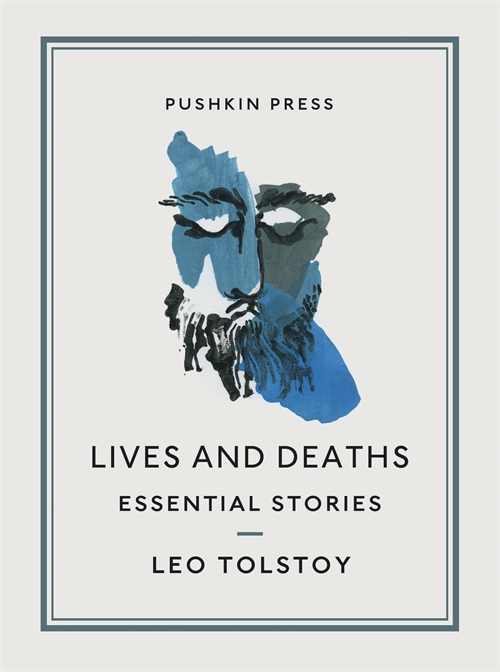
Lives and Deaths PDF - Leo Tolstoy
Leo Tolstoy • short stories • 126 Pages
(0)
Quate
Review
Save
Share
Book Description
Lives and Deaths by Leo Tolstoy: Essential Short Fiction on Mortality, Conscience, and the Human Condition
Lives and Deaths by Leo Tolstoy is a concentrated and deeply human collection of classic Russian short fiction, bringing together some of Tolstoy’s most powerful shorter works in a volume shaped around life, death, moral awakening, and the quiet truths that emerge when ordinary existence is placed under pressure. Presented in fresh English translations by Boris Dralyuk, this edition gathers four major pieces: The Death of Ivan Ilyich, Three Deaths, Pace-setter—also known through its Russian title Kholstomer—and Alyosha the Pot. Together, they offer a compact but remarkably rich introduction to Tolstoy’s genius beyond his monumental novels, showing how much emotional force, philosophical depth, and narrative clarity he could achieve in shorter forms. (PenguinRandomhouse.com)
A Powerful Collection of Tolstoy’s Shorter Masterpieces
Best known for War and Peace and Anna Karenina, Leo Tolstoy was also a master of the novella and short story, and Lives and Deaths highlights the precision of that talent. These stories do not rely on elaborate plots or dramatic spectacle; instead, they turn toward the essential experiences that define human life: ambition, fear, vanity, compassion, suffering, spiritual blindness, and the search for meaning. Tolstoy’s attention rests on small gestures, social habits, private thoughts, and moral evasions, revealing how a person’s inner life can be exposed most clearly at moments of crisis.
At the center of the collection is the question that gives the book its lasting power: what does it mean to live honestly when death is unavoidable? Tolstoy does not treat death simply as an ending, but as a mirror held up to life itself. In these stories, mortality strips away status, habit, self-deception, and social performance. A judge facing illness, a horse looking back on a life shaped by ownership and use, a humble worker moving through hardship, and contrasting scenes of dying all become part of a larger meditation on human dignity, moral truth, and the fragile boundary between a life well lived and a life merely endured.
Themes of Mortality, Morality, and Spiritual Awakening
Lives and Deaths is especially valuable for readers searching for philosophical fiction, classic literature about death, or Russian literature on the human condition. Tolstoy’s treatment of mortality is neither sentimental nor cold. He writes with intense psychological insight, showing how people avoid the truth until avoidance is no longer possible. His characters often cling to comfort, reputation, routine, or social approval, only to discover that these protections offer little when confronted with suffering, loneliness, or the final limits of the body.
In The Death of Ivan Ilyich, Tolstoy examines the terror of a man who begins to suspect that his respectable, socially successful life may have been spiritually hollow. The story is one of the most famous works of philosophical fiction because it transforms a private deathbed experience into a universal inquiry into authenticity, compassion, and self-knowledge. Without reducing the story to a lesson, Tolstoy forces readers to consider whether a life arranged around status and convenience can survive serious moral examination.
The other works deepen and widen that inquiry. Three Deaths contrasts different ways of facing the end of life, allowing Tolstoy to explore class, nature, fear, and acceptance with stark economy. Pace-setter, or Kholstomer, is remarkable for its unusual perspective, using the life of a horse to question ownership, pride, social hierarchy, and the human habit of confusing possession with meaning. Alyosha the Pot offers a quieter but equally moving portrait of humility, service, and unnoticed goodness. Across these stories, Tolstoy’s moral vision remains demanding but compassionate: he exposes human weakness while searching for the possibility of grace.
A Reading Experience That Is Clear, Intense, and Unforgettable
Readers who come to Lives and Deaths expecting the scale of Tolstoy’s great novels will find something different but no less powerful. The collection is shorter, sharper, and more immediate. Tolstoy’s prose moves with directness, yet beneath that clarity lies a vast emotional and philosophical range. He can make a sickroom feel like a courtroom of the soul, a stable yard feel like a social world, and a simple act of kindness feel more significant than wealth or reputation.
This makes the book an excellent choice for readers who want to explore Leo Tolstoy’s short stories without beginning with a long novel. It is also ideal for students, literature lovers, and reflective readers interested in classic short fiction, existential literature, moral philosophy in fiction, and nineteenth-century Russian literature. The stories are accessible in length but profound in effect, inviting slow reading and rereading. Each piece can be appreciated on its own, yet together they create a unified meditation on what people value, what they fear, and what remains when illusions fall away.
The translation by Boris Dralyuk gives this edition a contemporary freshness while preserving the seriousness and restraint that make Tolstoy’s fiction so enduring. The publisher presents the book as fresh translations of four of Tolstoy’s richest shorter works, emphasizing the economy with which Tolstoy renders the passions and conflicts of a life. (PenguinRandomhouse.com)
Why Lives and Deaths Remains Relevant
The lasting appeal of Lives and Deaths lies in its refusal to let readers remain passive. Tolstoy’s stories ask direct but uncomfortable questions: Are we living according to truth or according to appearances? Do we recognize the suffering of others, or only our own inconvenience? What do ambition, property, rank, and comfort amount to when measured against compassion, honesty, and the reality of death? These questions remain urgent because they are not tied to one century or one society. They belong to every life.
For modern readers, the collection feels surprisingly intimate. Tolstoy’s characters may inhabit the social world of nineteenth-century Russia, but their fears and self-deceptions are familiar. They worry about success, respectability, pain, aging, dependence, love, and whether anyone truly sees them. Tolstoy’s greatness lies in making these concerns feel both personal and universal. He does not merely describe people; he reveals the moral drama hidden inside ordinary life.
A Meaningful Choice for Readers of Classic Literature
Lives and Deaths by Leo Tolstoy is a profound and rewarding book for anyone interested in literary classics that combine storytelling with spiritual and philosophical depth. It offers an essential view of Tolstoy as a writer of shorter fiction: precise, searching, unsparing, and deeply humane. For readers of Russian classics, short story collections, literary fiction about mortality, and books that explore the meaning of life, this volume provides a powerful encounter with one of world literature’s most important voices.
More than a collection about dying, Lives and Deaths is a collection about how to live. Through illness, memory, humility, fear, vanity, and compassion, Tolstoy shows that the measure of a life is not found in public success or outward comfort, but in the difficult inward movement toward truth. These stories remain memorable because they do what the best classic literature has always done: they make the reader look again at life itself, with greater seriousness, greater tenderness, and a sharper awareness of what truly matters.
Leo Tolstoy
Leo Tolstoy is one of the most influential writers in world literature, a Russian novelist, moral thinker, and social critic whose work helped define the possibilities of the modern novel. Born into an aristocratic family in Russia, he grew up close to the rural estate life that later became central to his imagination, his ethical concerns, and his understanding of class, labor, family, faith, and personal responsibility. Tolstoy is best known for the monumental novels War and Peace and Anna Karenina, two works that continue to stand among the highest achievements of literary realism. His fiction is celebrated not merely for its scale, but for its extraordinary ability to portray human consciousness, social pressure, moral confusion, and the hidden movement of history through the lives of individuals. In War and Peace, Tolstoy transforms the historical novel into a vast meditation on war, fate, leadership, memory, and ordinary human experience. He portrays the Napoleonic era not as a simple sequence of heroic decisions, but as a complex web of personal choices, accidents, social customs, emotions, and forces beyond the control of any single ruler or general. In Anna Karenina, he offers one of literature’s most penetrating studies of love, marriage, desire, jealousy, social judgment, and spiritual hunger, creating characters whose inner lives feel immediate, contradictory, and painfully human. Tolstoy’s narrative style combines simplicity with depth: he can describe a ballroom, a battlefield, a family quarrel, a harvest, or a moment of private doubt with such precision that each scene becomes a window into moral and psychological truth. His characters are memorable because they are never reduced to symbols; they change, hesitate, deceive themselves, seek forgiveness, suffer, and grow. Beyond his novels, Tolstoy wrote short fiction, essays, autobiographical works, religious reflections, and educational writings that reveal a lifelong struggle to reconcile art, conscience, and everyday life. In his later years, he became increasingly concerned with questions of nonviolence, poverty, property, organized religion, and the ethical meaning of Christianity. His critique of violence and his insistence on moral self-examination influenced readers far beyond Russia and helped shape later discussions of peaceful resistance, social reform, and spiritual simplicity. As an author for book lovers, Tolstoy remains essential because his works speak to both private feeling and public history. He examines the intimate life of families while also asking how nations move toward war, how societies punish those who break their rules, and how individuals can live truthfully in a world built on pride, ambition, and illusion. His influence can be felt in modern realism, psychological fiction, historical narrative, philosophical literature, and moral essays. Readers return to Tolstoy because his books do not offer easy answers; they invite deep attention to life itself. He writes about birth, death, love, work, faith, conflict, and forgiveness with a seriousness that makes ordinary experience feel immense. Leo Tolstoy’s legacy endures because he created literature that is both artistically powerful and ethically demanding, literature that asks every generation to reconsider what it means to live honestly, love responsibly, and search for meaning in a complicated world.
Earn Rewards While Reading!
Every 10 pages you read and spent 30 seconds on every page, earns you 5 reward points! Keep reading to unlock achievements and exclusive benefits.
Read
Rate Now
5 Stars
4 Stars
3 Stars
2 Stars
1 Stars
Lives and Deaths Quotes
Top Rated
Latest
Quate
Be the first to leave a quote and earn 10 points
instead of 3
'%20/%3e%3c/svg%3e "War and Peace")
Comments
Be the first to leave a comment and earn 5 points
instead of 3