

The source of the book
This book is published for the public benefit under a Creative Commons license, or with the permission of the author or publisher. If you have any objections to its publication, please contact us.
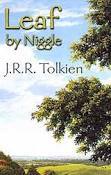
Leaf by Niggle PDF - J. R. R. Tolkien
J. R. R. Tolkien • short stories • 20 Pages
(0)
Quate
Review
Save
Share
Book Description
Leaf by Niggle by J. R. R. Tolkien
Leaf by Niggle by J. R. R. Tolkien is a thoughtful and imaginative short story that blends fantasy, allegory, and philosophical reflection into a deeply memorable reading experience. Originally published in 1945, this classic work reveals a different side of Tolkien’s literary voice beyond the epic scale of The Lord of the Rings. Though brief in length, the story carries emotional depth, symbolic meaning, and spiritual themes that continue to resonate with readers around the world.
Centered around the character Niggle, an artist obsessed with painting a vast tree filled with endless detail, the narrative explores creativity, duty, mortality, imagination, and the search for meaning. Tolkien transforms an apparently simple fantasy tale into a profound meditation on the struggles of artistic creation and the tension between everyday responsibilities and personal dreams. Readers interested in literary fantasy, symbolic fiction, philosophical storytelling, and classic twentieth-century literature will find this work especially rewarding.
A Story About Art, Imagination, and Human Purpose
At the heart of Leaf by Niggle is the image of a painter trying to complete his greatest work. Niggle dreams of creating a magnificent tree, yet he continually becomes distracted by practical concerns, interruptions, and obligations to others. This central conflict gives the story a universal emotional power, as it reflects experiences familiar to many readers: unfinished ambitions, limited time, creative frustration, and the challenge of balancing personal passion with ordinary life.
Tolkien uses fantasy elements not for spectacle alone, but as tools to explore deeply human questions. The story gradually unfolds into an allegorical journey that touches on life, death, responsibility, compassion, and redemption. The quiet emotional tone and reflective pacing create a reading experience that feels both intimate and timeless.
Unlike large-scale fantasy adventures filled with battles and kingdoms, Leaf by Niggle focuses on inner transformation and emotional insight. Its simplicity allows Tolkien’s ideas to emerge with remarkable clarity, making the story approachable for both longtime fantasy readers and those discovering literary allegory for the first time.
Tolkien’s Personal and Literary Influences
Many readers and literary scholars view Leaf by Niggle as one of Tolkien’s most personal works. The story is often interpreted as reflecting Tolkien’s own experiences as a writer and academic, particularly his concerns about unfinished work, creative perfectionism, and the pressure of daily responsibilities. This autobiographical dimension adds another layer of richness for readers interested in Tolkien’s life and artistic philosophy.
Fans of The Lord of the Rings and The Hobbit may recognize Tolkien’s distinctive prose style, attention to detail, and fascination with moral and spiritual themes. However, Leaf by Niggle stands apart through its quiet intimacy and symbolic depth. It offers insight into Tolkien not only as a world-builder, but also as a reflective thinker concerned with creativity, grace, and the meaning of human effort.
The story has become an important text in discussions of Tolkien’s theology, literary symbolism, and artistic worldview. Readers interested in Christian allegory, mythopoeic literature, and philosophical fantasy often consider it one of his most intellectually rewarding shorter works.
Themes That Continue to Resonate
One of the reasons Leaf by Niggle remains widely read decades after publication is its emotional universality. Tolkien addresses themes that transcend genre fiction and speak directly to readers across generations.
The theme of unfinished work is especially powerful. Niggle’s struggle to complete his painting mirrors the anxieties many people feel about their own ambitions and limitations. The story also explores the value of kindness and community through Niggle’s relationship with his neighbor Parish, showing how compassion and patience shape human experience.
Another major theme is the idea that small acts and incomplete efforts may still hold lasting value. Tolkien presents creativity not merely as personal achievement, but as something connected to beauty, service, and transcendence. This gives the narrative a reflective and hopeful tone that many readers find comforting and inspiring.
The symbolic journey within the story also encourages interpretation and discussion, making the work popular among students, literary critics, book clubs, and readers interested in deeper philosophical fiction.
Writing Style and Reading Experience
Tolkien’s prose in Leaf by Niggle is elegant, restrained, and richly atmospheric. The language balances simplicity with symbolic resonance, allowing readers to engage with the story on multiple levels. Some readers experience it primarily as a touching fantasy tale, while others uncover layers of allegorical and spiritual meaning through closer reading.
Because the work is relatively short, it is often recommended for readers seeking meaningful classic literature that can be read in a single sitting yet contemplated long afterward. Its concise structure makes it ideal for academic study, literary discussion, or reflective personal reading.
The story appeals strongly to fans of classic fantasy literature, literary allegory, mythic storytelling, philosophical fiction, and introspective narratives. It is also frequently recommended to writers, artists, and creative individuals who relate to the emotional realities of artistic ambition and self-doubt.
Why Readers Continue to Discover Leaf by Niggle
Decades after its original publication, Leaf by Niggle continues to attract new readers because of its emotional honesty and symbolic richness. Tolkien’s ability to combine fantasy with philosophical reflection gives the story enduring literary significance. Whether approached as an allegory, a meditation on creativity, or a deeply personal work from one of fantasy literature’s greatest authors, the book offers a rewarding and memorable experience.
For readers exploring Tolkien’s lesser-known writings, Leaf by Niggle provides an excellent introduction to the more reflective and spiritual dimensions of his work. It stands as a remarkable example of short fantasy fiction that achieves emotional depth without relying on epic scale or dramatic action.
The story remains especially meaningful for readers interested in creativity, imagination, purpose, and the quiet beauty found within unfinished human efforts.
J. R. R. Tolkien
John Ronald Reuel Tolkien (1892-1973) was an English writer, poet, and philologist best known for his works of high fantasy, including The Hobbit, The Lord of the Rings, and The Silmarillion. He was born in South Africa and raised in England, where he studied at Oxford University and later became a professor of Anglo-Saxon and English at the same institution.
Tolkien began writing stories as a child, and his love of language and mythology would later influence his fictional works. His first published work was a poem called "Goblin Feet" in the literary magazine Oxford Poetry in 1915. During World War I, Tolkien served in the British Army and later returned to academia.
In the 1930s, Tolkien began working on The Hobbit, a children's book that would eventually become a classic of fantasy literature. Published in 1937, The Hobbit tells the story of a hobbit named Bilbo Baggins who embarks on a quest to help a group of dwarves reclaim their treasure from a dragon.
Tolkien's next major work was The Lord of the Rings, a trilogy published in the mid-1950s that continues the story of Middle-earth, the setting of The Hobbit. The books follow the quest of hobbit Frodo Baggins to destroy the One Ring, a powerful artifact created by the dark lord Sauron to conquer Middle-earth.
Tolkien also worked on other stories set in Middle-earth, including The Silmarillion, which tells the history of the world and the creation of the first elves, and various unfinished tales collected in Unfinished Tales of Númenor and Middle-earth.
Tolkien's work has had a significant impact on the fantasy genre, with many authors citing him as a major influence. The popularity of his works has also led to adaptations in other media, including films, television series, and video games.
In addition to his writing, Tolkien was a respected scholar of language and literature, with a particular interest in Old English and Norse mythology. His academic work includes editions of medieval texts and a seminal lecture series on Beowulf, which has been published as a book.
Earn Rewards While Reading!
Every 10 pages you read and spent 30 seconds on every page, earns you 5 reward points! Keep reading to unlock achievements and exclusive benefits.
Read
Rate Now
5 Stars
4 Stars
3 Stars
2 Stars
1 Stars
Leaf by Niggle Quotes
Top Rated
Latest
Quate
Be the first to leave a quote and earn 10 points
instead of 3
'%20/%3e%3c/svg%3e "The Children of Hurin")
Comments
Be the first to leave a comment and earn 5 points
instead of 3