

The source of the book
This book is published for the public benefit under a Creative Commons license, or with the permission of the author or publisher. If you have any objections to its publication, please contact us.
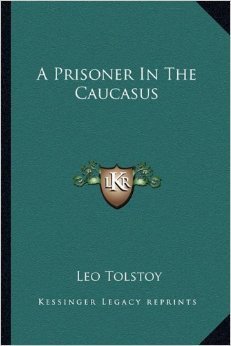
La tormenta de nieve PDF - Leo Tolstoy
Leo Tolstoy • short stories • 50 Pages
(0)
Quate
Review
Save
Share
Book Description
A Prisoner in the Caucasus by Leo Tolstoy: A Classic Story of Captivity, Courage, and Human Compassion
A Prisoner in the Caucasus by Leo Tolstoy is a powerful work of classic Russian literature that brings together adventure, moral reflection, and Tolstoy’s unmistakable gift for realistic storytelling. Also translated under titles such as The Prisoner of the Caucasus, this 1872 story follows a Russian soldier captured in the Caucasus and forced to confront fear, isolation, danger, and the uncertain mercy of those who hold him prisoner. Written in clear, direct prose, the story is known for its accessible style, vivid setting, and strong emotional impact, making it an excellent introduction to Leo Tolstoy’s short fiction as well as a meaningful read for anyone interested in classic literature, war stories, and human resilience. (Wikipedia)
A Gripping Tolstoy Story Set in the Caucasus
At the center of A Prisoner in the Caucasus is the experience of captivity in a tense and unfamiliar landscape. Tolstoy places the reader in a world shaped by military conflict, harsh terrain, cultural distance, and the constant struggle for survival. The story begins with the atmosphere of danger surrounding soldiers stationed in the Caucasus, where travel, duty, and personal fate can change suddenly. When the main character is taken prisoner, the narrative shifts from movement and expectation to confinement, uncertainty, and the urgent question of whether escape is possible.
Rather than turning the story into a simple tale of enemies and heroes, Leo Tolstoy gives the situation moral depth. The captive soldier must use courage, patience, intelligence, and emotional strength, but he must also learn to observe the people around him with greater care. The captors are not presented as flat figures of threat alone; they belong to families, homes, customs, and personal loyalties. This human dimension gives the story its lasting power. Readers looking for a classic adventure story by Tolstoy will find suspense and danger, but they will also find a thoughtful exploration of fear, kindness, pride, endurance, and the unexpected bonds that can form across conflict.
Themes of Survival, Freedom, and Moral Character
One of the strongest themes in A Prisoner in the Caucasus is the meaning of freedom. For the prisoner, freedom is not an abstract idea but a daily physical and emotional need. Every sound, movement, conversation, and opportunity becomes part of the struggle to return to life beyond captivity. Tolstoy makes the reader feel the pressure of time and uncertainty without relying on exaggeration. The suspense grows from practical details: the guarded spaces, the difficult landscape, the limits of the body, and the danger of trusting the wrong moment.
The story also contrasts different forms of character under pressure. In captivity, a person’s habits, fears, discipline, and hope become visible. Tolstoy is especially interested in how people respond when comfort and social status disappear. Courage in this story is not only physical bravery; it is also resourcefulness, self-control, and the refusal to surrender inwardly. This makes A Prisoner in the Caucasus a compelling choice for readers interested in classic stories about resilience, moral courage, and the psychology of survival.
Tolstoy’s Realism in a Short and Accessible Form
Although Leo Tolstoy is often associated with large masterpieces such as War and Peace and Anna Karenina, his shorter works show the same concern with moral truth, human behavior, and the details of ordinary experience. In A Prisoner in the Caucasus, Tolstoy’s realism appears through simple but precise scenes: the movement of soldiers through dangerous territory, the daily life of the captors, the emotional changes of the prisoner, and the quiet gestures that reveal sympathy or suspicion. The result is a story that feels direct, readable, and memorable without losing literary depth.
This accessible quality makes the book especially valuable for readers who want to begin reading Tolstoy in English translation but may not yet be ready for his longest novels. The prose is clear, the plot is focused, and the emotional stakes are easy to understand, yet the story still carries the philosophical seriousness associated with Tolstoy’s name. For students, general readers, and fans of 19th-century Russian literature, A Prisoner in the Caucasus offers a compact but rich example of Tolstoy’s narrative art.
A Story of Conflict Without Simple Hatred
A major reason the story continues to matter is its refusal to reduce human beings to political or military categories. The setting is shaped by conflict, and the prisoner’s danger is real, but Tolstoy pays close attention to individual behavior. A child’s curiosity, a captor’s authority, a prisoner’s determination, and a moment of sympathy all complicate the emotional landscape. This gives the work a humane quality that reaches beyond its historical setting.
Readers searching for Russian war literature, Caucasus fiction, or classic captivity narratives will find that Tolstoy’s story is not merely about imprisonment. It is about how people see one another when fear and necessity stand between them. The prisoner wants escape, the captors want ransom or control, and yet daily contact creates moments in which humanity becomes visible. Tolstoy’s moral vision depends on these moments: small acts and choices that reveal the soul more clearly than speeches or dramatic declarations.
Why Read A Prisoner in the Caucasus?
A Prisoner in the Caucasus by Leo Tolstoy is ideal for readers who enjoy meaningful classic fiction with a strong narrative drive. It has the movement and tension of an adventure tale, the emotional clarity of a moral fable, and the psychological insight of literary realism. Because it is shorter and more direct than Tolstoy’s major novels, it can be read as a standalone classic or as part of a wider journey through his works.
The book is also valuable for readers interested in themes such as captivity and escape, war and humanity, cross-cultural encounter, personal courage, and the moral choices made under pressure. Its setting in the Caucasus gives it a distinctive atmosphere, while its central questions remain universal. What keeps a person hopeful in danger? What separates courage from recklessness? Can compassion appear even in a relationship shaped by conflict? Tolstoy does not answer these questions through abstract argument; he lets the story unfold through action, observation, and character.
A Meaningful Classic for Modern Readers
Modern readers can approach A Prisoner in the Caucasus as both a historical classic and a timeless human story. Its world belongs to the 19th century, but its emotional concerns remain familiar: fear of being powerless, longing for home, the need to think clearly under pressure, and the surprising importance of kindness in hostile circumstances. Tolstoy’s ability to combine simplicity with depth gives the story a lasting freshness. It can be read quickly, but it invites reflection long after the final page.
For anyone building a collection of classic Russian books, exploring Leo Tolstoy’s short stories, or looking for a concise literary work with suspense, moral weight, and emotional humanity, A Prisoner in the Caucasus is a rewarding choice. It shows Tolstoy’s talent for turning a dramatic situation into a study of character, and it reminds readers why his work continues to be read across languages and generations.
Leo Tolstoy
Leo Tolstoy is one of the most influential writers in world literature, a Russian novelist, moral thinker, and social critic whose work helped define the possibilities of the modern novel. Born into an aristocratic family in Russia, he grew up close to the rural estate life that later became central to his imagination, his ethical concerns, and his understanding of class, labor, family, faith, and personal responsibility. Tolstoy is best known for the monumental novels War and Peace and Anna Karenina, two works that continue to stand among the highest achievements of literary realism. His fiction is celebrated not merely for its scale, but for its extraordinary ability to portray human consciousness, social pressure, moral confusion, and the hidden movement of history through the lives of individuals. In War and Peace, Tolstoy transforms the historical novel into a vast meditation on war, fate, leadership, memory, and ordinary human experience. He portrays the Napoleonic era not as a simple sequence of heroic decisions, but as a complex web of personal choices, accidents, social customs, emotions, and forces beyond the control of any single ruler or general. In Anna Karenina, he offers one of literature’s most penetrating studies of love, marriage, desire, jealousy, social judgment, and spiritual hunger, creating characters whose inner lives feel immediate, contradictory, and painfully human. Tolstoy’s narrative style combines simplicity with depth: he can describe a ballroom, a battlefield, a family quarrel, a harvest, or a moment of private doubt with such precision that each scene becomes a window into moral and psychological truth. His characters are memorable because they are never reduced to symbols; they change, hesitate, deceive themselves, seek forgiveness, suffer, and grow. Beyond his novels, Tolstoy wrote short fiction, essays, autobiographical works, religious reflections, and educational writings that reveal a lifelong struggle to reconcile art, conscience, and everyday life. In his later years, he became increasingly concerned with questions of nonviolence, poverty, property, organized religion, and the ethical meaning of Christianity. His critique of violence and his insistence on moral self-examination influenced readers far beyond Russia and helped shape later discussions of peaceful resistance, social reform, and spiritual simplicity. As an author for book lovers, Tolstoy remains essential because his works speak to both private feeling and public history. He examines the intimate life of families while also asking how nations move toward war, how societies punish those who break their rules, and how individuals can live truthfully in a world built on pride, ambition, and illusion. His influence can be felt in modern realism, psychological fiction, historical narrative, philosophical literature, and moral essays. Readers return to Tolstoy because his books do not offer easy answers; they invite deep attention to life itself. He writes about birth, death, love, work, faith, conflict, and forgiveness with a seriousness that makes ordinary experience feel immense. Leo Tolstoy’s legacy endures because he created literature that is both artistically powerful and ethically demanding, literature that asks every generation to reconsider what it means to live honestly, love responsibly, and search for meaning in a complicated world.
Earn Rewards While Reading!
Every 10 pages you read and spent 30 seconds on every page, earns you 5 reward points! Keep reading to unlock achievements and exclusive benefits.
Read
Rate Now
5 Stars
4 Stars
3 Stars
2 Stars
1 Stars
La tormenta de nieve Quotes
Top Rated
Latest
Quate
Be the first to leave a quote and earn 10 points
instead of 3
'%20/%3e%3c/svg%3e "War and Peace")
Comments
Be the first to leave a comment and earn 5 points
instead of 3