

The source of the book
This book is published for the public benefit under a Creative Commons license, or with the permission of the author or publisher. If you have any objections to its publication, please contact us.
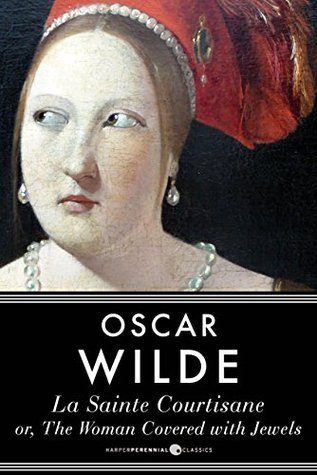
La Sainte Courtisane or The Woman Covered with Jewels PDF - Oscar Wilde
Oscar Wilde • Drama novels • 18 Pages
(0)
Quate
Review
Save
Share
Book Description
La Sainte Courtisane or The Woman Covered with Jewels is one of the most intriguing dramatic fragments by Oscar Wilde, a brief but richly suggestive work that brings together religious temptation, aesthetic beauty, spiritual longing, and Wilde’s unmistakable fascination with paradox. Unlike the social comedies for which Wilde is most widely celebrated, this unfinished play belongs to the more symbolic and poetic side of his writing, standing close in atmosphere to Salomé and to the author’s lifelong exploration of desire, faith, performance, and transformation.
The play centers on Myrrhina, a beautiful and wealthy Alexandrian woman, and Honorius, a Christian hermit who has withdrawn from the world into the desert. Myrrhina comes adorned with jewels and worldly allure, intending to tempt the holy man away from his life of renunciation. Yet the encounter soon becomes more complex than a simple struggle between sensual pleasure and religious devotion. In true Wildean fashion, the seducer and the saint do not remain fixed in their expected roles. The drama turns on the unstable boundary between holiness and desire, suggesting that belief, beauty, temptation, and surrender may be more closely connected than they first appear.
An Unfinished Oscar Wilde Play with a Fascinating History
Part of the lasting appeal of La Sainte Courtisane lies in its fragmentary form. Wilde is believed to have written the play in the 1890s, and the surviving text was published posthumously in 1908 by Robert Ross, Wilde’s literary executor. The work has a famous literary history: the manuscript was reportedly left in a cab and never recovered, leaving readers with only fragments of what may once have been a nearly completed drama.
That incompleteness gives the play a special atmosphere. Rather than feeling merely unfinished, The Woman Covered with Jewels reads like a luminous remnant from a lost theatrical world. Every line carries the pressure of something larger: a missing drama of conversion, seduction, reversal, and mystical longing. For readers interested in Oscar Wilde’s plays, Victorian drama, symbolist theatre, or the lesser-known works of major literary figures, this text offers a rare glimpse into a Wilde who is more solemn, ritualistic, and spiritually charged than the epigrammatic wit of his society comedies.
Beauty, Temptation, and Spiritual Reversal
At the heart of La Sainte Courtisane is one of Wilde’s most characteristic themes: the transformation that occurs when one person tries to convert another. Myrrhina arrives as a figure of luxury and sensual power, but her encounter with Honorius disrupts both her purpose and his certainty. The jeweled woman is not presented simply as sin, nor is the hermit presented simply as virtue. Instead, Wilde creates a dramatic situation in which each character becomes vulnerable to the other’s vision of life.
This makes the play especially compelling for readers drawn to religious symbolism in literature, decadent writing, and the conflict between body and soul. Wilde does not reduce the story to a moral lesson. He is more interested in contradiction: the saint may be tempted by the world, while the courtesan may be awakened to the divine. The result is a work that feels both theatrical and philosophical, using spare dramatic action to explore questions of identity, belief, longing, and the cost of persuasion.
A Poetic and Symbolist Reading Experience
Readers expecting the sparkling social satire of The Importance of Being Earnest or Lady Windermere’s Fan will find a very different Wilde here. La Sainte Courtisane is written in a more elevated, poetic mode, shaped by atmosphere, image, and symbolic contrast. The desert setting, the jeweled body of Myrrhina, the isolated figure of Honorius, and the language of temptation and revelation all give the play a ritual quality. It is less a realistic drama than a symbolic encounter between two ways of seeing the world.
This makes the work particularly valuable for those exploring Oscar Wilde’s symbolist phase, his interest in biblical and legendary subjects, and his ability to transform moral conflict into art. The play’s language has the ornamental quality associated with Wilde’s aesthetic imagination, yet its emotional center is serious. It invites slow reading, not because the fragment is long, but because its images and reversals continue to resonate beyond the page.
Why This Fragment Matters in Wilde’s Work
Although La Sainte Courtisane or The Woman Covered with Jewels is not as famous as The Picture of Dorian Gray, Salomé, or Wilde’s celebrated comedies, it occupies an important place for readers who want a fuller understanding of his literary range. It shows Wilde moving beyond drawing-room wit into a mode of dramatic myth, where characters become embodiments of spiritual and sensual forces. The work also reveals his recurring interest in the instability of moral categories: purity may contain desire, temptation may lead to revelation, and beauty may become a path toward either loss or illumination.
The play is also meaningful because it reflects the late-nineteenth-century fascination with saints, courtesans, deserts, jewels, martyrdom, and conversion. These elements were central to the decadent and symbolist imagination, and Wilde handles them with his distinctive mixture of elegance and irony. Even in fragmentary form, the drama feels complete enough to suggest its central idea, while incomplete enough to leave readers wondering what shape the lost whole might have taken.
Who Should Read La Sainte Courtisane?
La Sainte Courtisane is an ideal choice for readers who already admire Oscar Wilde and want to discover one of his more unusual works. It will especially appeal to those interested in classic literature, short plays, unfinished literary works, Victorian theatre, decadent literature, and symbolist drama. Because the text is brief, it can be read quickly, but its themes reward deeper reflection, making it suitable for students, scholars, theatre enthusiasts, and readers who enjoy literary fragments with a strong historical aura.
It is also a valuable companion to Salomé, since both works reveal Wilde’s attraction to biblical atmosphere, stylized dialogue, sensual imagery, and fatal spiritual drama. Readers interested in the contrast between Wilde’s public reputation as a master of comedy and his private artistic interest in beauty, suffering, faith, and transgression will find this fragment especially revealing.
A Luminous Fragment of Desire and Faith
La Sainte Courtisane or The Woman Covered with Jewels remains powerful precisely because it is incomplete. Its missing portions create a sense of mystery, while the surviving text preserves the intensity of Wilde’s imagination at its most symbolic and paradoxical. Through Myrrhina and Honorius, Wilde stages a haunting encounter between luxury and renunciation, seduction and belief, the body and the soul.
For anyone seeking a deeper view of Oscar Wilde’s literary world, this unfinished play offers more than a curiosity. It is a concentrated example of his ability to turn contradiction into beauty and moral conflict into art. Elegant, strange, spiritual, and sensuous, The Woman Covered with Jewels continues to invite readers into the unresolved brilliance of a drama that was partly lost, yet never entirely silenced.
Oscar Wilde
Oscar Wilde (1854-1900) was an Irish playwright, poet, and novelist who is widely regarded as one of the greatest writers of the Victorian era. He was born in Dublin, Ireland, and educated at Trinity College, Dublin, and Magdalen College, Oxford. Wilde was a flamboyant figure in Victorian society, known for his wit, dandyism, and homosexuality, which was then considered a crime.
Wilde's literary career began in the 1880s, when he gained popularity with his comedic plays, including "Lady Windermere's Fan," "A Woman of No Importance," and "The Importance of Being Earnest." These plays were known for their clever wordplay, social commentary, and satirical portrayal of Victorian society.
In addition to his plays, Wilde also wrote novels, including "The Picture of Dorian Gray," which tells the story of a beautiful young man who makes a Faustian pact to remain young and beautiful while his portrait ages and becomes ugly. The novel caused controversy when it was first published in 1890 because of its decadent themes and homoerotic undertones.
Despite his literary success, Wilde's personal life was tumultuous. In 1895, he was convicted of homosexual acts and sentenced to two years of hard labor. The trial and subsequent imprisonment destroyed his reputation and health, and he died in Paris in 1900, at the age of 46.
Wilde's legacy lives on through his works, which continue to be celebrated for their wit, humor, and social commentary. His writing has influenced generations of writers, and his plays continue to be performed and adapted for film and television. Today, Wilde is remembered not only as a great writer, but also as a symbol of resistance against Victorian moralism and hypocrisy.
Earn Rewards While Reading!
Every 10 pages you read and spent 30 seconds on every page, earns you 5 reward points! Keep reading to unlock achievements and exclusive benefits.
Read
Rate Now
5 Stars
4 Stars
3 Stars
2 Stars
1 Stars
La Sainte Courtisane or The Woman Covered with Jewels Quotes
Top Rated
Latest
Quate
Be the first to leave a quote and earn 10 points
instead of 3
'%20/%3e%3c/svg%3e "A Florentine Tragedy")
Comments
Be the first to leave a comment and earn 5 points
instead of 3