

The source of the book
This book is published for the public benefit under a Creative Commons license, or with the permission of the author or publisher. If you have any objections to its publication, please contact us.
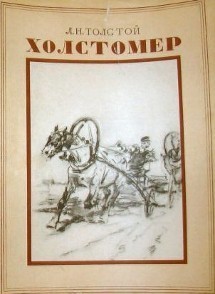
Kholstomer PDF - Leo Tolstoy
Leo Tolstoy • literature • 56 Pages
(0)
Quate
Review
Save
Share
Book Description
Kholstomer by Leo Tolstoy: A Powerful Story of a Horse and the Human Condition
Kholstomer by Leo Tolstoy, also known in English as Strider: The Story of a Horse, is one of Tolstoy’s most unusual and memorable works of short fiction. Through the life and consciousness of an aging horse, Tolstoy creates a deeply moving literary portrait of society, pride, ownership, cruelty, freedom, and moral blindness. Although the story is centered on a horse, its true subject is the human world: the rules people invent, the values they defend, and the suffering they often fail to notice.
Written with Tolstoy’s characteristic clarity and moral force, Kholstomer transforms a simple animal narrative into a profound reflection on class, possession, identity, and compassion. The horse Kholstomer is not merely a symbol or background figure; he becomes the emotional and philosophical center of the story. Through his perspective, familiar human customs begin to appear strange, irrational, and sometimes cruel. This makes the book especially compelling for readers interested in classic Russian literature, philosophical fiction, animal stories with deeper meaning, and the shorter works of Leo Tolstoy.
A Classic Tolstoy Story Told from an Unforgettable Perspective
At the heart of Kholstomer is the life of an old piebald horse who has endured rejection, labor, neglect, and misunderstanding. Tolstoy gives this horse a voice of memory and observation, allowing readers to see both the stable and the human world from an angle that feels fresh, unsettling, and emotionally powerful. The result is not a sentimental animal tale, but a work of literary realism shaped by irony, tenderness, and moral intelligence.
Kholstomer’s unusual appearance and status set him apart from the other horses, making him an outsider among both animals and humans. His difference becomes one of the story’s central concerns. Tolstoy uses the horse’s life to explore how societies define value, how living beings are judged by usefulness or beauty, and how easily injustice can be hidden behind ordinary habits. Readers who come to the book expecting a simple story about a horse often discover instead a sharp and compassionate examination of human vanity, social hierarchy, and the illusion of possession.
Themes of Ownership, Freedom, and Human Vanity
One of the most important themes in Kholstomer is ownership. Tolstoy questions what it means for one being to claim another, and he does so through the innocent but piercing logic of a horse who cannot understand why humans speak of “my horse,” “my land,” or “my property” as if such words could truly define life. This perspective allows Tolstoy to expose the absurdity and violence that can lie beneath accepted social customs.
The story also contrasts inner worth with outward status. Kholstomer may be dismissed because of his body, color, age, or condition, yet his memories reveal dignity, strength, sensitivity, and intelligence. Human characters, by contrast, often appear trapped by pride, desire, rank, and self-importance. Through this reversal, Tolstoy invites readers to ask which qualities truly make a life noble. Is nobility found in title, wealth, and appearance, or in endurance, honesty, and the capacity to suffer without hatred?
These themes make Kholstomer by Leo Tolstoy especially valuable for readers searching for literary classics about morality, stories about animals and society, or short philosophical fiction. The book speaks to questions that remain relevant: how we treat the vulnerable, how we judge those who are different, and how language can make injustice seem natural.
The Reading Experience: Quiet, Sharp, and Deeply Moving
The power of Kholstomer lies in its balance of simplicity and depth. Tolstoy’s prose is direct and vivid, yet every scene carries emotional and philosophical weight. The stable, the pasture, the movements of the horses, and the memories of past owners all become part of a larger meditation on life. The story does not need grand events to create impact; its force comes from observation, contrast, and the gradual recognition of how much suffering can exist beneath the surface of ordinary life.
Readers familiar with War and Peace or Anna Karenina will recognize Tolstoy’s ability to connect private experience with broad moral questions. However, Kholstomer is more compact and concentrated than his great novels. It offers a shorter entry point into Tolstoy’s world while still containing many of the qualities that define his writing: psychological insight, social criticism, spiritual seriousness, and compassion for beings overlooked by society.
The horse’s point of view also gives the story a striking originality. By making human behavior appear strange through non-human eyes, Tolstoy encourages readers to reconsider assumptions they may normally accept without question. This technique gives Kholstomer a lasting modern quality, making it appealing not only to readers of nineteenth-century Russian literature, but also to those interested in narrative perspective, ethics, animal studies, and social critique.
Who Should Read Kholstomer?
Kholstomer is an excellent choice for readers who appreciate classic literature with moral depth and stories that reveal human society from an unexpected angle. It is particularly suitable for fans of Leo Tolstoy’s short stories, students of Russian literature, readers interested in philosophical fiction, and anyone drawn to books that combine emotional tenderness with intellectual challenge. The story is also meaningful for readers who care about animals, not because it presents an easy or comforting picture, but because it treats the life of a horse as worthy of serious artistic and moral attention.
This book may be short in length, but it is rich in interpretation. It can be read as a story about an animal, a critique of aristocratic values, a reflection on social exclusion, a meditation on mortality, or a philosophical challenge to the idea of ownership. That layered quality is one reason Kholstomer: The Story of a Horse continues to be discussed as one of Tolstoy’s most distinctive works.
A Short Work with Lasting Literary Power
Kholstomer by Leo Tolstoy remains powerful because it transforms the life of one horse into a mirror held up to human civilization. Through Kholstomer’s memories and observations, Tolstoy asks readers to look again at pride, possession, cruelty, beauty, and usefulness. The story’s emotional force comes not from exaggeration, but from its calm and honest attention to a life that others fail to value properly.
For readers seeking a meaningful work of Russian classic fiction, Kholstomer offers a rare combination of narrative originality, moral insight, and quiet heartbreak. It is a book that lingers after reading, not only because of the horse at its center, but because of what that horse reveals about people. In this brief yet profound story, Tolstoy reminds us that the measure of a society can often be found in how it treats the beings it considers weak, strange, or disposable.
Leo Tolstoy
Leo Tolstoy is one of the most influential writers in world literature, a Russian novelist, moral thinker, and social critic whose work helped define the possibilities of the modern novel. Born into an aristocratic family in Russia, he grew up close to the rural estate life that later became central to his imagination, his ethical concerns, and his understanding of class, labor, family, faith, and personal responsibility. Tolstoy is best known for the monumental novels War and Peace and Anna Karenina, two works that continue to stand among the highest achievements of literary realism. His fiction is celebrated not merely for its scale, but for its extraordinary ability to portray human consciousness, social pressure, moral confusion, and the hidden movement of history through the lives of individuals. In War and Peace, Tolstoy transforms the historical novel into a vast meditation on war, fate, leadership, memory, and ordinary human experience. He portrays the Napoleonic era not as a simple sequence of heroic decisions, but as a complex web of personal choices, accidents, social customs, emotions, and forces beyond the control of any single ruler or general. In Anna Karenina, he offers one of literature’s most penetrating studies of love, marriage, desire, jealousy, social judgment, and spiritual hunger, creating characters whose inner lives feel immediate, contradictory, and painfully human. Tolstoy’s narrative style combines simplicity with depth: he can describe a ballroom, a battlefield, a family quarrel, a harvest, or a moment of private doubt with such precision that each scene becomes a window into moral and psychological truth. His characters are memorable because they are never reduced to symbols; they change, hesitate, deceive themselves, seek forgiveness, suffer, and grow. Beyond his novels, Tolstoy wrote short fiction, essays, autobiographical works, religious reflections, and educational writings that reveal a lifelong struggle to reconcile art, conscience, and everyday life. In his later years, he became increasingly concerned with questions of nonviolence, poverty, property, organized religion, and the ethical meaning of Christianity. His critique of violence and his insistence on moral self-examination influenced readers far beyond Russia and helped shape later discussions of peaceful resistance, social reform, and spiritual simplicity. As an author for book lovers, Tolstoy remains essential because his works speak to both private feeling and public history. He examines the intimate life of families while also asking how nations move toward war, how societies punish those who break their rules, and how individuals can live truthfully in a world built on pride, ambition, and illusion. His influence can be felt in modern realism, psychological fiction, historical narrative, philosophical literature, and moral essays. Readers return to Tolstoy because his books do not offer easy answers; they invite deep attention to life itself. He writes about birth, death, love, work, faith, conflict, and forgiveness with a seriousness that makes ordinary experience feel immense. Leo Tolstoy’s legacy endures because he created literature that is both artistically powerful and ethically demanding, literature that asks every generation to reconsider what it means to live honestly, love responsibly, and search for meaning in a complicated world.
Earn Rewards While Reading!
Every 10 pages you read and spent 30 seconds on every page, earns you 5 reward points! Keep reading to unlock achievements and exclusive benefits.
Read
Rate Now
5 Stars
4 Stars
3 Stars
2 Stars
1 Stars
Kholstomer Quotes
Top Rated
Latest
Quate
Be the first to leave a quote and earn 10 points
instead of 3
Other books by Leo Tolstoy
Other books like Kholstomer
'%20/%3e%3c/svg%3e "The Missionary Position: Mother Teresa in Theory and Practice")
3650
English
Comments
Be the first to leave a comment and earn 5 points
instead of 3