

The source of the book
This book is published for the public benefit under a Creative Commons license, or with the permission of the author or publisher. If you have any objections to its publication, please contact us.
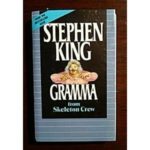
Gramma PDF - Stephen King
Stephen King • Horror novels • 27 Pages
(0)
Quate
Review
Save
Share
Book Description
Stephen King’s “Gramma” is a short horror story by American author Stephen King, first published in 1984 in Weirdbook #19, a horror and fantasy magazine published by W. Paul Ganley. The story was later collected in King’s 1985 short story collection Skeleton Crew, published by G. P. Putnam’s Sons. Though brief, “Gramma” is one of King’s memorable domestic horror stories, turning an ordinary family obligation into a frightening encounter with age, illness, witchcraft, and inherited evil.
“Gramma” centers on George Bruckner, an eleven-year-old boy living in Castle Rock, Maine. At the beginning of the story, George is at home with his mother, Ruth, when news arrives that his older brother Buddy has broken his ankle while playing baseball. Ruth must leave the house to collect Buddy, and George is asked to stay behind with his bedridden grandmother. This simple setup creates the story’s main source of tension: George is not merely nervous about being alone; he is terrified of the old woman in the next room.
King builds the horror through George’s memories and imagination. His grandmother, called “Gramma,” is presented as physically helpless, blind, overweight, and confined to bed, yet she seems to possess a strange, threatening power. George remembers earlier moments when she frightened him, especially her desire to hug him when he was younger. To adults, this might appear like the needy affection of an aging relative, but to George it feels monstrous. King uses the child’s point of view to make the house feel unsafe, turning silence, shadows, and ordinary caregiving into sources of dread.
As George waits for his mother to return, he recalls disturbing family history. He has heard hints that Gramma was once involved in witchcraft or forbidden rituals, and that her influence over the family may be darker than anyone admits. These memories connect the story to supernatural horror rather than simple fear of sickness or death. “Gramma” also contains references associated with H. P. Lovecraft’s mythos, giving the story a wider atmosphere of cosmic evil without turning it into a large-scale fantasy tale. The horror remains intimate because everything is filtered through George’s immediate problem: he is a child alone in a house with someone he believes may be evil.
The plot intensifies when Gramma appears to die while George is alone with her. At first, this seems like a release from terror, but it quickly becomes another stage of fear. George must face the body, the room, and the possibility that death has not ended Gramma’s power. King carefully stretches this moment, focusing on George’s hesitation and panic as he tries to decide what to do. The story’s suspense comes less from action than from waiting, dread, and the fear that the old woman may still be able to reach him.
The climax reveals that George’s fear is justified. Gramma’s death does not free him; instead, it allows her to pass something on to him. The story suggests that her supernatural power, or the evil connected to it, survives through George. This ending gives “Gramma” its lasting sting. The boy who seemed to be the victim becomes the next vessel for the very force he feared. Rather than ending with rescue, the story closes on transformation and contamination, a common Stephen King theme in which evil does not simply attack from outside but enters the family line.
As a Stephen King short story, “Gramma” is effective because it uses a familiar childhood situation: being left alone with an elderly relative, hearing noises in a quiet house, and feeling powerless while adults are absent. The supernatural elements make the story frightening, but its emotional strength comes from George’s isolation. King combines family tension, childhood anxiety, and occult horror into a compact narrative that fits well within Skeleton Crew, a collection known for mixing monsters, psychological fear, and strange everyday nightmares. For readers interested in Stephen King’s shorter fiction, “Gramma” offers a clear example of how he can turn a small domestic scene into a disturbing story about fear, inheritance, and the things families try not to name.
Stephen King
Stephen King is an American author best known for his contributions to the horror, supernatural fiction, and suspense genres. He was born in Portland, Maine in 1947 and began his writing career as a teenager, submitting short stories to various magazines. After graduating from college, King worked as a teacher while continuing to write in his spare time. His breakthrough novel, "Carrie," was published in 1974 and became a bestseller, launching his career as a full-time writer.
King is known for his prolific output, having written over 60 novels and 200 short stories throughout his career. Many of his books have been adapted into successful films and TV series, such as "The Shining," "It," and "The Stand." He has also won numerous awards for his work, including the Bram Stoker Award, the World Fantasy Award, and the National Medal of Arts.
King's writing style is characterized by his ability to create vivid and often terrifying imagery, as well as his focus on exploring the darkest aspects of the human psyche. He has tackled a wide range of subjects in his work, from the supernatural and the paranormal to more grounded themes such as addiction, family dynamics, and the struggles of everyday life.
Despite his success, King has also faced criticism for the often graphic and violent content of his work. Nevertheless, he remains one of the most popular and influential writers of his generation, with legions of fans around the world eagerly awaiting his next release.
In addition to his writing, King has also been an advocate for various causes, including freedom of expression and gun control. He has been active on social media, often sharing his thoughts on current events and engaging with his fans.
Earn Rewards While Reading!
Every 10 pages you read and spent 30 seconds on every page, earns you 5 reward points! Keep reading to unlock achievements and exclusive benefits.
Read
Rate Now
5 Stars
4 Stars
3 Stars
2 Stars
1 Stars
Gramma Quotes
Top Rated
Latest
Quate
Be the first to leave a quote and earn 10 points
instead of 3
'%20/%3e%3c/svg%3e "Carrie")
Comments
Be the first to leave a comment and earn 5 points
instead of 3