

The source of the book
This book is published for the public benefit under a Creative Commons license, or with the permission of the author or publisher. If you have any objections to its publication, please contact us.
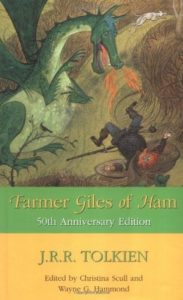
Farmer Giles of Ham PDF - J. R. R. Tolkien
J. R. R. Tolkien • short stories • 37 Pages
(0)
Quate
Review
Save
Share
Book Description
Farmer Giles of Ham by J. R. R. Tolkien
Farmer Giles of Ham is a witty and imaginative medieval fantasy tale by J. R. R. Tolkien, presenting a charming departure from his more epic and solemn works. Written in a playful, satirical tone, the story blends folklore-inspired adventure with gentle humor, creating a narrative that feels both timeless and refreshingly lighthearted. The book follows the life of an ordinary man who unexpectedly becomes a local hero, set in a semi-mythical version of rural England where dragons, kings, and knights coexist with everyday village life.
Originally published in 1949, this novella is often celebrated for its storytelling charm, its parody of medieval romance traditions, and its accessible style. It stands as one of Tolkien’s most entertaining shorter works, offering readers a unique glimpse into his ability to balance linguistic artistry with comedic storytelling.
Farmer Giles of Ham is a work that appeals not only to fantasy enthusiasts but also to readers who appreciate folklore, legend reinterpretations, and humorous takes on heroic mythology. Its enduring popularity comes from its simple yet clever narrative structure and its richly imagined world that feels both familiar and fantastical.
Story Overview and Narrative Style
The story centers on Giles, an unassuming farmer living in the quiet village of Ham. He is not a warrior, not a nobleman, and certainly not someone expected to shape the fate of kingdoms. Yet through a series of unexpected events, Giles finds himself facing challenges far beyond his humble lifestyle, including the arrival of a dragon that threatens the surrounding countryside.
Unlike traditional heroic epics where destiny is reserved for kings or chosen knights, this tale places an ordinary man at the heart of adventure. Giles’ journey begins almost accidentally, but gradually he becomes a figure of local legend. His encounters with authority, fame, and danger are portrayed with humor and irony, highlighting the contrast between his simple rural existence and the exaggerated world of medieval heroism.
The dragon, Chrysophylax Dives, is not merely a fearsome monster but a cunning and somewhat self-interested creature, adding further humor and complexity to the story. Their interactions form one of the most memorable elements of the novella, balancing tension with comedic undertones.
Themes and Literary Significance
One of the key themes in Farmer Giles of Ham is the subversion of heroic tradition. Rather than glorifying knights and kings, the story gently mocks the rigid structures of medieval romance literature. The hero is not noble by birth or trained in combat; instead, he is practical, skeptical, and often reluctant to accept the roles imposed upon him.
Another important theme is the idea of unexpected heroism. Giles does not seek glory, yet circumstances push him into positions where courage and wit are required. This makes the narrative especially engaging for readers who enjoy stories where ordinary individuals rise to extraordinary challenges.
Tolkien’s linguistic craftsmanship also plays a significant role. The prose is rich, rhythmic, and infused with a sense of historical parody. He mimics the tone of ancient chronicles while subtly inserting humor and modern sensibility, creating a layered reading experience that works on multiple levels.
The novella also explores the relationship between power and reputation. As Giles becomes more famous, his identity shifts in the eyes of others, raising questions about how legends are created and how ordinary actions can be transformed into heroic myths over time.
Tone, Style, and Reading Experience
Unlike the grand and solemn atmosphere of Tolkien’s major works, this book embraces a light, comedic tone throughout. The narrative often feels like a playful historical tale told by a storyteller who is aware of both the absurdity and charm of old legends.
Readers will notice the blend of satire and affection in the storytelling. While Tolkien gently mocks traditional heroic tales, he also clearly loves the medieval storytelling tradition. This balance creates a unique atmosphere where humor never undermines the richness of the world-building.
The language is accessible yet elegant, making it suitable for both younger readers and adults. The pacing is steady, with a focus on narrative charm rather than intense action sequences. This makes the book ideal for readers who enjoy short fantasy works that are easy to read but rich in detail and imagination.
Characters and Worldbuilding
The characters in the story are deliberately stylized, reflecting archetypes from folklore and medieval literature. Giles himself is an everyman figure, grounded in practicality and common sense. His personality contrasts sharply with the more exaggerated figures of authority and legend that surround him.
Chrysophylax, the dragon, is one of the most distinctive characters in the book. Unlike purely destructive dragons in many fantasy tales, he is portrayed with intelligence, negotiation skills, and a surprising sense of self-interest. This adds humor and unpredictability to the story.
The village of Ham and its surrounding countryside are depicted with a folkloric simplicity that enhances the fairy-tale atmosphere. Rather than detailed realism, Tolkien uses suggestion and mythic framing to create a world that feels both historical and imaginary.
Audience Appeal and Reading Value
This novella is especially appealing to readers who enjoy:
Classic fantasy with a humorous twist
Medieval-inspired storytelling and folklore
Short, accessible works by major fantasy authors
Lighthearted adventures with clever satire
Stories about ordinary people becoming unexpected heroes
Because of its short length and engaging tone, it is often recommended as an entry point into Tolkien’s lesser-known works. It also serves as a refreshing contrast to more epic fantasy narratives, offering a lighter and more playful reading experience.
Lasting Legacy and Cultural Impact
Although not as widely known as Tolkien’s major fantasy epics, Farmer Giles of Ham holds a respected place in fantasy literature. It showcases Tolkien’s versatility as a writer and his ability to experiment with tone and genre while maintaining high literary quality.
The book has influenced readers and writers who appreciate the blending of humor with mythic storytelling. Its approach to parodying heroic traditions without dismissing them entirely has made it a unique contribution to modern fantasy literature.
Over time, it has become a beloved example of how fantasy can be both entertaining and intellectually playful. Readers continue to discover it as a hidden gem within Tolkien’s broader body of work, appreciating its charm, wit, and originality.
Final Impression
Farmer Giles of Ham remains a delightful and inventive tale that transforms a simple village farmer into the center of a legendary adventure. Through humor, clever storytelling, and subtle commentary on heroic tradition, Tolkien creates a narrative that is both entertaining and meaningful. It is a story that celebrates the unexpected hero within ordinary life, wrapped in a playful medieval fantasy setting that continues to captivate readers of all ages.
J. R. R. Tolkien
John Ronald Reuel Tolkien (1892-1973) was an English writer, poet, and philologist best known for his works of high fantasy, including The Hobbit, The Lord of the Rings, and The Silmarillion. He was born in South Africa and raised in England, where he studied at Oxford University and later became a professor of Anglo-Saxon and English at the same institution.
Tolkien began writing stories as a child, and his love of language and mythology would later influence his fictional works. His first published work was a poem called "Goblin Feet" in the literary magazine Oxford Poetry in 1915. During World War I, Tolkien served in the British Army and later returned to academia.
In the 1930s, Tolkien began working on The Hobbit, a children's book that would eventually become a classic of fantasy literature. Published in 1937, The Hobbit tells the story of a hobbit named Bilbo Baggins who embarks on a quest to help a group of dwarves reclaim their treasure from a dragon.
Tolkien's next major work was The Lord of the Rings, a trilogy published in the mid-1950s that continues the story of Middle-earth, the setting of The Hobbit. The books follow the quest of hobbit Frodo Baggins to destroy the One Ring, a powerful artifact created by the dark lord Sauron to conquer Middle-earth.
Tolkien also worked on other stories set in Middle-earth, including The Silmarillion, which tells the history of the world and the creation of the first elves, and various unfinished tales collected in Unfinished Tales of Númenor and Middle-earth.
Tolkien's work has had a significant impact on the fantasy genre, with many authors citing him as a major influence. The popularity of his works has also led to adaptations in other media, including films, television series, and video games.
In addition to his writing, Tolkien was a respected scholar of language and literature, with a particular interest in Old English and Norse mythology. His academic work includes editions of medieval texts and a seminal lecture series on Beowulf, which has been published as a book.
Earn Rewards While Reading!
Every 10 pages you read and spent 30 seconds on every page, earns you 5 reward points! Keep reading to unlock achievements and exclusive benefits.
Read
Rate Now
5 Stars
4 Stars
3 Stars
2 Stars
1 Stars
Farmer Giles of Ham Quotes
Top Rated
Latest
Quate
Be the first to leave a quote and earn 10 points
instead of 3
'%20/%3e%3c/svg%3e "The Children of Hurin")
Comments
Be the first to leave a comment and earn 5 points
instead of 3