

The source of the book
This book is published for the public benefit under a Creative Commons license, or with the permission of the author or publisher. If you have any objections to its publication, please contact us.
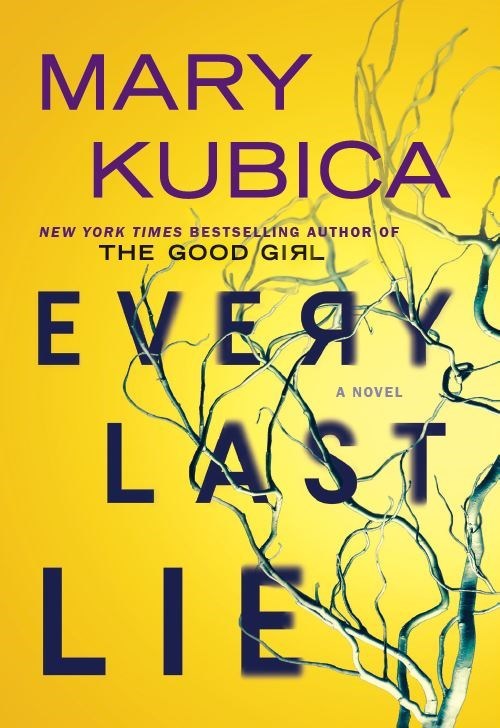
Every Last Lie PDF - Mary Kubica
Mary Kubica • Drama novels • 336 Pages
(0)
Quate
Review
Save
Share
Book Description
Every Last Lie by Mary Kubica is a gripping psychological suspense novel about grief, suspicion, marriage, and the terrifying possibility that the person you trusted most may have taken secrets to the grave. At the center of the story is Clara Solberg, whose life is shattered when her husband, Nick, is killed in a car crash while their four-year-old daughter, Maisie, survives with remarkably little physical harm. The crash is officially treated as an accident, but when Maisie begins suffering from disturbing night terrors, Clara starts to question what truly happened on that road and whether Nick’s death was as simple as everyone wants her to believe.
A Psychological Thriller About Grief, Doubt, and Hidden Truths
Mary Kubica builds Every Last Lie around one of the most unsettling emotional questions in domestic suspense: what happens when grief refuses to accept the official explanation? Clara is not simply mourning her husband. She is raising a young daughter who may have witnessed something she cannot explain, caring for a newborn, and trying to make sense of a sudden loss that has torn apart the ordinary structure of her life. The novel uses this fragile emotional state to create a tense and intimate reading experience, where every memory, every small inconsistency, and every unanswered question becomes a possible clue.
The power of the story lies in the way it turns a family tragedy into a psychological investigation. Clara’s world had been built on marriage, motherhood, routine, and trust, but Nick’s death forces her to examine the life they shared from a new and frightening angle. The more she searches for answers, the more she begins to wonder whether the man she loved was keeping parts of himself hidden. This makes the novel especially appealing for readers who enjoy domestic thrillers, marriage suspense, and stories where the danger grows from secrets buried inside ordinary relationships.
Clara Solberg and the Fear of Not Knowing
Clara is a compelling central character because her search for the truth is driven by both love and fear. She wants to understand what happened to Nick, but she is also afraid of what the truth may reveal. Her daughter’s nightmares disturb the fragile explanation she has been given, and that uncertainty begins to consume her. In a more conventional mystery, the investigation might move outward toward suspects and evidence. In Every Last Lie, the investigation also turns inward, into Clara’s grief, anxiety, memory, and growing suspicion.
This emotional pressure gives the novel its strongest psychological dimension. Clara’s doubts are not abstract; they are tied to motherhood, survival, and the terrifying responsibility of protecting her children while her own sense of reality is under strain. The reader is drawn into her need for certainty, even as each new possibility makes certainty harder to reach. Was the crash truly an accident? Was someone following Nick? Did Maisie see something that adults have overlooked? Or is Clara’s grief reshaping fear into suspicion? These questions give the book the slow-burning tension that fans of psychological thrillers about unreliable truth often seek.
Alternating Perspectives and Layered Suspense
One of the most effective features of Every Last Lie is its use of alternating perspectives. The novel moves between Clara’s present-day search for answers and Nick’s life in the months leading up to the crash, allowing readers to see the marriage from different angles and gradually understand that there may have been more happening beneath the surface than Clara knew. This structure deepens the suspense because it does not reveal the full picture all at once. Instead, it allows secrets, pressures, and emotional contradictions to emerge piece by piece.
By shifting between Clara’s grief and Nick’s hidden world, Mary Kubica creates a story that is not only about what happened on the day of the crash, but about how much can remain unknown inside a marriage. The reader is placed in a position of constant reevaluation. A detail that first seems ordinary may later feel significant. A relationship that appears stable may become uncertain. A memory may begin to feel less reliable. This layered approach makes the novel a strong choice for readers who enjoy twisty suspense novels, family mystery fiction, and emotionally charged thrillers where the truth is revealed through careful narrative construction.
Marriage, Secrets, and the Fragility of Trust
At its heart, Every Last Lie is a novel about the frightening fragility of trust. Clara believed she knew her husband, but his death leaves behind questions that cannot be answered easily. This is one of the most powerful themes in the book: the idea that even the closest relationships may contain hidden fears, private failures, and choices one partner never fully shares with the other. The suspense does not depend only on external danger. It also comes from the possibility that love itself may have been built beside secrets Clara never noticed.
This theme gives the novel strong appeal for readers interested in marital suspense and domestic psychological fiction. Mary Kubica understands that the most disturbing mysteries are not always found in distant crimes or unfamiliar places. Sometimes they exist inside the home, inside routine, inside the silence between two people who believe they understand each other. In Every Last Lie, the crash becomes a doorway into a larger emotional mystery: how well can anyone truly know another person, even after marriage, children, and years of shared life?
A Tense Reading Experience for Fans of Domestic Suspense
Readers who enjoy slow-burning psychological suspense will find Every Last Lie especially absorbing because it combines an urgent central mystery with emotional realism. The novel does not treat grief as a background detail; it makes grief part of the suspense itself. Clara’s mourning, exhaustion, fear, and obsession shape the way she interprets the world around her. That makes the story feel intimate and claustrophobic, as though the reader is trapped inside the same uncertainty that is consuming her.
The book also has strong appeal for readers who like stories about missing answers rather than simple puzzles. The question is not only who may have wanted Nick dead, but why the people closest to him may not have understood the whole truth of his life. As Clara investigates, the novel explores how secrets can distort a family long before anyone recognizes the damage. The result is a suspenseful story about loss, deception, motherhood, and the dangerous need to know what really happened.
Mary Kubica’s Signature Style
Mary Kubica is a New York Times and USA Today bestselling author known for psychological suspense and contemporary thrillers, with books translated into more than thirty languages and millions of copies sold worldwide. Her work often focuses on ordinary people placed under extraordinary emotional pressure, and Every Last Lie fits naturally within that tradition.
Kubica’s writing style is clear, controlled, and carefully paced. She uses emotional tension as much as plot tension, allowing the reader to feel the weight of every unanswered question. In Every Last Lie, her suspense grows from grief, suspicion, and the gradual realization that a life can be filled with hidden rooms. Rather than relying only on shock, the novel builds unease through atmosphere, doubt, and the painful possibility that every last lie matters.
Why Every Last Lie Is Worth Reading
Every Last Lie by Mary Kubica is ideal for readers who enjoy psychological thrillers, domestic suspense novels, family secrets, marriage mysteries, and stories where grief becomes the beginning of a dangerous search for truth. It offers a tense and emotionally charged reading experience without giving away its secrets too quickly. The novel asks the reader to sit with uncertainty, to question appearances, and to follow Clara into the painful space between what she has been told and what she fears may be true.
For fans of suspense fiction, the book delivers the elements that make Mary Kubica’s work so compelling: a strong premise, intimate emotional stakes, shifting perspectives, hidden motives, and a central mystery rooted in the ordinary fears of family life. Every Last Lie is not only a thriller about a fatal crash; it is a story about what remains after tragedy, what secrets survive the dead, and how far one woman will go to uncover the truth behind the life she thought she knew.
Mary Kubica
Mary Kubica is an American author best known for psychological suspense, mystery, and contemporary thriller fiction built around family secrets, missing people, unreliable perspectives, and the hidden dangers inside ordinary lives. She is a New York Times and USA Today bestselling author whose novels include The Good Girl, Pretty Baby, Don’t You Cry, Every Last Lie, When the Lights Go Out, The Other Mrs., Local Woman Missing, Just the Nicest Couple, She’s Not Sorry, and It’s Not Her. Before becoming widely known as a novelist, she worked as a high school history teacher and earned a Bachelor of Arts degree from Miami University in Oxford, Ohio, where she studied History and American Literature. She lives outside Chicago with her husband and children, and her books have been translated into more than thirty languages and have sold millions of copies worldwide.
What makes Mary Kubica’s work especially appealing is the way she turns familiar settings into places of emotional danger. Her stories often begin in homes, neighborhoods, schools, hospitals, families, or marriages that appear recognizable and stable. Gradually, however, she reveals fractures beneath the surface: a vanished child, a woman with a hidden past, a marriage under pressure, a witness who may not understand what she has seen, or a family whose version of events cannot be trusted. This approach gives her fiction the close, unsettling atmosphere that readers often seek in domestic suspense and psychological thrillers. The threat does not feel distant or abstract; it grows from relationships, secrets, memories, and choices that might exist in the reader’s own world.
Kubica’s novels are particularly strong in their treatment of uncertainty. She often builds suspense by placing readers inside situations where no single version of the truth feels completely secure. Characters may lie to protect themselves, conceal painful memories, misunderstand what they have witnessed, or shape the story in a way that hides their own guilt. As a result, her books do not rely only on action or crime, but on psychological instability and shifting perception. The reader is pulled into the act of interpretation, constantly asking who is reliable, who is vulnerable, who is dangerous, and which details will matter later.
Her debut novel, The Good Girl, became an important early success in her career. It was selected as an Indie Next pick in August 2014, received a Strand Critics nomination for Best First Novel, and was nominated in the Goodreads Choice Awards in both debut author and mystery and thriller categories. Local Woman Missing also became one of her most discussed novels, earning an Indie Next selection in May 2021, a Goodreads Choice Awards nomination in mystery and thriller, and a place as a finalist for an Audie Award. Her books have also been selected as Amazon Best Books of the Month and LibraryReads picks, reflecting her strong connection with booksellers, librarians, and commercial thriller readers.
Mary Kubica’s writing style is clear, tense, and carefully controlled. She does not usually slow the reader with excessive description; instead, she builds suspense through pacing, structure, and the slow release of information. Her chapters are designed to keep questions alive, and her scenes often end with a new doubt or disturbing possibility. This makes her novels highly readable while still giving them emotional weight. Readers who enjoy fast-paced thrillers often appreciate her ability to create momentum, but readers who prefer psychological depth can also find strong themes in her work, including grief, motherhood, guilt, trauma, marital distrust, social pressure, and the fear of being wrong about the people closest to us.
A central reason for her popularity is her understanding of ordinary fear. In Mary Kubica’s fiction, suspense is not limited to detectives, police investigations, or dramatic crime scenes. It is also found in the quiet unease of a missing neighbor, a child who disappears, a stranger who knows too much, a spouse who behaves differently, or a memory that refuses to settle. Her novels often explore how fragile safety can be and how quickly the everyday can become threatening. This gives her books a strong emotional hook, because the reader is not simply solving a puzzle but experiencing the collapse of trust.
For readers searching for modern psychological thrillers, Mary Kubica offers stories that combine domestic tension, mystery, emotional suspense, and surprising reversals. Her books are suited to fans of character-driven thrillers, family secrets, missing-person mysteries, and novels where each revelation changes the reader’s understanding of what came before. She has built a recognizable place in contemporary suspense fiction by writing novels that are accessible, atmospheric, and twist-filled without losing sight of human vulnerability. Her work reminds readers that the most frightening secrets are often hidden in the places that seem safest: the home, the family, the neighborhood, and the private memories people choose not to share.
Earn Rewards While Reading!
Every 10 pages you read and spent 30 seconds on every page, earns you 5 reward points! Keep reading to unlock achievements and exclusive benefits.
Read
Rate Now
5 Stars
4 Stars
3 Stars
2 Stars
1 Stars
Every Last Lie Quotes
Top Rated
Latest
Quate
Be the first to leave a quote and earn 10 points
instead of 3
'%20/%3e%3c/svg%3e "Local Woman Missing")
Comments
Be the first to leave a comment and earn 5 points
instead of 3