

The source of the book
This book is published for the public benefit under a Creative Commons license, or with the permission of the author or publisher. If you have any objections to its publication, please contact us.
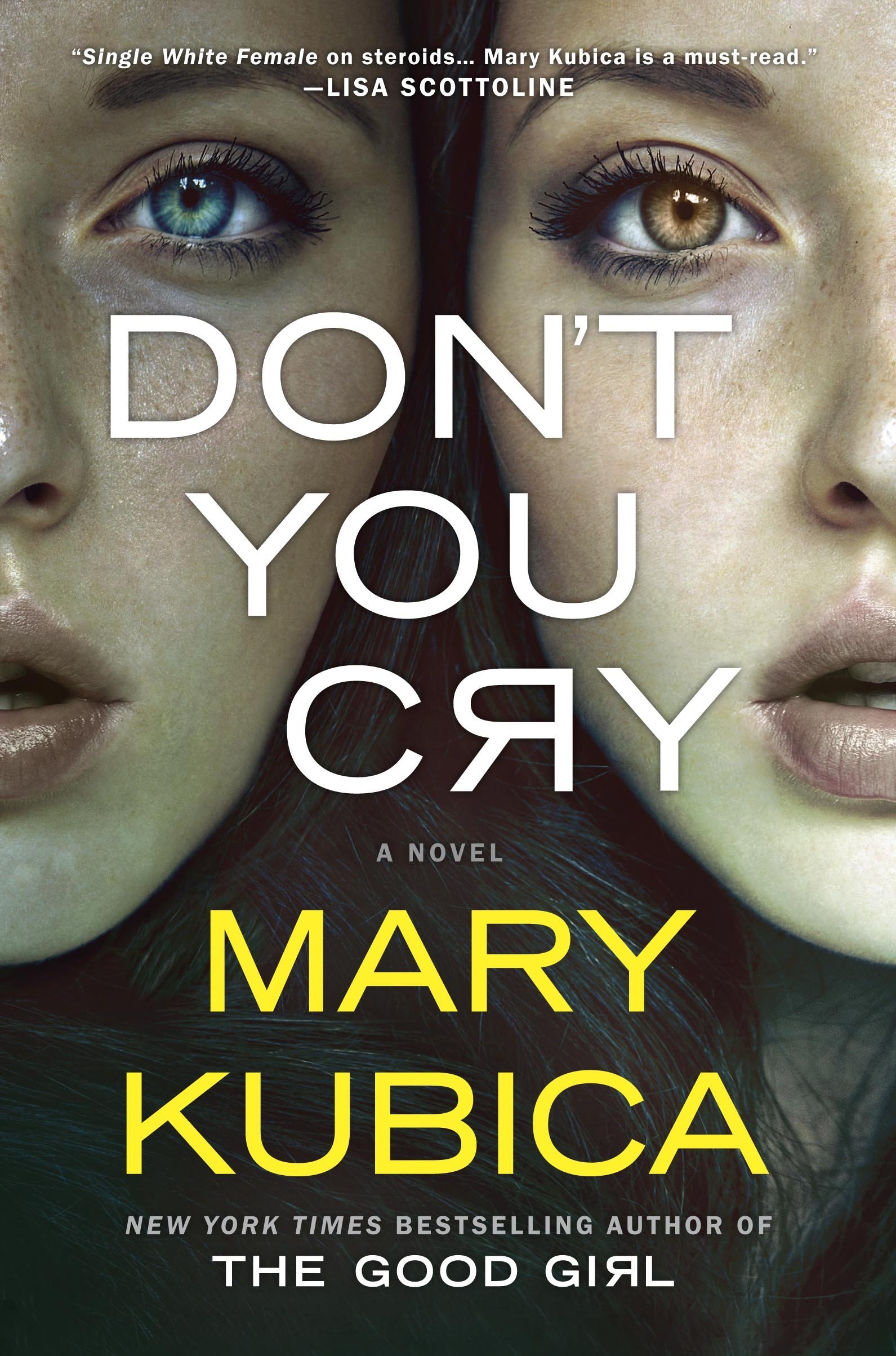
Don't You Cry PDF - Mary Kubica
Mary Kubica • Drama novels • 313 Pages
(0)
Quate
Review
Save
Share
Book Description
Don’t You Cry by Mary Kubica is a gripping psychological suspense novel about disappearance, deception, obsession, and the terrifying possibility that the people closest to us may be hiding the darkest truths. Set between downtown Chicago and a small Michigan harbor town, the story begins when Esther Vaughan vanishes from her apartment without a trace, leaving behind a haunting letter that causes her roommate, Quinn Collins, to question everything she thought she knew about her friend. At the same time, eighteen-year-old Alex Gallo, who works as a dishwasher in a quiet coffee shop, becomes fascinated by a mysterious woman whose arrival soon leads him toward something far more disturbing than a harmless crush.
A Psychological Thriller About Secrets Beneath Ordinary Lives
At its heart, Don’t You Cry is a novel about the danger of assuming that familiarity means truth. Quinn believes she knows Esther because they share an apartment and a life of ordinary closeness, but Esther’s disappearance forces her to reconsider the limits of that intimacy. A missing roommate is frightening enough, yet the deeper horror comes from discovering that a person who slept just a few doors away may have been living a hidden life. Mary Kubica uses this premise to create a suspenseful story where the mystery is not only about where Esther has gone, but also about who Esther really was.
The novel’s tension comes from the slow collapse of certainty. Quinn’s search for answers leads her into a world of clues, doubts, and unsettling discoveries, while Alex’s storyline develops in a different setting with its own sense of quiet threat. The contrast between the urban apartment in Chicago and the smaller lakeside community gives the book a dual atmosphere: one thread feels intimate and claustrophobic, while the other feels isolated, watchful, and increasingly sinister. Together, these perspectives create a layered mystery that keeps the reader wondering how the two narratives connect and what truth lies beneath them.
Quinn Collins, Esther Vaughan, and the Fear of Not Knowing
Quinn Collins is a compelling figure because she begins the novel in a position many readers can immediately understand: someone close to her has disappeared, and suddenly every memory feels uncertain. The questions that haunt her are deeply human. Did she overlook signs that something was wrong? Was Esther frightened, dangerous, vulnerable, or deceptive? Was their friendship real, or was it built on carefully chosen omissions? This emotional uncertainty gives the book much of its psychological power.
Mary Kubica does not treat disappearance as a simple plot device. In Don’t You Cry, absence becomes a form of pressure. Esther’s empty room, her abandoned possessions, and the mysterious letter she leaves behind all become symbols of a life Quinn may never have truly understood. The more Quinn investigates, the more the novel explores themes of trust, identity, guilt, and the stories people create about those they love. The result is a suspense novel that feels personal as well as mysterious, because the central fear is not only that Esther is missing, but that Quinn may have been wrong about her all along.
Alex Gallo and the Pull of Obsession
The second narrative thread follows Alex Gallo, an eighteen-year-old whose quiet life is disrupted by the arrival of a mysterious woman. His attraction to her begins with fascination, but that fascination gradually becomes darker and more dangerous. This part of the novel adds another layer to the theme of obsession. Alex is young, impressionable, and emotionally open to the possibility of escape from the limitations of his daily life. When the stranger enters his world, she becomes more than a person; she becomes a symbol of mystery, beauty, risk, and change.
Through Alex, Don’t You Cry examines how easily curiosity can turn into fixation. The reader understands that something is wrong before all the pieces are visible, and that uneasy awareness creates suspense. Kubica’s storytelling depends on the tension between what the characters believe and what the reader suspects. Alex may think he is being drawn into something exciting, but the tone of the novel suggests that every step closer to the stranger may also be a step toward danger.
Mary Kubica’s Suspense Style
Mary Kubica is known for psychological suspense novels that combine emotional tension, domestic unease, mystery, and carefully timed revelations. She is a New York Times and USA Today bestselling author, and her books include The Good Girl, Pretty Baby, Every Last Lie, The Other Mrs., Local Woman Missing, Just the Nicest Couple, She’s Not Sorry, and It’s Not Her. Her work has been translated into more than thirty languages and has reached millions of readers worldwide.
In Don’t You Cry, Kubica’s strengths are especially clear. She builds suspense through atmosphere rather than shock alone. Her chapters create questions, her characters hold back information, and her settings feel ordinary enough to be believable but tense enough to become threatening. This is the kind of psychological thriller that invites the reader to pay attention to small details: a letter, a glance, a memory, a missing object, a sudden silence. Each detail may be meaningless, or it may be the piece that changes everything.
Themes of Deception, Identity, and the Past
One of the strongest themes in Don’t You Cry is the idea that the past is never completely gone. The book suggests that people may run from old mistakes, buried pain, or hidden identities, but those things often return in unexpected ways. Esther’s disappearance opens a door into questions of who she was before Quinn knew her, while Alex’s storyline raises questions about desire, loneliness, and the dangers of being captivated by someone who may not be what she seems.
The title itself carries emotional weight. Don’t You Cry suggests comfort, warning, denial, and emotional restraint all at once. It fits a novel in which characters are surrounded by grief, fear, longing, and suspicion, but cannot always express what they feel or understand why they feel it. The book’s psychological suspense grows from that tension between emotion and secrecy. People are afraid, but they may not know what they are afraid of. People are drawn to one another, but attraction may hide danger. People search for the truth, but the truth may not offer peace.
A Strong Choice for Readers of Dark Suspense
Don’t You Cry by Mary Kubica is ideal for readers who enjoy psychological thrillers, domestic suspense, missing person mysteries, and novels built around unreliable impressions and hidden motives. It will appeal to readers who like suspense that unfolds through character, atmosphere, and slow revelation rather than simple action. The story offers the pleasure of a mystery, but also the deeper unease of realizing that ordinary relationships can conceal extraordinary secrets.
Fans of Mary Kubica’s other novels will recognize her talent for creating emotionally charged suspense around people who seem familiar at first but gradually become more complicated. New readers will find Don’t You Cry a strong introduction to her style: accessible, tense, atmospheric, and full of questions about trust, obsession, and the shadows people carry with them. It is a novel about a missing woman, but it is also about the terrifying distance between knowing someone’s name and knowing the truth of their life.
Why Don’t You Cry Stands Out
Don’t You Cry stands out because it transforms a simple mystery into a layered psychological puzzle. Esther’s disappearance, Quinn’s growing doubt, Alex’s dangerous fascination, and the slow merging of separate storylines create a reading experience built on uncertainty. The novel keeps its focus on the emotional consequences of secrets: how they distort friendship, how they shape identity, and how they can pull unsuspecting people into their orbit.
For readers searching for a suspenseful, atmospheric, and character-driven thriller, Don’t You Cry by Mary Kubica offers a dark and absorbing story about deception, obsession, and the hidden past. It is a book that asks how well we can ever know another person, and what might happen when the answer is far more frightening than we imagined.
Mary Kubica
Mary Kubica is an American author best known for psychological suspense, mystery, and contemporary thriller fiction built around family secrets, missing people, unreliable perspectives, and the hidden dangers inside ordinary lives. She is a New York Times and USA Today bestselling author whose novels include The Good Girl, Pretty Baby, Don’t You Cry, Every Last Lie, When the Lights Go Out, The Other Mrs., Local Woman Missing, Just the Nicest Couple, She’s Not Sorry, and It’s Not Her. Before becoming widely known as a novelist, she worked as a high school history teacher and earned a Bachelor of Arts degree from Miami University in Oxford, Ohio, where she studied History and American Literature. She lives outside Chicago with her husband and children, and her books have been translated into more than thirty languages and have sold millions of copies worldwide.
What makes Mary Kubica’s work especially appealing is the way she turns familiar settings into places of emotional danger. Her stories often begin in homes, neighborhoods, schools, hospitals, families, or marriages that appear recognizable and stable. Gradually, however, she reveals fractures beneath the surface: a vanished child, a woman with a hidden past, a marriage under pressure, a witness who may not understand what she has seen, or a family whose version of events cannot be trusted. This approach gives her fiction the close, unsettling atmosphere that readers often seek in domestic suspense and psychological thrillers. The threat does not feel distant or abstract; it grows from relationships, secrets, memories, and choices that might exist in the reader’s own world.
Kubica’s novels are particularly strong in their treatment of uncertainty. She often builds suspense by placing readers inside situations where no single version of the truth feels completely secure. Characters may lie to protect themselves, conceal painful memories, misunderstand what they have witnessed, or shape the story in a way that hides their own guilt. As a result, her books do not rely only on action or crime, but on psychological instability and shifting perception. The reader is pulled into the act of interpretation, constantly asking who is reliable, who is vulnerable, who is dangerous, and which details will matter later.
Her debut novel, The Good Girl, became an important early success in her career. It was selected as an Indie Next pick in August 2014, received a Strand Critics nomination for Best First Novel, and was nominated in the Goodreads Choice Awards in both debut author and mystery and thriller categories. Local Woman Missing also became one of her most discussed novels, earning an Indie Next selection in May 2021, a Goodreads Choice Awards nomination in mystery and thriller, and a place as a finalist for an Audie Award. Her books have also been selected as Amazon Best Books of the Month and LibraryReads picks, reflecting her strong connection with booksellers, librarians, and commercial thriller readers.
Mary Kubica’s writing style is clear, tense, and carefully controlled. She does not usually slow the reader with excessive description; instead, she builds suspense through pacing, structure, and the slow release of information. Her chapters are designed to keep questions alive, and her scenes often end with a new doubt or disturbing possibility. This makes her novels highly readable while still giving them emotional weight. Readers who enjoy fast-paced thrillers often appreciate her ability to create momentum, but readers who prefer psychological depth can also find strong themes in her work, including grief, motherhood, guilt, trauma, marital distrust, social pressure, and the fear of being wrong about the people closest to us.
A central reason for her popularity is her understanding of ordinary fear. In Mary Kubica’s fiction, suspense is not limited to detectives, police investigations, or dramatic crime scenes. It is also found in the quiet unease of a missing neighbor, a child who disappears, a stranger who knows too much, a spouse who behaves differently, or a memory that refuses to settle. Her novels often explore how fragile safety can be and how quickly the everyday can become threatening. This gives her books a strong emotional hook, because the reader is not simply solving a puzzle but experiencing the collapse of trust.
For readers searching for modern psychological thrillers, Mary Kubica offers stories that combine domestic tension, mystery, emotional suspense, and surprising reversals. Her books are suited to fans of character-driven thrillers, family secrets, missing-person mysteries, and novels where each revelation changes the reader’s understanding of what came before. She has built a recognizable place in contemporary suspense fiction by writing novels that are accessible, atmospheric, and twist-filled without losing sight of human vulnerability. Her work reminds readers that the most frightening secrets are often hidden in the places that seem safest: the home, the family, the neighborhood, and the private memories people choose not to share.
Earn Rewards While Reading!
Every 10 pages you read and spent 30 seconds on every page, earns you 5 reward points! Keep reading to unlock achievements and exclusive benefits.
Read
Rate Now
5 Stars
4 Stars
3 Stars
2 Stars
1 Stars
Don't You Cry Quotes
Top Rated
Latest
Quate
Be the first to leave a quote and earn 10 points
instead of 3
'%20/%3e%3c/svg%3e "Local Woman Missing")
Comments
Be the first to leave a comment and earn 5 points
instead of 3