

The source of the book
This book is published for the public benefit under a Creative Commons license, or with the permission of the author or publisher. If you have any objections to its publication, please contact us.
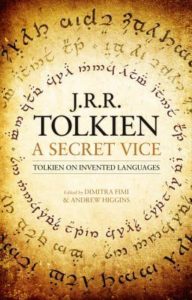
A Secret Vice PDF - J. R. R. Tolkien
J. R. R. Tolkien • literature • 203 Pages
(0)
Quate
Review
Save
Share
Book Description
A Deep Exploration of Language and Imagination in A Secret Vice by J. R. R. Tolkien
A Secret Vice offers a rare and fascinating glimpse into the intellectual world of one of the twentieth century’s most influential authors. Best known for creating Middle-earth and writing The Hobbit and The Lord of the Rings, Tolkien was also a distinguished philologist and lifelong lover of languages. In this remarkable work, readers encounter the foundations of his creative philosophy through an exploration of invented languages, mythology, sound, and imagination.
Originally presented as a lecture in the early 1930s, A Secret Vice reveals Tolkien’s personal passion for constructing languages long before fantasy world-building became a global literary phenomenon. Rather than treating invented languages as simple curiosities, Tolkien argues that language creation is a profound artistic act deeply connected to storytelling, culture, and myth. The book demonstrates how linguistic invention shaped the development of Middle-earth and influenced every aspect of his literary universe. (Wikipedia)
The Origins of Tolkien’s Invented Languages
At the heart of A Secret Vice lies Tolkien’s belief that language and mythology are inseparable. He explains how the beauty of sounds, rhythms, and word forms inspired him to imagine entire peoples, histories, and worlds. Readers gain insight into the early development of Elvish languages such as Quenya and Noldorin, predecessors to the more familiar languages found in Middle-earth.
Tolkien discusses the emotional and aesthetic power of language in a way that feels both scholarly and deeply personal. He examines why certain languages sound beautiful to the human ear and how phonetics can evoke atmosphere, memory, and emotion. His fascination with Welsh, Finnish, Greek, and other linguistic traditions becomes part of a broader meditation on creativity itself. (Goodreads)
For readers interested in linguistics, philology, or the history of constructed languages, this book provides an invaluable perspective from one of the pioneers of modern conlang creation. Long before fictional languages became common in fantasy and science fiction, Tolkien was already developing detailed linguistic systems supported by mythology, poetry, and cultural history.
A Unique Work for Tolkien Fans and Language Enthusiasts
Unlike Tolkien’s epic novels, A Secret Vice is not a fantasy adventure. Instead, it is an intellectual and creative exploration that reveals how Tolkien’s mind worked behind the scenes. Readers discover the academic and artistic principles that shaped Middle-earth, making the book especially rewarding for dedicated Tolkien enthusiasts.
The expanded editions of the work include editorial commentary, notes, drafts, and additional writings that help contextualize Tolkien’s ideas about language invention and phonetic symbolism. These additions enrich the reading experience by connecting the lecture to Tolkien’s broader literary legacy and scholarly background. (Wikipedia)
The text also sheds light on Tolkien’s concept of “sub-creation,” the idea that imaginative authors build internally coherent worlds through language, mythology, and narrative consistency. Readers interested in fantasy literature, creative writing, mythology, or literary theory will find these reflections especially compelling.
Themes of Creativity, Sound, and Myth-Making
One of the most fascinating aspects of A Secret Vice is Tolkien’s discussion of sound symbolism and the emotional effect of words. He believed that language possessed an artistic beauty independent of practical communication. This philosophy shaped his approach to world-building and distinguished his work from many later fantasy writers.
The book explores several interconnected themes:
- The artistic value of invented languages
- The relationship between myth and linguistic structure
The emotional resonance of sound and pronunciation
The creative process behind fantasy world-building
The cultural identity embedded within language
The origins of Tolkien’s Elvish linguistic traditions
These ideas continue to influence fantasy authors, linguists, and creators of fictional worlds today. Tolkien’s methods helped establish many of the conventions now associated with epic fantasy literature and immersive fictional universes. (bookstores.com)
Reading Experience and Style
Although rooted in academic thought, A Secret Vice remains engaging and accessible for many readers. Tolkien’s voice is thoughtful, enthusiastic, and occasionally humorous, especially when describing the “secret vice” of inventing private languages. His passion for words and linguistic beauty is evident throughout the text.
Readers familiar with Tolkien’s fiction will appreciate seeing the intellectual foundations behind Middle-earth. At the same time, the work appeals to students of linguistics, literary criticism, medieval studies, and fantasy literature. The blend of scholarship and imagination gives the book a distinctive character unlike traditional literary essays.
The expanded scholarly editions also provide historical context and editorial analysis, making the book valuable both as a standalone essay and as part of Tolkien studies. (Wikipedia)
Why A Secret Vice Remains Important
Decades after its original presentation, A Secret Vice continues to attract readers because it reveals a side of Tolkien that many casual fans never fully encounter: Tolkien the linguist, the scholar, and the creator fascinated by the music of language itself.
For anyone interested in constructed languages, fantasy writing, philology, mythology, or the creative origins of Middle-earth, this book offers a unique and rewarding reading experience. It stands as both an academic reflection and a deeply personal statement about imagination, artistic creation, and the enduring power of language.
More than simply a lecture about invented words, A Secret Vice is a window into the creative philosophy that shaped one of literature’s greatest mythologies.
J. R. R. Tolkien
John Ronald Reuel Tolkien (1892-1973) was an English writer, poet, and philologist best known for his works of high fantasy, including The Hobbit, The Lord of the Rings, and The Silmarillion. He was born in South Africa and raised in England, where he studied at Oxford University and later became a professor of Anglo-Saxon and English at the same institution.
Tolkien began writing stories as a child, and his love of language and mythology would later influence his fictional works. His first published work was a poem called "Goblin Feet" in the literary magazine Oxford Poetry in 1915. During World War I, Tolkien served in the British Army and later returned to academia.
In the 1930s, Tolkien began working on The Hobbit, a children's book that would eventually become a classic of fantasy literature. Published in 1937, The Hobbit tells the story of a hobbit named Bilbo Baggins who embarks on a quest to help a group of dwarves reclaim their treasure from a dragon.
Tolkien's next major work was The Lord of the Rings, a trilogy published in the mid-1950s that continues the story of Middle-earth, the setting of The Hobbit. The books follow the quest of hobbit Frodo Baggins to destroy the One Ring, a powerful artifact created by the dark lord Sauron to conquer Middle-earth.
Tolkien also worked on other stories set in Middle-earth, including The Silmarillion, which tells the history of the world and the creation of the first elves, and various unfinished tales collected in Unfinished Tales of Númenor and Middle-earth.
Tolkien's work has had a significant impact on the fantasy genre, with many authors citing him as a major influence. The popularity of his works has also led to adaptations in other media, including films, television series, and video games.
In addition to his writing, Tolkien was a respected scholar of language and literature, with a particular interest in Old English and Norse mythology. His academic work includes editions of medieval texts and a seminal lecture series on Beowulf, which has been published as a book.
Earn Rewards While Reading!
Every 10 pages you read and spent 30 seconds on every page, earns you 5 reward points! Keep reading to unlock achievements and exclusive benefits.
Read
Rate Now
5 Stars
4 Stars
3 Stars
2 Stars
1 Stars
A Secret Vice Quotes
Top Rated
Latest
Quate
Be the first to leave a quote and earn 10 points
instead of 3
Other books by J. R. R. Tolkien
Other books like A Secret Vice
'%20/%3e%3c/svg%3e "The Missionary Position: Mother Teresa in Theory and Practice")
3613
English
Comments
Be the first to leave a comment and earn 5 points
instead of 3