

The source of the book
This book is published for the public benefit under a Creative Commons license, or with the permission of the author or publisher. If you have any objections to its publication, please contact us.
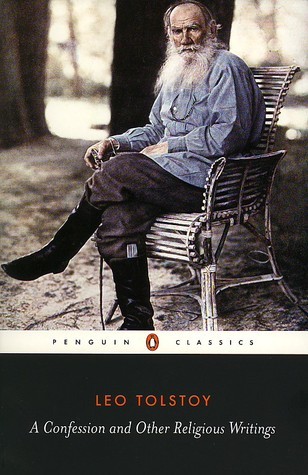
A Confession and Other Religious Writings PDF - Leo Tolstoy
Leo Tolstoy • literature • 238 Pages
(0)
Quate
Review
Save
Share
Book Description
A Confession and Other Religious Writings by Leo Tolstoy
A Confession and Other Religious Writings by Leo Tolstoy brings together some of the most searching spiritual and philosophical works of one of the greatest writers in world literature. Best known for War and Peace and Anna Karenina, Tolstoy turned in his later life toward urgent questions of faith, morality, truth, violence, freedom, and the meaning of human existence. This Penguin Classics edition, translated and introduced by Jane Kentish, presents a powerful selection that includes A Confession, Religion and Morality, What Is Religion, and of What Does Its Essence Consist?, and The Law of Love and the Law of Violence. (PenguinRandomhouse.com)
A Classic Search for Faith, Meaning, and Moral Truth
At the center of this collection is A Confession, Tolstoy’s deeply personal account of spiritual crisis and inner transformation. Written after he had achieved worldwide fame, wealth, family life, and literary immortality, the work records a period when outward success could no longer answer the most basic question: what gives life meaning? Penguin describes A Confession as an autobiographical work of exceptional emotional honesty, shaped by Tolstoy’s depression, estrangement from the world, and desire for a practical religion grounded in life rather than abstraction. (Penguin)
This is not a conventional religious book, nor is it a simple memoir. A Confession and Other Religious Writings is a work of classic spiritual nonfiction, philosophical inquiry, and moral reflection. Tolstoy writes with the intensity of a novelist and the seriousness of a thinker who refuses easy answers. His questions are direct and unsettling: Why live if death is inevitable? Can reason alone explain existence? What is the relationship between faith and truth? How should a person live in a world shaped by suffering, inequality, and violence?
Tolstoy Beyond the Novel
For readers who know Tolstoy primarily through his fiction, this book offers a vital view of the author’s later thought. The moral conflicts that appear in his novels become explicit here, no longer hidden inside characters and plots but expressed through argument, confession, and spiritual reflection. Tolstoy’s interest is not in religious comfort for its own sake, but in a way of life that can withstand doubt, suffering, and intellectual honesty.
The essays in this volume show Tolstoy wrestling with orthodox religion, institutional authority, social convention, and the moral demands of Christianity. His writing challenges passive belief and asks whether faith can be lived as a practical force in everyday conduct. The result is a collection that speaks not only to readers of Russian literature, but also to those interested in Christian ethics, religious philosophy, existential questions, and the history of modern spiritual thought.
Themes of Faith, Freedom, Violence, and Love
One of the great strengths of A Confession and Other Religious Writings is the range of themes it gathers into a single moral vision. Tolstoy considers faith not as a decorative idea, but as a question of survival and action. He reflects on immortality, human freedom, moral responsibility, violence, and the possibility of living according to love rather than domination. Penguin’s description highlights these writings as Tolstoy’s passionate and iconoclastic search for truth and for a religion “firmly grounded in reality.” (PenguinRandomhouse.com)
The collection is especially valuable for readers interested in Tolstoy’s critique of violence. In The Law of Love and the Law of Violence, Tolstoy develops ideas that would later influence discussions of nonviolence, conscience, and moral resistance. His emphasis on love is not sentimental; it is demanding, radical, and tied to his belief that genuine religion must transform behavior. For Tolstoy, faith cannot be separated from how people treat one another, how societies justify power, and how individuals choose between comfort and truth.
A Powerful Reading Experience for Thoughtful Readers
This book is ideal for readers who want philosophical nonfiction with emotional depth. Tolstoy’s style is direct, restless, and often uncompromising. He does not write as someone presenting a finished system from a distance; he writes as someone who has passed through uncertainty and is still testing every answer against experience. That personal urgency gives the collection its lasting force.
Readers searching for books about the meaning of life, spiritual crisis, faith and reason, or classic religious writings will find in Tolstoy a companion who treats these questions with rare seriousness. His reflections remain compelling because they begin from a recognizably human place: the fear that life may be meaningless, the dissatisfaction with shallow success, and the longing for a truth that can be lived rather than merely believed.
Why A Confession and Other Religious Writings Still Matters
More than a century after Tolstoy’s death, A Confession and Other Religious Writings continues to speak to modern readers because it addresses questions that have not disappeared. In an age of distraction, anxiety, public conflict, and private uncertainty, Tolstoy’s insistence on examining the foundations of life feels remarkably contemporary. He asks what remains when status, achievement, pleasure, and intellectual pride fail to satisfy the soul.
This collection also deepens appreciation of Tolstoy as a complete writer. His religious and moral essays reveal the conscience behind his fiction and the restless ethical imagination that made his novels so powerful. To read these writings is to encounter Tolstoy not only as a literary master, but as a man determined to understand how truth should shape life.
An Essential Volume of Spiritual and Philosophical Nonfiction
A Confession and Other Religious Writings by Leo Tolstoy is an essential book for readers of classic literature, religious philosophy, Christian thought, and existential nonfiction. It offers a profound portrait of a great writer confronting despair, rejecting superficial answers, and seeking a form of faith connected to morality, compassion, and daily life.
For anyone interested in Tolstoy’s later beliefs, the spiritual dimension of Russian literature, or the enduring human search for meaning, this collection provides a challenging and unforgettable reading experience. It is a book for readers who do not want simple reassurance, but honest inquiry; not abstract doctrine, but a serious attempt to discover how a person should live.
Leo Tolstoy
Leo Tolstoy is one of the most influential writers in world literature, a Russian novelist, moral thinker, and social critic whose work helped define the possibilities of the modern novel. Born into an aristocratic family in Russia, he grew up close to the rural estate life that later became central to his imagination, his ethical concerns, and his understanding of class, labor, family, faith, and personal responsibility. Tolstoy is best known for the monumental novels War and Peace and Anna Karenina, two works that continue to stand among the highest achievements of literary realism. His fiction is celebrated not merely for its scale, but for its extraordinary ability to portray human consciousness, social pressure, moral confusion, and the hidden movement of history through the lives of individuals. In War and Peace, Tolstoy transforms the historical novel into a vast meditation on war, fate, leadership, memory, and ordinary human experience. He portrays the Napoleonic era not as a simple sequence of heroic decisions, but as a complex web of personal choices, accidents, social customs, emotions, and forces beyond the control of any single ruler or general. In Anna Karenina, he offers one of literature’s most penetrating studies of love, marriage, desire, jealousy, social judgment, and spiritual hunger, creating characters whose inner lives feel immediate, contradictory, and painfully human. Tolstoy’s narrative style combines simplicity with depth: he can describe a ballroom, a battlefield, a family quarrel, a harvest, or a moment of private doubt with such precision that each scene becomes a window into moral and psychological truth. His characters are memorable because they are never reduced to symbols; they change, hesitate, deceive themselves, seek forgiveness, suffer, and grow. Beyond his novels, Tolstoy wrote short fiction, essays, autobiographical works, religious reflections, and educational writings that reveal a lifelong struggle to reconcile art, conscience, and everyday life. In his later years, he became increasingly concerned with questions of nonviolence, poverty, property, organized religion, and the ethical meaning of Christianity. His critique of violence and his insistence on moral self-examination influenced readers far beyond Russia and helped shape later discussions of peaceful resistance, social reform, and spiritual simplicity. As an author for book lovers, Tolstoy remains essential because his works speak to both private feeling and public history. He examines the intimate life of families while also asking how nations move toward war, how societies punish those who break their rules, and how individuals can live truthfully in a world built on pride, ambition, and illusion. His influence can be felt in modern realism, psychological fiction, historical narrative, philosophical literature, and moral essays. Readers return to Tolstoy because his books do not offer easy answers; they invite deep attention to life itself. He writes about birth, death, love, work, faith, conflict, and forgiveness with a seriousness that makes ordinary experience feel immense. Leo Tolstoy’s legacy endures because he created literature that is both artistically powerful and ethically demanding, literature that asks every generation to reconsider what it means to live honestly, love responsibly, and search for meaning in a complicated world.
Earn Rewards While Reading!
Every 10 pages you read and spent 30 seconds on every page, earns you 5 reward points! Keep reading to unlock achievements and exclusive benefits.
Read
Rate Now
5 Stars
4 Stars
3 Stars
2 Stars
1 Stars
A Confession and Other Religious Writings Quotes
Top Rated
Latest
Quate
Be the first to leave a quote and earn 10 points
instead of 3
Other books by Leo Tolstoy
Other books like A Confession and Other Religious Writings
'%20/%3e%3c/svg%3e "The Missionary Position: Mother Teresa in Theory and Practice")
3649
English
Comments
Be the first to leave a comment and earn 5 points
instead of 3