

The source of the book
This book is published for the public benefit under a Creative Commons license, or with the permission of the author or publisher. If you have any objections to its publication, please contact us.
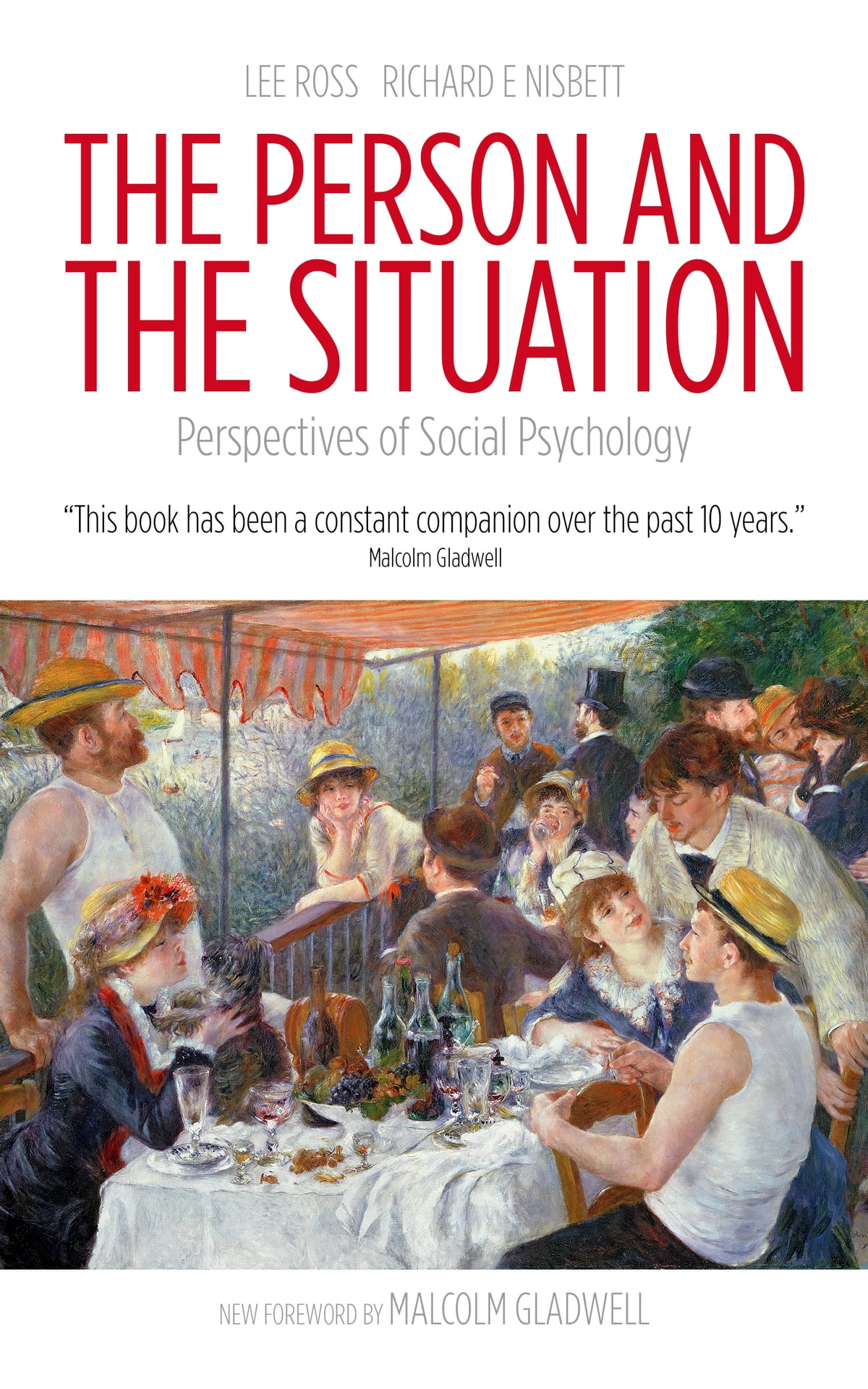
The Person and the Situation PDF - Lee Ross
Lee Ross • psychology • 309 Pages
(0)
Author
Lee RossCategory
Social sciencesSection
Number Of Downloads
57
Number Of Reads
119
File Size
1.91 MB
Views
1,410
Quate
Review
Save
Share
Book Description
The Person and the Situation by Lee Ross
The Person and the Situation: Perspectives of Social Psychology is a landmark work in modern social psychology that challenges one of the most common assumptions people make about human behavior: the belief that personality alone determines how individuals think, act, and make decisions. Written by renowned psychologists Lee Ross and Richard E. Nisbett, this influential book explores how situations, environments, social pressures, and subtle contextual factors often shape behavior far more powerfully than stable personality traits. (besci.org)
Blending classic psychological experiments, behavioral research, philosophical reflection, and real-world examples, the book offers readers a deep yet accessible introduction to the foundations of social psychology. Rather than presenting human behavior as fixed and predictable, Ross and Nisbett reveal the complexity of social influence and demonstrate how ordinary people can behave in dramatically different ways depending on context, expectations, and environmental conditions. (Forage)
A Foundational Book in Social Psychology
Widely regarded as one of the most important books in behavioral science and social psychology, The Person and the Situation examines the tension between dispositional explanations of behavior and situational explanations. The authors argue that people consistently overestimate the role of personality while underestimating the power of external circumstances — a cognitive bias now commonly known as the fundamental attribution error. (Goodreads)
Through engaging discussions of famous psychological studies involving conformity, obedience, perception, persuasion, and social judgment, the book explains why individuals often misunderstand both themselves and others. Readers are introduced to influential concepts such as attribution theory, social influence, construal, channel factors, tension systems, and behavioral consistency. These ideas are presented not as abstract academic theories, but as practical tools for understanding relationships, organizations, politics, education, negotiation, and everyday decision-making. (besci.org)
The writing combines intellectual depth with clarity, making the book valuable for psychology students, researchers, professionals, and curious general readers interested in human nature and behavior.
Exploring the Power of Situations
One of the central insights of the book is that small situational differences can produce surprisingly large behavioral outcomes. Ross and Nisbett demonstrate how factors that appear insignificant — social expectations, environmental cues, timing, framing, peer pressure, or institutional structures — can dramatically influence moral choices, judgments, and actions. (besci.org)
The authors challenge the traditional belief that behavior reflects stable character traits across situations. Instead, they explain that human behavior is often context-dependent and shaped by how people interpret the environments around them. This perspective reshapes the way readers think about success, failure, conflict, prejudice, cooperation, and responsibility.
The book also explores why people are often poor judges of their own motivations and why social misunderstandings are so common. By examining how perception and interpretation influence reactions, the authors reveal the hidden psychological mechanisms behind disagreement, stereotyping, and interpersonal conflict. These discussions remain highly relevant in contemporary conversations about politics, media, leadership, workplace culture, and social behavior.
Key Themes and Psychological Concepts
Throughout the book, readers encounter many of the foundational concepts that define modern social psychology. Topics explored include:
- The influence of social environments on behavior
- Fundamental attribution error and dispositional bias
- Conformity and obedience studies
- Social perception and judgment
- Cognitive biases and decision-making
- Framing effects and construal processes
- Group dynamics and social influence
- Personality versus situational explanations
- Predictability of human behavior
- Behavioral interventions and social change
The authors connect these ideas to both laboratory research and real-life situations, helping readers understand why people frequently act inconsistently across different circumstances. This combination of theory and practical application makes the book especially valuable for readers interested in behavioral economics, sociology, organizational psychology, communication, negotiation, and leadership studies.
Writing Style and Reading Experience
Although grounded in serious academic research, The Person and the Situation is written in a thoughtful and engaging style that rewards careful reading. The book does not rely on sensationalism or oversimplified pop psychology. Instead, it presents rigorous ideas in a clear narrative voice that encourages reflection and critical thinking.
Readers who enjoy intellectually rich nonfiction, behavioral science books, and psychology classics will appreciate the depth of analysis and the authors’ ability to connect scientific findings with everyday human experience. The text balances scholarly credibility with readability, making it suitable for advanced students while remaining accessible to motivated general audiences. (Goodreads)
The influence of the book extends far beyond academic psychology. Writer Malcolm Gladwell, who contributed a foreword to later editions, described the work as deeply influential on his own thinking and writing about human behavior and social systems. (Google Books)
Why Readers Continue to Discover This Book
Decades after its original publication, The Person and the Situation remains one of the most respected introductions to social psychological thinking. Its arguments continue to shape conversations in psychology, business, public policy, education, law, negotiation, and behavioral science. The book’s insights feel especially relevant in a world increasingly focused on human behavior, decision-making, social influence, and cognitive bias.
Readers searching for books about human behavior, behavioral psychology, social influence, critical thinking, cognitive bias, persuasion, or the psychology of decision-making will find this work both intellectually rewarding and practically insightful. It appeals to those interested in understanding why people behave differently across situations and how environments can quietly shape beliefs, actions, and relationships.
For anyone seeking a deeper understanding of the forces that influence human conduct, The Person and the Situation offers a sophisticated and enduring perspective on the relationship between individuals and the social worlds they inhabit. (besci.org)
Lee Ross
Lee Ross was one of the most influential social psychologists of the modern era, widely recognized for transforming the understanding of human behavior, social judgment, and interpersonal conflict. His work reshaped the field of social psychology by demonstrating that human behavior is deeply influenced by situational factors rather than merely by stable personality traits. Lee Ross became especially well known through the landmark book The Person and the Situation: Perspectives of Social Psychology, co-authored with Richard E. Nisbett. This influential work is considered a classic in psychology and continues to be studied in universities around the world for its insightful examination of how context shapes thought and behavior.
Born in the United States, Lee Ross built an extraordinary academic career that eventually led him to Stanford University, where he served as a professor of psychology. Throughout his professional life, he focused on understanding how people interpret social situations, form judgments, and misunderstand one another. His research explored the hidden psychological mechanisms behind human decision-making and social conflict, making him one of the most cited scholars in social psychology. Ross contributed to several groundbreaking concepts, including the “fundamental attribution error,” a theory explaining how people tend to overestimate personality-based explanations for behavior while underestimating the influence of external circumstances.
One of Lee Ross’s most important intellectual contributions was the concept of “naive realism.” This theory suggests that individuals believe they see the world objectively and rationally, while assuming that those who disagree with them are biased, uninformed, or irrational. The idea became highly influential in understanding political polarization, ideological conflicts, and interpersonal misunderstandings. Ross demonstrated that even intelligent and well-meaning individuals can become trapped in psychological biases that prevent constructive communication and mutual understanding.
In The Person and the Situation, Lee Ross and Richard Nisbett argued that human behavior cannot be fully understood without considering environmental and social contexts. The book challenged the common belief that actions primarily reflect inner character or personality. Through discussions of famous psychological experiments and social studies, Ross illustrated how subtle situational pressures can dramatically shape behavior. The authors examined topics such as conformity, obedience, social influence, and group dynamics, offering readers a comprehensive framework for understanding why people behave differently in different settings.
The book gained recognition not only within academic psychology but also among general readers interested in human nature and society. Its accessible writing style allowed complex psychological theories to become understandable for a broader audience. The influence of the book extended far beyond psychology classrooms, inspiring thinkers in sociology, political science, business, education, and conflict resolution. Malcolm Gladwell, who later wrote the foreword for a reissued edition, openly acknowledged the intellectual influence the book had on his own writing and thinking.
Lee Ross was also deeply involved in the study of conflict resolution and negotiation. At Stanford University, he became associated with research initiatives focused on reducing misunderstanding between opposing groups and improving communication in political and social disputes. His work examined why individuals and communities often become entrenched in their beliefs and why compromise becomes psychologically difficult. Ross believed that many conflicts persist not because of evil intentions, but because people sincerely perceive reality differently.
Another important aspect of Lee Ross’s scholarship was his ability to connect academic theory with real-world problems. Rather than limiting his research to laboratory settings, he sought to explain everyday social behavior, prejudice, stereotyping, and ideological division. His studies helped explain why people often misjudge others, why eyewitness testimony can be unreliable, and why public debates become emotionally polarized. Many of his insights remain highly relevant in the modern era of digital communication and social media, where misunderstanding and confirmation bias continue to shape public discourse.
Throughout his career, Lee Ross authored numerous academic articles, book chapters, and collaborative works that influenced generations of psychologists and researchers. His writing combined intellectual rigor with practical relevance, allowing his ideas to reach both scholars and ordinary readers. Even after his passing in 2021, his theories continue to shape discussions about human behavior, social perception, and the psychology of disagreement.
Today, Lee Ross is remembered not only as a pioneering academic but also as a thinker who fundamentally changed how people understand themselves and others. His work continues to inspire students, researchers, educators, and writers interested in the complex interaction between personality, social context, and human judgment. The enduring popularity of The Person and the Situation reflects the lasting importance of his ideas and his extraordinary contribution to modern social psychology.
Earn Rewards While Reading!
Every 10 pages you read and spent 30 seconds on every page, earns you 5 reward points! Keep reading to unlock achievements and exclusive benefits.
Read
Rate Now
5 Stars
4 Stars
3 Stars
2 Stars
1 Stars
The Person and the Situation Quotes
Top Rated
Latest
Quate
Be the first to leave a quote and earn 10 points
instead of 3
'%20/%3e%3c/svg%3e "The Man Who Mistook His Wife for a Hat")
Comments
Be the first to leave a comment and earn 5 points
instead of 3