
Newly released
This book is new and will be uploaded as soon as it becomes available to us and if we secure the necessary publishing rights.
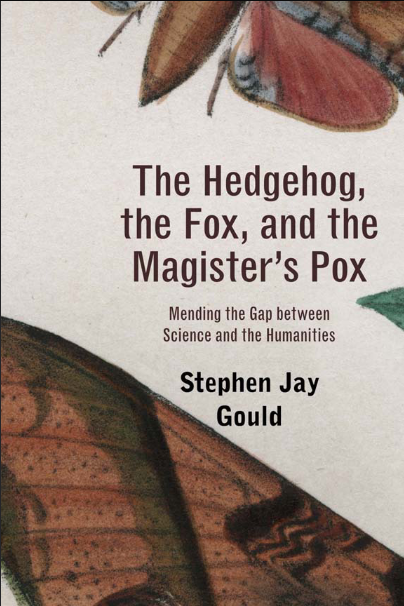
The Hedgehog, the Fox, and the Magister's Pox PDF - Stephen Jay Gould
Stephen Jay Gould • Biology • 288 Pages
(0)
Quate
Review
Save
Share
Book Description
The Hedgehog, the Fox, and the Magister's Pox: Mending the Gap between Science and the Humanities
In his final book and his first full-length original title since Full House in 1996, the eminent paleontologist Stephen Jay Gould offers a surprising and nuanced study of the complex relationship between our two great ways of knowing: science and the humanities, twin realms of knowledge that have been divided against each other for far too long. In building his case, Gould shows why the common assumption of an inescapable conflict between science and the humanities is false, mounts a spirited rebuttal to the ideas that his intellectual rival E. O. Wilson set forth in his book Consilience, and explains why the pursuit of knowledge must always operate upon the bedrock of nature' s randomness. The Hedgehog, the Fox, and the Magister’s Pox is a controversial discourse, rich with facts and observations gathered by one of the most erudite minds of our time.
Stephen Jay Gould
Book Currently Unavailable
This book is currently unavailable for publication. We obtained it under a Creative Commons license, but the author or publisher has not granted permission to publish it.
Rate Now
5 Stars
4 Stars
3 Stars
2 Stars
1 Stars
The Hedgehog, the Fox, and the Magister's Pox Quotes
Top Rated
Latest
Quate
Be the first to leave a quote and earn 10 points
instead of 3
Other books by Stephen Jay Gould
'%20/%3e%3c/svg%3e "Wonderful Life: The Burgess Shale and the Nature of History")
1508
English
Other books like The Hedgehog, the Fox, and the Magister's Pox
Oliver Brandenberg.
Biology
(0)
1853
English
Comments
Be the first to leave a comment and earn 5 points
instead of 3