

The source of the book
This book is published for the public benefit under a Creative Commons license, or with the permission of the author or publisher. If you have any objections to its publication, please contact us.
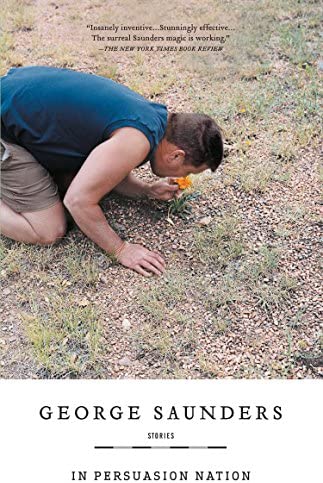
In Persuasion Nation PDF - George Saunders
George Saunders • short stories • 201 Pages
(0)
Author
George SaundersCategory
literatureSection
Number Of Downloads
35
Number Of Reads
241
File Size
0.88 MB
Views
1,233
Quate
Review
Save
Share
Book Description
In Persuasion Nation by George Saunders: A Sharp, Strange, and Human Collection of Satirical Short Stories
In Persuasion Nation by George Saunders is a bold collection of American short stories that turns consumer culture, advertising language, media noise, political fear, and everyday moral confusion into fiction that is at once comic, unsettling, and deeply humane. First published in 2006 and later issued in paperback by Riverhead Books, the book belongs to Saunders’s distinctive world of literary satire, dark humor, and speculative fiction, where absurd situations expose recognizable truths about modern life. (PenguinRandomhouse.com)
At the center of In Persuasion Nation is a society that often feels only slightly exaggerated from our own: a place where brands speak with too much confidence, entertainment becomes a form of control, public fear can turn into cruelty, and ordinary people struggle to remain kind inside systems designed to make them anxious, competitive, or obedient. Saunders fills the collection with unusual premises—talking products, strange corporate worlds, moral fables, media-saturated families, and citizens caught inside bizarre social rituals—but the emotional force of the book comes from how real its characters feel beneath the absurdity. (PenguinRandomhouse.com)
A Satirical Vision of Advertising, Media, and Modern America
This George Saunders short story collection is especially powerful for readers interested in fiction about consumerism, advertising, corporate culture, and the persuasive language that shapes public life. Saunders is not simply mocking commercials, slogans, or political messaging; he is examining what happens when human beings begin to think in the language of marketing. In these stories, people are often surrounded by scripts—corporate scripts, media scripts, family scripts, patriotic scripts—and the drama comes from the painful effort to speak honestly inside a world that keeps telling them what to want, fear, buy, or believe.
The title itself, In Persuasion Nation, suggests a country where persuasion has become the atmosphere everyone breathes. Saunders uses exaggerated comedy to reveal how easily entertainment can become manipulation and how easily public opinion can become moral panic. Stories such as “The Red Bow,” “Jon,” “Bohemians,” “Brad Carrigan, American,” and the title story move between satire, speculative imagination, and emotional realism, creating a collection that feels inventive without losing sight of loneliness, tenderness, guilt, and conscience. (ويكيبيديا)
Dark Humor with Real Emotional Weight
Although In Persuasion Nation is often described through its humor, its strongest effect comes from the tension between the funny and the heartbreaking. Saunders writes with a fast, comic energy, but his satire is rarely cold. Behind the absurd setups are people trying to love someone, protect someone, escape shame, survive work, understand violence, or hold on to a fragile sense of goodness. This makes the book ideal for readers who enjoy funny literary fiction that also asks serious questions about morality, empathy, social pressure, and the cost of living inside a culture of constant performance.
The collection’s humor is deliberately unstable. A story may begin with an outrageous concept and then slowly reveal fear, grief, or moral desperation underneath it. Saunders often makes readers laugh before making them uncomfortable with what the laughter has exposed. That quality has made his work especially appealing to readers of satirical fiction, absurdist literature, and contemporary American fiction, because the stories are imaginative and strange while remaining grounded in recognizable emotional experience.
Stories That Challenge the Reader Without Losing Clarity
Readers coming to In Persuasion Nation by George Saunders should expect a collection that is playful in form but serious in purpose. Some stories use letters, monologues, media formats, compressed dialogue, or deliberately artificial voices. Others take place in worlds shaped by advertising, bureaucracy, experiments, televised realities, or strange social rules. The result is a reading experience that feels energetic and unpredictable, with each story offering a different angle on how language can distort reality and how people try to recover meaning from that distortion.
This is not a conventional realist collection, yet it is not difficult for the sake of difficulty. Saunders’s style is accessible because it is driven by voice, rhythm, humor, and emotional pressure. His fictional worlds may be exaggerated, but the human questions are clear: How do people behave when fear spreads through a community? What happens when entertainment replaces compassion? Can tenderness survive inside a commercialized world? How much of a person’s inner life can be colonized by the language of selling, judging, and performing?
A Key Book for Readers of George Saunders
For readers exploring George Saunders books, In Persuasion Nation is an important part of the author’s development as one of the major voices in contemporary short fiction. Saunders is also known for works such as CivilWarLand in Bad Decline, Pastoralia, Tenth of December, and the Booker Prize-winning novel Lincoln in the Bardo. Penguin Random House identifies him as the author of multiple acclaimed books and notes his honors including a MacArthur Fellowship and the PEN/Malamud Award for Excellence in Short Fiction. (PenguinRandomhouse.com)
This collection shows many of the qualities that define Saunders’s fiction: compressed comic dialogue, invented social systems, moral intensity, sympathy for damaged or ordinary people, and a remarkable ability to turn absurdity into compassion. Readers who already admire Tenth of December may find here a sharper and more surreal version of Saunders’s recurring concerns, while readers new to his work may discover why his stories are often associated with satire, experimental literary fiction, and emotionally charged depictions of American life.
Why In Persuasion Nation Still Feels Relevant
One reason In Persuasion Nation continues to feel fresh is that its concerns have only become more recognizable. The book’s world of aggressive messaging, commercial identity, public outrage, media repetition, and manipulated desire speaks strongly to readers living in an age of social platforms, targeted advertising, political branding, and nonstop digital persuasion. Saunders wrote these stories before many of today’s media habits became dominant, yet the collection often feels unusually alert to the emotional and moral consequences of a culture built around attention, consumption, and spectacle.
The book is especially valuable for readers who enjoy fiction that does more than tell a story. In Persuasion Nation invites reflection on how people are shaped by the systems around them, how language can be used to soften cruelty, and how humor can become a way of seeing more clearly. Its satire is not merely a critique of advertising or politics; it is a critique of any culture that turns human beings into consumers, performers, targets, or data points before seeing them as souls.
Who Should Read In Persuasion Nation?
In Persuasion Nation is a strong choice for readers who enjoy short story collections, literary fiction with dark humor, American satire, and fiction that blends realism with speculative or absurd elements. It will appeal to fans of writers who use strange premises to reveal emotional truth, as well as to readers interested in books about consumer society, media influence, corporate language, and the uneasy comedy of modern life. The collection can also be rewarding for students and discussion groups because each story raises questions about ethics, identity, social conformity, fear, love, and responsibility.
This is also a memorable book for readers who want fiction that feels alive at the sentence level. Saunders’s prose is quick, comic, compressed, and often surprising, but it is never only clever. His best moments arrive when the artificial language of the world breaks open and a character’s vulnerability becomes visible. That movement—from noise to feeling, from satire to compassion—is one of the defining pleasures of reading George Saunders.
A Brilliantly Strange Collection About Persuasion and Humanity
In Persuasion Nation by George Saunders is a daring, funny, and unsettling work of contemporary short fiction that captures the strangeness of a society shaped by advertising, fear, entertainment, and desire. Its stories are filled with bizarre inventions and comic exaggerations, yet their emotional center remains deeply human. Saunders uses the tools of satire not to distance readers from the world, but to bring them closer to the hidden pressures that shape ordinary behavior.
For anyone searching for a smart and original George Saunders book, a powerful satirical short story collection, or a work of literary fiction about consumer culture and modern America, In Persuasion Nation offers a reading experience that is inventive, disturbing, compassionate, and hard to forget.
George Saunders
George Saunders is an American author, short story writer, novelist, essayist, and teacher whose work has become central to contemporary literary fiction, especially for readers interested in satire, moral imagination, experimental narrative form, and compassionate social criticism. Although he is now widely recognized as one of the most distinctive writers in modern American literature, Saunders followed an unusual path into fiction. He studied geophysical engineering, worked in technical and industrial settings, and brought into literature a sharp awareness of systems, workplaces, bureaucratic language, consumer culture, and the pressures placed on ordinary people by institutions that often speak in polished slogans while producing real suffering. This background helps explain the strange energy of his fiction: his stories often feel at once futuristic and familiar, comic and devastating, absurd and deeply humane. In works such as CivilWarLand in Bad Decline, Pastoralia, In Persuasion Nation, Tenth of December, and Liberation Day, Saunders explores theme parks, corporate environments, artificial communities, media-saturated worlds, and damaged families, using exaggerated premises to reveal emotional truths about fear, ambition, debt, shame, kindness, and moral choice. His style is instantly recognizable for its blend of vernacular speech, dark humor, surreal invention, and sudden moments of tenderness. Rather than presenting satire as simple ridicule, he uses satire to ask how people become trapped inside economic pressures, cultural scripts, and self-protective stories, and how they might still act with generosity. Saunders achieved a major international breakthrough with Lincoln in the Bardo, his first novel, which won the Booker Prize and expanded his audience far beyond the world of short fiction. The novel uses a chorus of voices to imagine the grief of Abraham Lincoln after the death of his son Willie, while also creating a spiritual landscape filled with comic, tragic, and yearning presences. It is formally daring, emotionally direct, and historically resonant, showing Saunders’s ability to turn an experimental structure into a moving meditation on death, love, national sorrow, and the difficulty of letting go. His later novel Vigil continues many of his central concerns, including mortality, spiritual reckoning, environmental responsibility, corporate power, and the possibility of empathy even at the edge of judgment. Saunders is also admired for A Swim in a Pond in the Rain, a craft book and literary meditation drawn from his long experience teaching Russian short stories, where he examines how narrative attention works and why fiction can sharpen the reader’s moral perception. As a professor of creative writing at Syracuse University, he has influenced many writers not only through his published books but also through his approach to teaching, which emphasizes precision, revision, playfulness, and the ethical force of noticing. His honors include a MacArthur Fellowship, a Guggenheim Fellowship, the PEN/Malamud Award for excellence in the short story, the Story Prize and the Folio Prize for Tenth of December, recognition by Time as one of the world’s most influential people in 2013, and the 2025 Medal for Distinguished Contribution to American Letters. Yet the real significance of George Saunders lies not only in awards or reputation. His fiction has helped renew the short story as a form capable of confronting contemporary life without becoming flatly realistic or narrowly political. He understands that modern cruelty often hides inside ordinary language, that people can be ridiculous and worthy of love at the same time, and that moral awakening may begin in a tiny hesitation before harm. For readers, students, and writers, Saunders offers a model of literary art that is inventive without being cold, funny without being shallow, and compassionate without being sentimental. His books remain especially valuable for anyone seeking fiction that challenges the imagination while deepening the capacity for attention, mercy, and self-examination.
Earn Rewards While Reading!
Every 10 pages you read and spent 30 seconds on every page, earns you 5 reward points! Keep reading to unlock achievements and exclusive benefits.
Read
Rate Now
5 Stars
4 Stars
3 Stars
2 Stars
1 Stars
In Persuasion Nation Quotes
Top Rated
Latest
Quate
Be the first to leave a quote and earn 10 points
instead of 3
'%20/%3e%3c/svg%3e "Tenth Of December")
Comments
Be the first to leave a comment and earn 5 points
instead of 3