

The source of the book
This book is published for the public benefit under a Creative Commons license, or with the permission of the author or publisher. If you have any objections to its publication, please contact us.
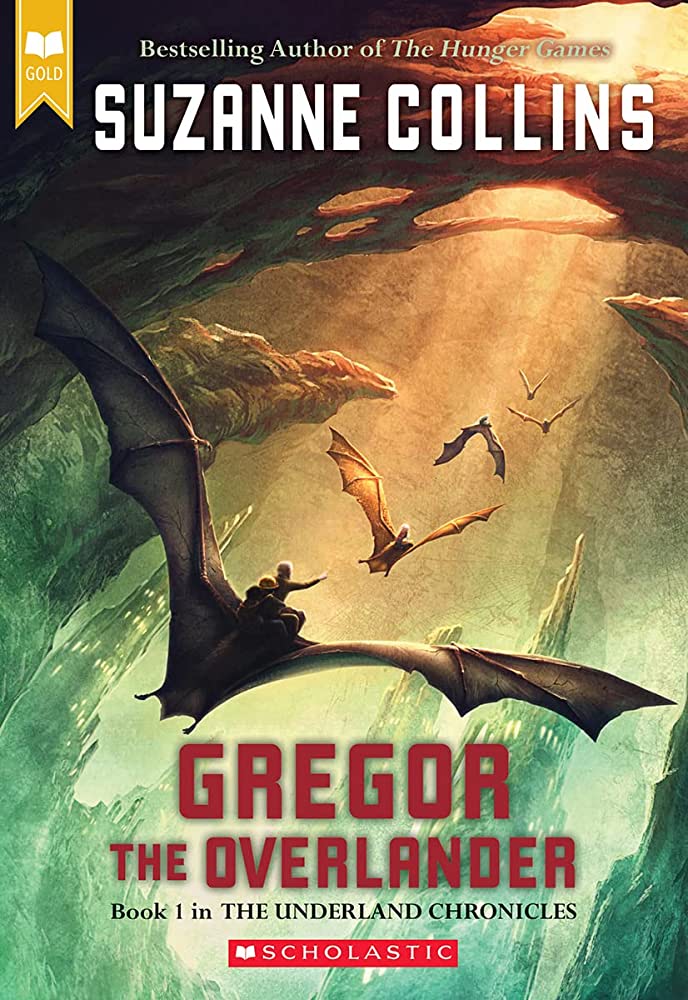
Gregor the Overlander PDF - Suzanne Collins
Suzanne Collins • Fantasy novels • 252 Pages
(0)
Author
Suzanne CollinsCategory
literatureSection
Number Of Downloads
19
Number Of Reads
291
File Size
0.78 MB
Views
936
Quate
Review
Save
Share
Book Description
Gregor the Overlander by Suzanne Collins
Gregor the Overlander by Suzanne Collins is a gripping middle grade fantasy adventure and the first book in The Underland Chronicles, a series that introduces readers to a hidden world beneath New York City. Before Suzanne Collins became internationally known for The Hunger Games, she created the story of Gregor, an ordinary boy whose life changes when a strange accident pulls him far below the familiar streets of the city and into a dangerous underground kingdom filled with mystery, prophecy, conflict, and unforgettable creatures.
The novel begins with Gregor living a difficult but realistic life aboveground. He is not looking for adventure, glory, or destiny. He is a responsible boy helping care for his family after the unexplained disappearance of his father, and his ordinary world is shaped by worry, duty, and unanswered questions. When Gregor and his little sister Boots fall through a grate in their apartment building’s laundry room, they enter the Underland, a vast and shadowy realm where humans live alongside giant bats, cockroaches, spiders, and rats. What seems at first like a terrifying accident soon becomes the beginning of a quest that may be connected to Gregor’s missing father and to the future of an entire underground civilization.
A Fantasy Adventure Beneath New York City
One of the most memorable strengths of Gregor the Overlander is its imaginative setting. The Underland is not a bright fairy-tale kingdom, but a strange, tense, and fully realized underground world with its own rules, dangers, alliances, and history. Suzanne Collins builds this hidden realm with a cinematic sense of movement and suspense, creating a place that feels both magical and threatening. Readers discover it through Gregor’s eyes: the enormous creatures, the pale Underlanders, the dark tunnels, the fragile political balance, and the constant sense that danger may appear from any direction.
The story combines the excitement of a children’s fantasy novel with the emotional seriousness of a family quest. Gregor’s journey is not only about surviving the Underland, but about understanding courage when he has no desire to be a hero. The prophecy that surrounds him suggests that his arrival may not be accidental, yet Collins keeps the focus on Gregor’s human reactions: fear, confusion, loyalty, frustration, and the deep need to protect his sister. This balance gives the novel its lasting appeal. It is fast-paced enough for readers who enjoy action and adventure, but thoughtful enough for those who want a fantasy story with emotional depth.
Courage, Family, and the Burden of Responsibility
At the heart of Gregor the Overlander by Suzanne Collins is the bond between family members. Gregor’s love for Boots gives the story warmth and urgency, turning the underground adventure into something more personal than a simple quest. Boots is small, innocent, and trusting, and her presence reveals Gregor’s protective nature. He is young, but he has already learned what it means to carry responsibility, and that makes his journey through the Underland especially powerful for young readers who understand the pressure of growing up before they feel ready.
The novel also explores the idea of destiny in a grounded and accessible way. Gregor does not rush toward prophecy or greatness. He doubts what others expect from him, questions the world he has entered, and wants above all to return home safely. This reluctance makes him a relatable hero. His bravery does not come from confidence or a desire for recognition; it comes from love, necessity, and the choices he makes when others are counting on him. For readers searching for fantasy books about courage, loyalty, and family, Gregor’s story offers an engaging and meaningful experience.
A Strong Beginning to The Underland Chronicles
As Book 1 of The Underland Chronicles, Gregor the Overlander introduces the central world, conflicts, and emotional stakes of the series without overwhelming the reader. It opens the door to a larger saga involving war, prophecy, difficult alliances, and the moral questions that often appear in Suzanne Collins’s work. Even though the book is written for younger readers, it does not talk down to them. Collins presents fear, loss, prejudice, and conflict in a way that is understandable for children and compelling for older readers as well.
The Underland is filled with creatures who are not simply monsters or allies. Giant rats, bats, cockroaches, and spiders all play roles in a world where survival depends on uneasy relationships and shifting loyalties. This gives the story a richer texture than a straightforward good-versus-evil adventure. Readers are encouraged to think about trust, difference, and the way communities can misunderstand or fear one another. These themes make the book valuable not only as an exciting fantasy adventure for kids, but also as a story that can spark discussion in classrooms, reading groups, and family reading time.
Why Readers Enjoy Gregor the Overlander
Readers who enjoy fast-paced fantasy, hidden worlds, dangerous quests, and young heroes facing impossible choices will find much to enjoy in Gregor the Overlander. The chapters move with strong momentum, and the story offers a steady mix of suspense, discovery, humor, and emotional tension. Suzanne Collins has a gift for creating high-stakes situations that remain clear and accessible, making the novel especially appealing for middle grade readers who are beginning to explore longer fantasy books.
The book is also a strong choice for readers who like stories similar in spirit to classic portal fantasies, where an ordinary child enters an extraordinary world. However, Gregor the Overlander has its own darker, more urban atmosphere. Instead of stepping through a wardrobe or sailing to a distant magical island, Gregor falls beneath the city he already knows. This gives the novel a distinctive identity: it feels close to everyday life and yet completely otherworldly. The idea that a vast, dangerous civilization could exist under an ordinary apartment building gives the story an exciting sense of possibility.
A Suzanne Collins Novel for Young Readers and Beyond
For fans of Suzanne Collins, this book is especially interesting because it shows many of the storytelling qualities that later became associated with her writing: urgent pacing, moral complexity, young characters under pressure, and a world shaped by conflict. While Gregor the Overlander is very different from The Hunger Games in setting and audience, readers can still recognize Collins’s interest in survival, loyalty, power, and the cost of war. The novel is suitable for young fantasy readers, but its themes give it crossover appeal for teens and adults who appreciate imaginative adventure with emotional weight.
Parents, teachers, and librarians often look for books that can hold a child’s attention while also offering substance. Gregor the Overlander fits that need well. It is adventurous without being shallow, imaginative without losing emotional realism, and suspenseful without depending only on action. Gregor’s journey gives readers a hero who is brave because he cares, not because he is fearless. That makes the book both exciting and reassuring, especially for children who enjoy stories about ordinary characters discovering unexpected strength.
An Immersive Start to an Underground Quest
Gregor the Overlander is a compelling introduction to a hidden fantasy world and a memorable beginning to The Underland Chronicles. With its underground kingdom, dangerous creatures, mysterious prophecy, and deeply personal search for answers, the novel offers a reading experience full of adventure and heart. Suzanne Collins creates a story that is easy to enter, difficult to put down, and rich enough to stay with readers after the final page.
For anyone searching for a middle grade fantasy book, a children’s adventure novel, or the first volume in a suspenseful fantasy series, Gregor the Overlander by Suzanne Collins is a strong and rewarding choice. It invites readers into the darkness beneath the city and follows a boy who must decide what courage means when the way home is uncertain, the world around him is on the edge of war, and the people he loves may depend on the choices he makes.
Suzanne Collins
Suzanne Collins is an American author and television writer whose work has become one of the defining forces in contemporary young adult literature, especially through her internationally celebrated series The Hunger Games. Known for combining suspenseful storytelling with sharp social and political insight, Collins writes fiction that is accessible to young readers while remaining powerful enough to engage adults, educators, critics, and film audiences around the world. Before her rise as a novelist, she built a strong career in children’s television, writing for programs that required clarity, pace, emotional intelligence, and a deep understanding of how young audiences respond to character and conflict. That professional foundation shaped the narrative energy of her books: her chapters move with cinematic focus, her dialogue is lean and purposeful, and her scenes often carry the directness of visual storytelling while still offering rich moral complexity. Collins first gained attention in children’s literature with The Underland Chronicles, beginning with Gregor the Overlander, a fantasy adventure that introduces an underground world filled with danger, prophecy, war, and difficult choices. Although written for younger readers, the series treats its audience seriously, exploring fear, loyalty, family responsibility, loss, and the cost of violence. This early work already showed many of the themes that would later become central to Collins’s reputation: children forced into adult conflicts, systems that normalize brutality, and protagonists who must act bravely without ever being allowed simple certainty. Her breakthrough came with The Hunger Games, followed by Catching Fire and Mockingjay, a trilogy that transformed the landscape of young adult fiction. Through the character of Katniss Everdeen, Collins created a heroine who is not heroic because she seeks glory, but because she tries to protect those she loves in a society designed to turn suffering into spectacle. The fictional nation of Panem became a memorable literary setting because it is both vividly imagined and disturbingly recognizable: a world of extreme inequality, political propaganda, media manipulation, ritualized violence, and public entertainment built on private pain. Collins’s greatest achievement in the trilogy lies in her refusal to simplify rebellion, trauma, or power. As the story expands, the reader sees that oppression can wear many faces, that revolutionary movements can become morally compromised, and that survival often leaves wounds no victory can erase. Her later return to Panem in The Ballad of Songbirds and Snakes deepened the mythology of the series by examining the early life of Coriolanus Snow and the conditions that help shape authoritarian ambition. Rather than presenting evil as something simple or distant, Collins traces how vanity, fear, privilege, resentment, and intellectual self-justification can become the roots of tyranny. With Sunrise on the Reaping, she continued to expand the moral and historical scope of the Hunger Games universe, revisiting questions about propaganda, public obedience, narrative control, and the political power of memory. In addition to her dystopian and fantasy fiction, Collins wrote Year of the Jungle, a picture book inspired by childhood experience and family memory, showing her sustained interest in how war affects children emotionally long before they can fully understand its causes. Her literary style is economical but emotionally charged, built on clear stakes, symbolic detail, and characters who are shaped by fear, hunger, grief, loyalty, and resistance. Collins’s books have reached global audiences not only because they are thrilling, but because they ask urgent questions about entertainment, ethics, inequality, and the responsibility of the individual under pressure. For a book website, Suzanne Collins stands out as an author whose name is strongly associated with bestselling young adult fiction, dystopian literature, powerful female protagonists, and stories that turn imaginative worlds into mirrors of real political and human concerns.
Earn Rewards While Reading!
Every 10 pages you read and spent 30 seconds on every page, earns you 5 reward points! Keep reading to unlock achievements and exclusive benefits.
Read
Rate Now
5 Stars
4 Stars
3 Stars
2 Stars
1 Stars
Gregor the Overlander Quotes
Top Rated
Latest
Quate
Be the first to leave a quote and earn 10 points
instead of 3
Other books by Suzanne Collins
Other books like Gregor the Overlander
'%20/%3e%3c/svg%3e "Fantastic Beasts: The Crimes of Grindelwald - the Original Screenplay")
J. K. Rowling.
Fantasy novels
(0)
7667
English
Comments
Be the first to leave a comment and earn 5 points
instead of 3