

The source of the book
This book is published for the public benefit under a Creative Commons license, or with the permission of the author or publisher. If you have any objections to its publication, please contact us.
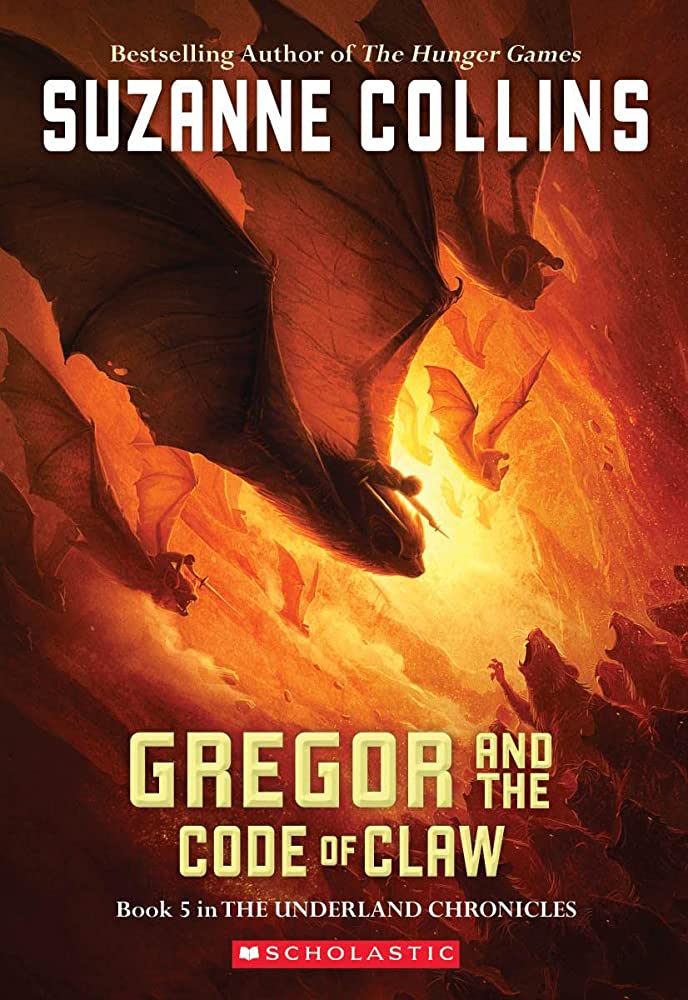
Gregor and the Code of Claw PDF - Suzanne Collins
Suzanne Collins • Fantasy novels • 189 Pages
(0)
Author
Suzanne CollinsCategory
literatureSection
Number Of Downloads
63
Number Of Reads
302
File Size
1.16 MB
Views
1,655
Quate
Review
Save
Share
Book Description
Gregor and the Code of Claw by Suzanne Collins: The Final Underland Chronicles Adventure
Gregor and the Code of Claw by Suzanne Collins is the fifth and concluding book in The Underland Chronicles, the middle-grade fantasy series that began with Gregor the Overlander. Set between ordinary New York City life and the strange, dangerous world beneath it, the novel brings Gregor’s journey to its most urgent point: a final conflict in the Underland, a prophecy no one wants him to read, and a mysterious code that may decide the fate of everyone he loves. Scholastic lists Gregor and the Code of Claw as the 2007 final title in the five-book Underland series.
A High-Stakes Fantasy Finale Beneath the City
In this final installment, Gregor is no longer simply a boy who has stumbled into an underground world of giant bats, rats, spiders, cockroaches, and humans. He has become a reluctant warrior shaped by danger, loyalty, loss, and the burden of prophecy. The people of the Underland have tried to keep The Prophecy of Time from him, but Gregor understands that whatever it contains must be terrible. When he learns that it speaks of the warrior’s death, the story becomes more than an adventure quest; it becomes a tense and emotional test of courage, choice, and responsibility. Scholastic’s guide describes the central situation as one in which an army of rats approaches Regalia while Gregor’s mother and sister are still there, leaving him to defend the city and protect his family.
The title’s “Code of Claw” gives the book its distinctive sense of mystery and strategy. Alongside battles, alliances, and desperate escapes, the novel includes a code that must be solved before time runs out. This makes Gregor and the Code of Claw especially appealing to readers who enjoy fantasy stories with puzzles, secret messages, hidden meanings, and political tension. The book combines the momentum of an action adventure with the suspense of a wartime intelligence story, giving the final Underland Chronicles volume a darker and more complex atmosphere than a simple good-versus-evil quest.
Themes of War, Loyalty, and Moral Choice
Suzanne Collins is known for writing stories in which young characters face difficult moral choices, and Gregor and the Code of Claw is one of the clearest examples of that approach. The novel explores war not as a glamorous contest, but as a painful force that changes families, communities, and individual identities. Gregor’s role as a “rager,” his fear of his own violence, and his desire to protect the people closest to him all create a powerful inner conflict. The result is a children’s fantasy novel that remains accessible to middle-grade readers while also raising serious questions about restraint, revenge, sacrifice, and what it means to do the right thing under extreme pressure.
The Underland itself is one of the strengths of the series. Its societies have histories, prejudices, alliances, wounds, and competing claims to survival. In this book, those tensions reach their peak as humans, rats, and other Underland creatures face the possibility of destruction. Scholastic’s discussion materials connect the series to themes such as the reluctant hero, fate versus free will, the effects of war, and the way fictional conflict can mirror real-world attitudes and divisions.
Gregor as a Reluctant Hero
One reason Gregor and the Code of Claw remains memorable is that Gregor is not a hero because he seeks glory. He is a hero because he keeps being placed in situations where someone must act, and he cannot ignore the people who depend on him. Across The Underland Chronicles, Gregor changes from a boy trying to hold his family together into someone forced to make decisions with consequences far beyond himself. This final book deepens that transformation, showing the emotional cost of bravery and the loneliness that can come with being seen as a symbol rather than a person.
His relationship with family is central to the novel’s emotional pull. Gregor’s need to protect his mother and sisters keeps the fantasy grounded in recognizable feeling. Even when the setting is filled with giant creatures, ancient prophecies, and underground kingdoms, the heart of the story remains deeply human. Readers looking for a middle-grade fantasy adventure about family, courage, and survival will find that the book’s strongest moments often come from Gregor’s struggle to remain compassionate while surrounded by fear and violence.
A Strong Choice for Readers of Middle-Grade Fantasy
Gregor and the Code of Claw is ideal for readers who enjoy fast-paced fantasy with emotional depth. It suits fans of quest fantasy, underground world adventures, prophecy-driven stories, and children’s books with complex themes. Because it is the final book in the series, it works best for readers who have already followed Gregor through the earlier Underland Chronicles novels. The emotional weight of the story depends heavily on previous relationships, earlier prophecies, and the growth Gregor has experienced throughout the series.
The book is especially valuable for readers who are ready for fantasy that does not avoid difficult subjects. While written for younger audiences, it does not treat them as unable to think about fear, grief, loyalty, anger, and moral uncertainty. Collins’s storytelling respects the intelligence of middle-grade readers, offering action and suspense while also encouraging reflection. Scholastic has described The Underland Chronicles as a middle-grade fantasy series and notes that it explores war-related topics through Gregor’s journey in the Underland.
Suzanne Collins Before The Hunger Games
Readers who know Suzanne Collins primarily as the author of The Hunger Games will recognize several of her signature concerns here: the impact of war on young people, the pressure placed on children by adult systems, and the question of whether violence can ever produce peace. Yet Gregor and the Code of Claw has its own identity. It is more openly fantastical, built around subterranean kingdoms and giant creatures, but it carries the same seriousness about survival, power, and responsibility that later became central to Collins’s young adult work. Scholastic notes that Collins first made her mark in children’s literature with the New York Times bestselling Underland Chronicles before continuing to explore war and violence in The Hunger Games trilogy.
Why Gregor and the Code of Claw Still Stands Out
As a series finale, Gregor and the Code of Claw offers suspense, danger, emotional closure, and a darker sense of consequence. It does not simply ask whether Gregor can win a battle; it asks what victory might cost, whether prophecy controls people or people shape prophecy, and how a young person can return home after being changed by war. These questions give the book lasting value for classrooms, libraries, and personal reading, especially for children and young teens beginning to explore more layered fantasy fiction.
For anyone searching for Gregor and the Code of Claw by Suzanne Collins, Underland Chronicles Book 5, or a thoughtful middle-grade fantasy series conclusion, this novel delivers a dramatic and meaningful end to Gregor’s journey. It is adventurous without being shallow, emotional without becoming sentimental, and imaginative without losing sight of real human concerns. As the final descent into the Underland, it leaves readers with a story about courage, restraint, sacrifice, and the difficult hope that can survive even in the deepest dark.
Suzanne Collins
Suzanne Collins is an American author and television writer whose work has become one of the defining forces in contemporary young adult literature, especially through her internationally celebrated series The Hunger Games. Known for combining suspenseful storytelling with sharp social and political insight, Collins writes fiction that is accessible to young readers while remaining powerful enough to engage adults, educators, critics, and film audiences around the world. Before her rise as a novelist, she built a strong career in children’s television, writing for programs that required clarity, pace, emotional intelligence, and a deep understanding of how young audiences respond to character and conflict. That professional foundation shaped the narrative energy of her books: her chapters move with cinematic focus, her dialogue is lean and purposeful, and her scenes often carry the directness of visual storytelling while still offering rich moral complexity. Collins first gained attention in children’s literature with The Underland Chronicles, beginning with Gregor the Overlander, a fantasy adventure that introduces an underground world filled with danger, prophecy, war, and difficult choices. Although written for younger readers, the series treats its audience seriously, exploring fear, loyalty, family responsibility, loss, and the cost of violence. This early work already showed many of the themes that would later become central to Collins’s reputation: children forced into adult conflicts, systems that normalize brutality, and protagonists who must act bravely without ever being allowed simple certainty. Her breakthrough came with The Hunger Games, followed by Catching Fire and Mockingjay, a trilogy that transformed the landscape of young adult fiction. Through the character of Katniss Everdeen, Collins created a heroine who is not heroic because she seeks glory, but because she tries to protect those she loves in a society designed to turn suffering into spectacle. The fictional nation of Panem became a memorable literary setting because it is both vividly imagined and disturbingly recognizable: a world of extreme inequality, political propaganda, media manipulation, ritualized violence, and public entertainment built on private pain. Collins’s greatest achievement in the trilogy lies in her refusal to simplify rebellion, trauma, or power. As the story expands, the reader sees that oppression can wear many faces, that revolutionary movements can become morally compromised, and that survival often leaves wounds no victory can erase. Her later return to Panem in The Ballad of Songbirds and Snakes deepened the mythology of the series by examining the early life of Coriolanus Snow and the conditions that help shape authoritarian ambition. Rather than presenting evil as something simple or distant, Collins traces how vanity, fear, privilege, resentment, and intellectual self-justification can become the roots of tyranny. With Sunrise on the Reaping, she continued to expand the moral and historical scope of the Hunger Games universe, revisiting questions about propaganda, public obedience, narrative control, and the political power of memory. In addition to her dystopian and fantasy fiction, Collins wrote Year of the Jungle, a picture book inspired by childhood experience and family memory, showing her sustained interest in how war affects children emotionally long before they can fully understand its causes. Her literary style is economical but emotionally charged, built on clear stakes, symbolic detail, and characters who are shaped by fear, hunger, grief, loyalty, and resistance. Collins’s books have reached global audiences not only because they are thrilling, but because they ask urgent questions about entertainment, ethics, inequality, and the responsibility of the individual under pressure. For a book website, Suzanne Collins stands out as an author whose name is strongly associated with bestselling young adult fiction, dystopian literature, powerful female protagonists, and stories that turn imaginative worlds into mirrors of real political and human concerns.
Earn Rewards While Reading!
Every 10 pages you read and spent 30 seconds on every page, earns you 5 reward points! Keep reading to unlock achievements and exclusive benefits.
Read
Rate Now
5 Stars
4 Stars
3 Stars
2 Stars
1 Stars
Gregor and the Code of Claw Quotes
Top Rated
Latest
Quate
Be the first to leave a quote and earn 10 points
instead of 3
Other books by Suzanne Collins
Other books like Gregor and the Code of Claw
'%20/%3e%3c/svg%3e "Fantastic Beasts: The Crimes of Grindelwald - the Original Screenplay")
J. K. Rowling.
Fantasy novels
(0)
7647
English
Comments
Be the first to leave a comment and earn 5 points
instead of 3