

The source of the book
This book is published for the public benefit under a Creative Commons license, or with the permission of the author or publisher. If you have any objections to its publication, please contact us.
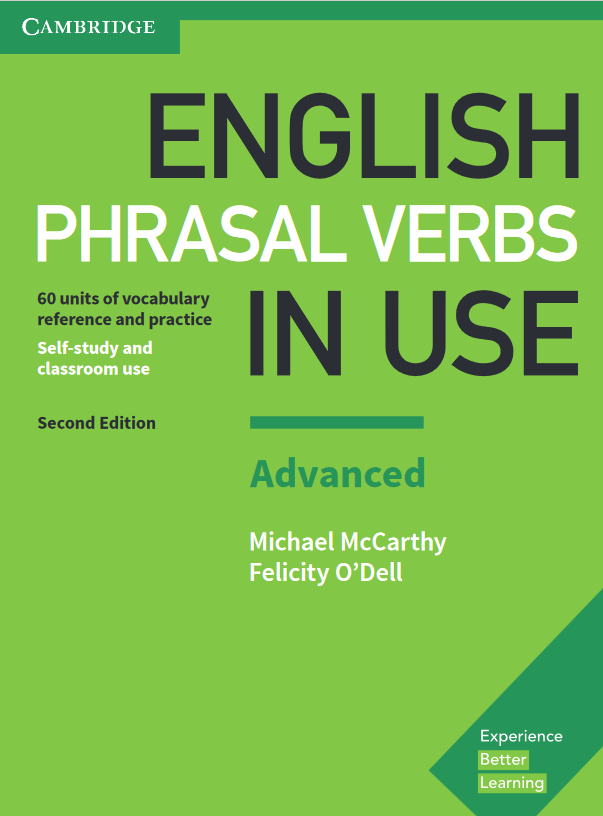
English Phrasal Verbs In Use PDF - Raymond Murphy
Raymond Murphy • English language • 194 Pages
(0)
Author
Raymond MurphyCategory
LanguagesSection
Number Of Downloads
80
Number Of Reads
324
File Size
16.02 MB
Views
2,881
Quate
Review
Save
Share
Book Description
English Phrasal Verbs in Use is a focused and practical vocabulary book for learners who want to understand, remember, and use English phrasal verbs with more confidence. Phrasal verbs are one of the most challenging areas of English because their meanings are often not obvious from the individual words. A learner may know the verb “take” and the particle “up,” for example, but still need guided practice to understand how “take up” changes meaning in different contexts. This book is designed to make that difficult area clearer, more organized, and easier to practise through explanations, examples, and exercises.
This title belongs to the well-known Cambridge English “In Use” style of learning, a format valued by many students because it combines reference material with practical exercises. Official Cambridge listings identify English Phrasal Verbs in Use as part of the Cambridge vocabulary and language-learning range, with editions written by Michael McCarthy and Felicity O’Dell; some online catalogues and learner searches may also associate this type of Cambridge self-study material with Raymond Murphy, whose name is strongly connected with the famous “English Grammar in Use” series. For readers searching for a clear phrasal verbs book in English, the important value of this resource is its direct approach: it helps learners move from memorizing isolated expressions to understanding how phrasal verbs work in real communication.
A Clear Way to Learn English Phrasal Verbs
One of the main strengths of English Phrasal Verbs in Use is that it treats phrasal verbs as useful language, not just as a long list of confusing expressions. Learners often struggle with phrasal verbs because the same verb can create many meanings when combined with different particles. Words such as “make,” “put,” “take,” “go,” “come,” “get,” and “turn” appear constantly in everyday English, but their phrasal forms can be difficult to predict. The book helps students notice meaning, usage, grammar, and context, making it easier to recognize phrasal verbs in reading and listening and then use them more naturally in speaking and writing.
The material is especially useful for learners who want to improve spoken English, everyday vocabulary, listening comprehension, and natural expression. Phrasal verbs appear in conversations, emails, films, interviews, articles, workplace communication, and exam texts. Without understanding them, learners may understand individual words but miss the real meaning of a sentence. By studying phrasal verbs systematically, readers can build a more flexible vocabulary and become more comfortable with the informal and semi-formal language that native and fluent speakers use every day.
Reference and Practice in One Book
The book follows a learner-friendly structure that makes it suitable for both classroom use and independent study. A typical “In Use” format presents explanations and examples first, followed by exercises that help the learner check understanding and practise the target language. A Cambridge excerpt for English Phrasal Verbs in Use shows this practical approach clearly, with units explaining phrasal verbs such as those formed with “make,” “put,” and “take,” then giving learners activities to apply what they have studied. This combination of explanation and practice is important because phrasal verbs are not learned effectively through definitions alone; they need repeated exposure, example sentences, and active use.
The exercises help students notice important details such as whether a phrasal verb is separable or inseparable, whether it is used with people or things, whether it sounds formal or informal, and which nouns commonly appear with it. These details matter because correct usage is not only about knowing the meaning. A learner also needs to know how the phrasal verb behaves in a sentence. By practising these patterns, students can reduce common mistakes and become more accurate when using phrasal verbs in real-life communication.
Useful for Intermediate and Advanced Learners
English Phrasal Verbs in Use is particularly valuable for learners who already have a basic knowledge of English and want to expand their vocabulary beyond simple verbs and literal meanings. Intermediate learners can use it to understand common phrasal verbs that appear in everyday conversation, while more advanced learners can use it to refine accuracy, expand range, and sound more natural. Cambridge’s second-edition listing notes updated content and new units, while advanced-level listings describe coverage of around 1,000 phrasal verbs for higher-level learners. This makes the book attractive to students preparing for exams, professionals improving workplace English, and self-learners who want a reliable vocabulary practice resource.
For exam preparation, phrasal verbs are especially important because they often appear in reading passages, listening sections, vocabulary tasks, and informal writing contexts. Students preparing for English exams such as Cambridge English qualifications, IELTS-style study, school exams, or university language requirements can benefit from the book’s organized presentation. It helps learners build the kind of vocabulary awareness that improves comprehension and gives writing and speaking more variety. Instead of relying only on simple verbs such as “start,” “continue,” “stop,” or “discover,” learners can begin to understand and use natural alternatives such as “set off,” “carry on,” “give up,” or “find out,” depending on context.
Learning Meaning Through Context
A major advantage of this book is its emphasis on learning phrasal verbs through context. Phrasal verbs often have several meanings, and a single expression may change depending on the sentence. For example, a learner might meet a phrasal verb in a physical sense, then later see the same form used in an abstract or idiomatic sense. A strong vocabulary book does not simply translate the expression; it shows how it works. English Phrasal Verbs in Use supports this by presenting examples that help readers connect meaning with real situations.
This approach is helpful because learners need more than dictionary definitions. They need to see which phrasal verbs are common, which ones are useful, how they combine with objects, and what kind of tone they carry. Some phrasal verbs are common in relaxed conversation, while others appear in news, business, technology, rules, travel, or academic contexts. Advanced sample contents from Cambridge show topic-based units covering areas such as nature, weather, places, transport, news, rules and laws, technology, food and drink, and key verbs like “come,” “get,” “go,” “keep,” and “take.” This type of organization helps learners connect vocabulary to real themes rather than studying expressions randomly.
A Strong Resource for Self-Study
Students who study English independently often need books that are clear, structured, and easy to use without constant teacher explanation. English Phrasal Verbs in Use is well suited to self-study because it gives learners a way to work through difficult vocabulary step by step. The explanations guide the learner, the examples show real usage, and the exercises provide immediate practice. Many editions in the Cambridge “In Use” family also include answer keys, making them useful for learners who want to study at home, revise regularly, and track their own progress.
The book can also be used flexibly. A learner may study it from beginning to end, or choose units based on personal needs. Someone who struggles with everyday conversation may focus on common verbs and informal meanings. A learner preparing for advanced reading may focus on topic-based units and more nuanced usage. A teacher may assign selected units as homework, extra vocabulary practice, or revision after a lesson. This flexibility makes the book useful for a wide range of learning situations.
Why Phrasal Verbs Matter in Real English
Phrasal verbs are essential because they are part of the rhythm and character of natural English. Many learners can speak correctly but still sound formal, limited, or unnatural because they avoid phrasal verbs. Native and fluent speakers often choose phrasal verbs in everyday communication because they are short, expressive, and direct. Understanding expressions such as “bring up,” “look into,” “put off,” “come across,” “run out of,” or “sort out” can make English feel more accessible and less mechanical.
This book helps learners close the gap between textbook English and real English. It supports better comprehension when listening to conversations, watching English videos, reading modern texts, or communicating with colleagues and friends. It also helps learners build confidence because phrasal verbs often appear in situations where quick understanding is needed. When students become familiar with these expressions, they can follow conversations more easily and respond with language that feels more natural.
A Valuable Addition to Any English Learning Library
English Phrasal Verbs in Use is a useful choice for learners who want a dedicated, practical, and well-organized book on one of the most important areas of English vocabulary. It is especially helpful for students who already know basic grammar and vocabulary but want to improve fluency, accuracy, and everyday comprehension. By combining explanations, examples, exercises, and topic-based vocabulary work, the book gives learners a structured path toward mastering phrasal verbs.
For anyone looking for an English phrasal verbs practice book, a self-study vocabulary reference, or a clear guide to more natural English expression, English Phrasal Verbs in Use offers a strong and practical learning experience. It helps transform phrasal verbs from a confusing list of expressions into a usable part of active English vocabulary, making it a valuable resource for study, revision, exam preparation, and everyday communication.
Raymond Murphy
Raymond Murphy is a British author and English language teaching specialist best known for creating some of the most influential grammar books for learners of English as a second or foreign language. His name is especially associated with Cambridge University Press and the internationally recognized Grammar in Use series, including English Grammar in Use, Essential Grammar in Use, and related editions designed for different levels of language proficiency. Murphy’s work has become a trusted foundation for students, teachers, tutors, language schools, universities, and self-study learners because it combines clear explanations with practical exercises in a format that is simple, consistent, and highly effective. Rather than treating grammar as a set of abstract rules to memorize, Raymond Murphy presents English grammar as a practical tool for communication. His books explain how structures are formed, when they are used, and why one expression may be more appropriate than another in real-life English. This ability to connect form, meaning, and usage is one of the reasons his books have remained popular across many generations of learners. A typical Murphy unit is carefully organized, often placing explanation on one page and practice on the facing page, allowing readers to understand a point and immediately test their knowledge. This structure has made his books ideal for independent learning, classroom reinforcement, revision, exam preparation, and teacher-led instruction. Raymond Murphy’s style is direct, learner-centered, and highly accessible. He avoids unnecessary technical terminology and focuses instead on examples, patterns, contrast, and repetition. Students who struggle with English tenses, modal verbs, articles, prepositions, conditionals, passive forms, reported speech, relative clauses, and phrasal structures often find his approach reassuring because each topic is broken into manageable parts. Teachers also value his books because they provide reliable practice material that can be adapted to different teaching contexts. Murphy’s contribution to English language education is not merely that he wrote successful textbooks; it is that he helped define a modern model for grammar learning in which clarity, usability, and learner independence are central. His books are widely used in countries where English is studied for academic, professional, travel, migration, and cultural purposes, and they continue to appear on recommended reading lists for learners who want a dependable grammar reference. For book websites, educational catalogs, and SEO-focused author pages, Raymond Murphy is a key name connected with English grammar books, ESL learning, EFL study, Cambridge English resources, self-study grammar, and practical English language instruction. His reputation rests on the usefulness of his books rather than on publicity or literary celebrity, which makes his author profile especially important for readers searching for trusted learning materials. The lasting appeal of Raymond Murphy’s work lies in its balance: the explanations are simple but not superficial, the exercises are practical but not mechanical, and the progression is structured without feeling intimidating. Learners can open one of his books to solve a specific grammar problem, follow a complete course of study, or review areas they have forgotten. In this way, Raymond Murphy has become one of the most recognizable and respected authors in English language teaching, and his books continue to support learners around the world in building accuracy, confidence, and fluency in English.
Earn Rewards While Reading!
Every 10 pages you read and spent 30 seconds on every page, earns you 5 reward points! Keep reading to unlock achievements and exclusive benefits.
Read
Rate Now
5 Stars
4 Stars
3 Stars
2 Stars
1 Stars
English Phrasal Verbs In Use Quotes
Top Rated
Latest
Quate
Be the first to leave a quote and earn 10 points
instead of 3
'%20/%3e%3c/svg%3e "English Grammar in Use")
Comments
Be the first to leave a comment and earn 5 points
instead of 3