

مصدر الكتاب
تم نشر هذا الكتاب بهدف النفع العام، وذلك بموجب رخصة المشاع الإبداعي، أو بناءً على موافقة من المؤلف أو دار النشر. في حال وجود أي اعتراض على النشر، يُرجى التواصل معنا لنتخذ الإجراء المناسب.
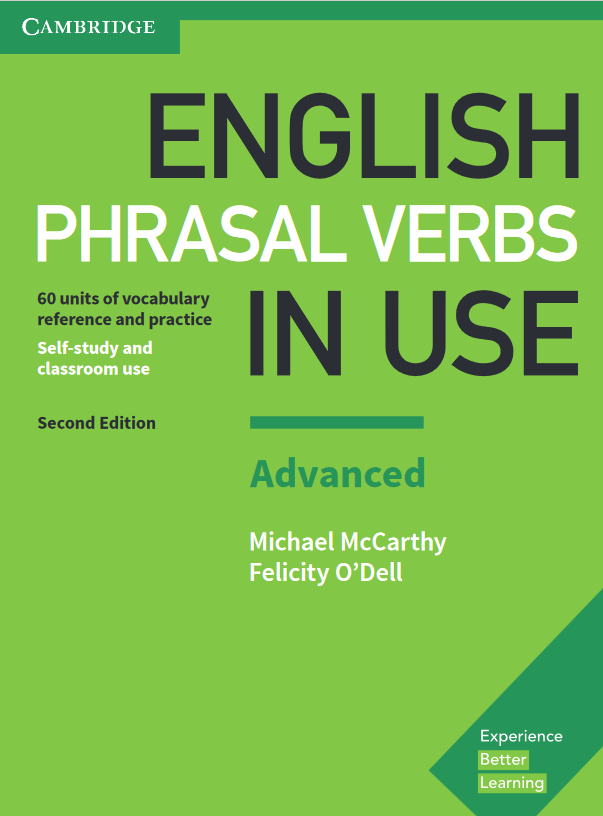
English Phrasal Verbs In Use PDF - ريموند مورفي
ريموند مورفي • اللغة الإنجليزية • ١٩٤ الصفحات
(0)
اقتباس
مراجعة
حفظ
مشاركة
وصف الكتاب
English Phrasal Verbs in Use is a focused and practical vocabulary book for learners who want to understand, remember, and use English phrasal verbs with more confidence. Phrasal verbs are one of the most challenging areas of English because their meanings are often not obvious from the individual words. A learner may know the verb “take” and the particle “up,” for example, but still need guided practice to understand how “take up” changes meaning in different contexts. This book is designed to make that difficult area clearer, more organized, and easier to practise through explanations, examples, and exercises.
This title belongs to the well-known Cambridge English “In Use” style of learning, a format valued by many students because it combines reference material with practical exercises. Official Cambridge listings identify English Phrasal Verbs in Use as part of the Cambridge vocabulary and language-learning range, with editions written by Michael McCarthy and Felicity O’Dell; some online catalogues and learner searches may also associate this type of Cambridge self-study material with Raymond Murphy, whose name is strongly connected with the famous “English Grammar in Use” series. For readers searching for a clear phrasal verbs book in English, the important value of this resource is its direct approach: it helps learners move from memorizing isolated expressions to understanding how phrasal verbs work in real communication.
A Clear Way to Learn English Phrasal Verbs
One of the main strengths of English Phrasal Verbs in Use is that it treats phrasal verbs as useful language, not just as a long list of confusing expressions. Learners often struggle with phrasal verbs because the same verb can create many meanings when combined with different particles. Words such as “make,” “put,” “take,” “go,” “come,” “get,” and “turn” appear constantly in everyday English, but their phrasal forms can be difficult to predict. The book helps students notice meaning, usage, grammar, and context, making it easier to recognize phrasal verbs in reading and listening and then use them more naturally in speaking and writing.
The material is especially useful for learners who want to improve spoken English, everyday vocabulary, listening comprehension, and natural expression. Phrasal verbs appear in conversations, emails, films, interviews, articles, workplace communication, and exam texts. Without understanding them, learners may understand individual words but miss the real meaning of a sentence. By studying phrasal verbs systematically, readers can build a more flexible vocabulary and become more comfortable with the informal and semi-formal language that native and fluent speakers use every day.
Reference and Practice in One Book
The book follows a learner-friendly structure that makes it suitable for both classroom use and independent study. A typical “In Use” format presents explanations and examples first, followed by exercises that help the learner check understanding and practise the target language. A Cambridge excerpt for English Phrasal Verbs in Use shows this practical approach clearly, with units explaining phrasal verbs such as those formed with “make,” “put,” and “take,” then giving learners activities to apply what they have studied. This combination of explanation and practice is important because phrasal verbs are not learned effectively through definitions alone; they need repeated exposure, example sentences, and active use.
The exercises help students notice important details such as whether a phrasal verb is separable or inseparable, whether it is used with people or things, whether it sounds formal or informal, and which nouns commonly appear with it. These details matter because correct usage is not only about knowing the meaning. A learner also needs to know how the phrasal verb behaves in a sentence. By practising these patterns, students can reduce common mistakes and become more accurate when using phrasal verbs in real-life communication.
Useful for Intermediate and Advanced Learners
English Phrasal Verbs in Use is particularly valuable for learners who already have a basic knowledge of English and want to expand their vocabulary beyond simple verbs and literal meanings. Intermediate learners can use it to understand common phrasal verbs that appear in everyday conversation, while more advanced learners can use it to refine accuracy, expand range, and sound more natural. Cambridge’s second-edition listing notes updated content and new units, while advanced-level listings describe coverage of around 1,000 phrasal verbs for higher-level learners. This makes the book attractive to students preparing for exams, professionals improving workplace English, and self-learners who want a reliable vocabulary practice resource.
For exam preparation, phrasal verbs are especially important because they often appear in reading passages, listening sections, vocabulary tasks, and informal writing contexts. Students preparing for English exams such as Cambridge English qualifications, IELTS-style study, school exams, or university language requirements can benefit from the book’s organized presentation. It helps learners build the kind of vocabulary awareness that improves comprehension and gives writing and speaking more variety. Instead of relying only on simple verbs such as “start,” “continue,” “stop,” or “discover,” learners can begin to understand and use natural alternatives such as “set off,” “carry on,” “give up,” or “find out,” depending on context.
Learning Meaning Through Context
A major advantage of this book is its emphasis on learning phrasal verbs through context. Phrasal verbs often have several meanings, and a single expression may change depending on the sentence. For example, a learner might meet a phrasal verb in a physical sense, then later see the same form used in an abstract or idiomatic sense. A strong vocabulary book does not simply translate the expression; it shows how it works. English Phrasal Verbs in Use supports this by presenting examples that help readers connect meaning with real situations.
This approach is helpful because learners need more than dictionary definitions. They need to see which phrasal verbs are common, which ones are useful, how they combine with objects, and what kind of tone they carry. Some phrasal verbs are common in relaxed conversation, while others appear in news, business, technology, rules, travel, or academic contexts. Advanced sample contents from Cambridge show topic-based units covering areas such as nature, weather, places, transport, news, rules and laws, technology, food and drink, and key verbs like “come,” “get,” “go,” “keep,” and “take.” This type of organization helps learners connect vocabulary to real themes rather than studying expressions randomly.
A Strong Resource for Self-Study
Students who study English independently often need books that are clear, structured, and easy to use without constant teacher explanation. English Phrasal Verbs in Use is well suited to self-study because it gives learners a way to work through difficult vocabulary step by step. The explanations guide the learner, the examples show real usage, and the exercises provide immediate practice. Many editions in the Cambridge “In Use” family also include answer keys, making them useful for learners who want to study at home, revise regularly, and track their own progress.
The book can also be used flexibly. A learner may study it from beginning to end, or choose units based on personal needs. Someone who struggles with everyday conversation may focus on common verbs and informal meanings. A learner preparing for advanced reading may focus on topic-based units and more nuanced usage. A teacher may assign selected units as homework, extra vocabulary practice, or revision after a lesson. This flexibility makes the book useful for a wide range of learning situations.
Why Phrasal Verbs Matter in Real English
Phrasal verbs are essential because they are part of the rhythm and character of natural English. Many learners can speak correctly but still sound formal, limited, or unnatural because they avoid phrasal verbs. Native and fluent speakers often choose phrasal verbs in everyday communication because they are short, expressive, and direct. Understanding expressions such as “bring up,” “look into,” “put off,” “come across,” “run out of,” or “sort out” can make English feel more accessible and less mechanical.
This book helps learners close the gap between textbook English and real English. It supports better comprehension when listening to conversations, watching English videos, reading modern texts, or communicating with colleagues and friends. It also helps learners build confidence because phrasal verbs often appear in situations where quick understanding is needed. When students become familiar with these expressions, they can follow conversations more easily and respond with language that feels more natural.
A Valuable Addition to Any English Learning Library
English Phrasal Verbs in Use is a useful choice for learners who want a dedicated, practical, and well-organized book on one of the most important areas of English vocabulary. It is especially helpful for students who already know basic grammar and vocabulary but want to improve fluency, accuracy, and everyday comprehension. By combining explanations, examples, exercises, and topic-based vocabulary work, the book gives learners a structured path toward mastering phrasal verbs.
For anyone looking for an English phrasal verbs practice book, a self-study vocabulary reference, or a clear guide to more natural English expression, English Phrasal Verbs in Use offers a strong and practical learning experience. It helps transform phrasal verbs from a confusing list of expressions into a usable part of active English vocabulary, making it a valuable resource for study, revision, exam preparation, and everyday communication.
ريموند مورفي
ريموند مورفي هو مؤلف بريطاني بارز في مجال تعليم اللغة الإنجليزية، ويُعرف عالميًا بوصفه واحدًا من أكثر الكتّاب تأثيرًا في كتب قواعد اللغة الإنجليزية الموجهة للمتعلمين غير الناطقين بها. ارتبط اسمه على نحو خاص بسلسلة كتب Grammar in Use الصادرة عن Cambridge University Press، ولا سيما كتاب English Grammar in Use، الذي أصبح مرجعًا أساسيًا للطلاب والمعلمين في معاهد اللغة والجامعات ومراكز التدريب حول العالم. يتميز ريموند مورفي بقدرته الفريدة على تحويل قواعد اللغة الإنجليزية، التي قد تبدو معقدة أو جافة لكثير من الدارسين، إلى شرح واضح ومنظم وسهل التطبيق. وقد ساعد أسلوبه التعليمي العملي ملايين المتعلمين على فهم الأزمنة، والتراكيب، والأفعال المساعدة، والجمل الشرطية، وحروف الجر، والضمائر، وغيرها من الموضوعات النحوية بطريقة تدريجية تعتمد على الأمثلة والتمارين المباشرة. لا يقدم مورفي القاعدة بوصفها معلومة نظرية معزولة، بل يربطها بالاستخدام الحقيقي للغة، وهو ما جعل كتبه مناسبة للتعلم الذاتي بقدر ما هي مناسبة للاستخدام داخل الصفوف الدراسية. ومن أهم ما يميز منهجه أن كل وحدة تعليمية عادة ما تجمع بين صفحة للشرح وصفحة للتدريب، فيجد القارئ نفسه أمام نظام متوازن يساعده على الاستيعاب ثم التطبيق فورًا. هذا التصميم البسيط والفعّال جعل كتب مورفي محبوبة لدى المتعلمين من مستويات مختلفة، من المبتدئين الذين يستخدمون أعمالًا مثل Essential Grammar in Use إلى الطلاب المتوسطين والمتقدمين الذين يعتمدون على English Grammar in Use وكتب أخرى ضمن السلسلة. وتكمن قوة ريموند مورفي في أنه لا يخاطب المتخصصين بل يخاطب الطالب العادي الذي يريد أن يفهم لماذا تُستخدم صيغة معينة، ومتى يكون التعبير صحيحًا، وكيف يمكن تجنب الأخطاء الشائعة في الكتابة والمحادثة. لذلك تحولت كتبه إلى أدوات تعليمية عالمية لا ترتبط ببلد واحد أو منهج واحد، بل تُستخدم في بيئات تعليمية متعددة، من الفصول التقليدية إلى الدراسة الفردية والمنصات الحديثة. كما أن لغته المباشرة وأمثلته اليومية منحا كتبه طابعًا إنسانيًا قريبًا من حاجات المتعلم، بعيدًا عن التعقيد الأكاديمي غير الضروري. بالنسبة لمحركات البحث ومواقع الكتب، يُعد ريموند مورفي اسمًا محوريًا في موضوعات مثل تعلم قواعد اللغة الإنجليزية، كتب تعليم الإنجليزية، English grammar، Cambridge English، وكتب اللغة للمتعلمين الدوليين. ورغم أن شهرته قائمة أساسًا على الكتب التعليمية لا على الظهور الإعلامي أو السيرة الشخصية، فإن أثره في مجال تعليم الإنجليزية واسع وممتد؛ فقد ساهم في تشكيل طريقة تدريس القواعد الحديثة عبر التركيز على الوضوح، والاستقلالية، والتدرج، وكثرة التطبيق. إن القارئ الذي يبحث عن مؤلف يجمع بين الخبرة التعليمية والبساطة المنهجية سيجد في أعمال ريموند مورفي نموذجًا مثاليًا للكتاب التعليمي الناجح: كتاب يمكن فتحه من أي وحدة، وفهم موضوع محدد، ثم ممارسة اللغة بثقة أكبر. ولهذا بقي اسمه حاضرًا بقوة في مكتبات الطلاب والمعلمين، وأصبح مرادفًا تقريبًا لكتب القواعد الإنجليزية العملية التي تمنح المتعلم معرفة قابلة للاستخدام لا مجرد تعريفات محفوظة.
اكسب مكافآت أثناء القراءة!
كل 10 صفحات تقرؤها وتقضى فيها 30 ثانية تمنحك 5 نقاط مكافأة! واصل القراءة لفتح الإنجازات والمزايا الحصرية.
اقرأ
قيم الآن
5 نجوم
4 نجوم
3 نجوم
2 نجوم
1 نجوم
اقتباسات English Phrasal Verbs In Use
الأعلى تقييماً
الأحدث
اقتباس
كن أول من يترك اقتباسًا واكسب 10 نقاط
بدلاً من 3
'%20/%3e%3c/svg%3e "English Grammar in Use")
التعليقات
كن أول من يترك تعليقًا واكسب 5 نقاط
بدلاً من 3