

The source of the book
This book is published for the public benefit under a Creative Commons license, or with the permission of the author or publisher. If you have any objections to its publication, please contact us.
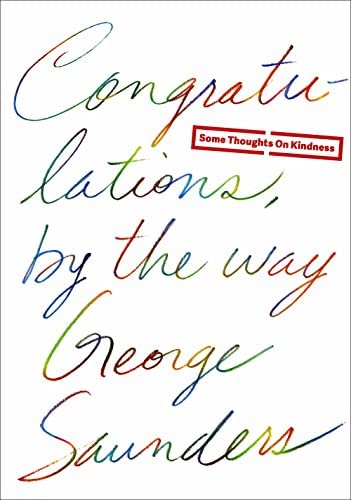
Congratulations, by the Way PDF - George Saunders
George Saunders • literature • 91 Pages
(0)
Author
George SaundersCategory
literatureSection
Number Of Downloads
42
Number Of Reads
229
File Size
10.25 MB
Views
1,119
Quate
Review
Save
Share
Book Description
Congratulations, by the Way: Some Thoughts on Kindness by George Saunders
Congratulations, by the Way: Some Thoughts on Kindness by George Saunders is a brief, thoughtful, and quietly powerful book about one of the simplest and most difficult human virtues: kindness. Adapted from Saunders’s 2013 graduation address at Syracuse University and published by Random House in 2014, this compact work turns the familiar form of a commencement speech into a lasting meditation on compassion, regret, humility, and the kind of life worth building. (PenguinRandomhouse.com)
At its center is a deceptively simple idea: when people look back on their lives, the moments that often trouble them most are not failures of ambition, status, money, or achievement, but failures to be kind. Saunders approaches this message with the warmth, humor, and moral clarity that have made him one of contemporary American literature’s most distinctive voices. Rather than offering abstract advice or sentimental inspiration, he speaks in a direct, human way about everyday choices: how we respond to others, how we notice suffering, and how small gestures of generosity can shape the emotional meaning of a life.
A Short Book with a Lasting Message
Although Congratulations, by the Way is a short inspirational book, its brevity is part of its strength. The book does not try to become a full self-help system or a complicated philosophy of happiness. Instead, it focuses on one essential principle and returns to it with increasing emotional force: to live well, we must learn to become more attentive, more generous, and more willing to “err” toward kindness. For readers searching for a book about kindness, a graduation gift book, or a meaningful piece of life advice from George Saunders, this work offers a memorable and accessible reading experience.
Saunders’s message is especially effective because it avoids perfectionism. He does not present kindness as something easy, automatic, or morally decorative. He understands that people are distracted by ambition, self-protection, fear, busyness, and the desire to be seen as successful. The book gently challenges those habits by asking readers to reconsider what success actually means. In this sense, Congratulations, by the Way: Some Thoughts on Kindness belongs not only to the category of inspirational nonfiction, but also to books about ethics, emotional intelligence, empathy, and personal growth.
George Saunders and the Voice of Compassionate Wisdom
George Saunders is widely known for fiction that combines humor, moral seriousness, satire, and deep sympathy for human vulnerability. He is the author of acclaimed works including Tenth of December and Lincoln in the Bardo, and he teaches creative writing at Syracuse University. His literary background gives this small book an unusual richness: even when he is writing in the form of a speech, Saunders brings the rhythm, timing, and emotional precision of a storyteller. (artsandsciences.syracuse.edu)
What makes Saunders’s voice so appealing here is the balance between wisdom and humility. He does not speak as someone who has mastered life, but as someone who has lived, noticed, regretted, and learned. The result is a book that feels personal without being self-centered, funny without becoming casual, and serious without becoming heavy. Readers who know Saunders from his fiction will recognize his humane intelligence; readers discovering him for the first time will find an author whose advice feels honest rather than performative.
Themes of Kindness, Regret, and Human Connection
The central theme of Congratulations, by the Way is kindness, but Saunders treats kindness as a living practice rather than a vague ideal. The book invites readers to think about how often people miss opportunities to be gentle, helpful, patient, or brave on behalf of someone else. It also suggests that kindness is not separate from intelligence or ambition; rather, it is the deeper measure by which a life may eventually be judged.
Regret is another important theme. Saunders does not dwell on regret in a depressing way, but he uses it as a moral lens. By asking what truly remains in the memory after time passes, he shifts attention away from external achievement and toward the quality of our relationships. This gives the book a reflective power that can speak to graduates, young adults, parents, teachers, professionals, and anyone thinking about the direction of their life.
The book also explores human connection in a quiet but meaningful way. Saunders reminds readers that every person is surrounded by chances to respond with more care. Kindness, in this vision, is not grand or dramatic. It is often ordinary, immediate, and practical. A person may become kinder not by changing the whole world at once, but by noticing the person in front of them more fully.
A Meaningful Gift for Graduates and Thoughtful Readers
Because it began as a commencement address, Congratulations, by the Way has become strongly associated with graduation, transition, and new beginnings. It is easy to understand why the book works so well as a graduation gift: it offers encouragement without clichés, wisdom without pressure, and a message that can grow more meaningful as the reader grows older. The hardcover edition is also compact, making it suitable as a keepsake for major life moments such as graduation, birthdays, career changes, or personal milestones. Penguin Random House lists the book as a 64-page hardcover, ebook, and audiobook, with the audiobook read by Saunders himself. (PenguinRandomhouse.com)
Yet the book is not only for graduates. Its reflections on kindness and regret can resonate with readers at any stage of life. For young readers, it offers a guiding principle before life becomes crowded with responsibilities. For older readers, it offers a chance to reflect on what has mattered most. For anyone feeling overwhelmed by competition, anxiety, or the pressure to achieve, Saunders’s message provides a calm and humane reminder that character is built through repeated small acts.
Reading Experience and Style
The reading experience of Congratulations, by the Way: Some Thoughts on Kindness is intimate, clear, and emotionally direct. Saunders uses humor to lower the reader’s defenses, then gradually leads the book toward a sincere moral insight. This movement from lightness to depth is one of the reasons the work remains memorable. It does not feel like a lecture; it feels like a conversation with a thoughtful person who has discovered something simple enough to say plainly and important enough to repeat.
The style is accessible for a wide audience. Readers do not need to be familiar with Saunders’s fiction or with literary criticism to appreciate the book. Its language is straightforward, but the emotional effect is layered. The book can be read quickly, but it invites rereading, especially at moments when a reader is considering how to treat others, how to make better choices, or how to live with fewer moral regrets.
Why Congratulations, by the Way Still Matters
In a world that often rewards speed, productivity, self-promotion, and competition, Congratulations, by the Way remains valuable because it argues for a quieter and more enduring form of success. Saunders does not dismiss ambition, but he places it in perspective. Achievement may bring recognition, but kindness gives life its human weight. This is why the book continues to appeal to readers looking for inspirational nonfiction, short books with deep meaning, books about empathy, and thoughtful gifts for graduates.
The book’s lasting appeal comes from its clarity. It says something most people already know but often forget: the way we treat others matters more than many of the goals we chase. Saunders turns that truth into a gentle challenge. He asks readers not merely to admire kindness, but to practice it more often, more deliberately, and with more courage.
A Quiet, Memorable Reflection on Living Well
Congratulations, by the Way: Some Thoughts on Kindness by George Saunders is a small book with a generous heart. It offers no complicated program and no exaggerated promise of transformation. Instead, it gives readers a clear and humane reminder that kindness is not a minor virtue, but one of the central tasks of a meaningful life.
For readers drawn to reflective nonfiction, commencement speeches, literary essays, personal growth, or books that can be returned to in moments of transition, this work offers a thoughtful and lasting message. It is a book to give, to reread, and to remember—not because it says something obscure, but because it says something essential with grace, humor, and sincerity.
George Saunders
George Saunders is an American author, short story writer, novelist, essayist, and teacher whose work has become central to contemporary literary fiction, especially for readers interested in satire, moral imagination, experimental narrative form, and compassionate social criticism. Although he is now widely recognized as one of the most distinctive writers in modern American literature, Saunders followed an unusual path into fiction. He studied geophysical engineering, worked in technical and industrial settings, and brought into literature a sharp awareness of systems, workplaces, bureaucratic language, consumer culture, and the pressures placed on ordinary people by institutions that often speak in polished slogans while producing real suffering. This background helps explain the strange energy of his fiction: his stories often feel at once futuristic and familiar, comic and devastating, absurd and deeply humane. In works such as CivilWarLand in Bad Decline, Pastoralia, In Persuasion Nation, Tenth of December, and Liberation Day, Saunders explores theme parks, corporate environments, artificial communities, media-saturated worlds, and damaged families, using exaggerated premises to reveal emotional truths about fear, ambition, debt, shame, kindness, and moral choice. His style is instantly recognizable for its blend of vernacular speech, dark humor, surreal invention, and sudden moments of tenderness. Rather than presenting satire as simple ridicule, he uses satire to ask how people become trapped inside economic pressures, cultural scripts, and self-protective stories, and how they might still act with generosity. Saunders achieved a major international breakthrough with Lincoln in the Bardo, his first novel, which won the Booker Prize and expanded his audience far beyond the world of short fiction. The novel uses a chorus of voices to imagine the grief of Abraham Lincoln after the death of his son Willie, while also creating a spiritual landscape filled with comic, tragic, and yearning presences. It is formally daring, emotionally direct, and historically resonant, showing Saunders’s ability to turn an experimental structure into a moving meditation on death, love, national sorrow, and the difficulty of letting go. His later novel Vigil continues many of his central concerns, including mortality, spiritual reckoning, environmental responsibility, corporate power, and the possibility of empathy even at the edge of judgment. Saunders is also admired for A Swim in a Pond in the Rain, a craft book and literary meditation drawn from his long experience teaching Russian short stories, where he examines how narrative attention works and why fiction can sharpen the reader’s moral perception. As a professor of creative writing at Syracuse University, he has influenced many writers not only through his published books but also through his approach to teaching, which emphasizes precision, revision, playfulness, and the ethical force of noticing. His honors include a MacArthur Fellowship, a Guggenheim Fellowship, the PEN/Malamud Award for excellence in the short story, the Story Prize and the Folio Prize for Tenth of December, recognition by Time as one of the world’s most influential people in 2013, and the 2025 Medal for Distinguished Contribution to American Letters. Yet the real significance of George Saunders lies not only in awards or reputation. His fiction has helped renew the short story as a form capable of confronting contemporary life without becoming flatly realistic or narrowly political. He understands that modern cruelty often hides inside ordinary language, that people can be ridiculous and worthy of love at the same time, and that moral awakening may begin in a tiny hesitation before harm. For readers, students, and writers, Saunders offers a model of literary art that is inventive without being cold, funny without being shallow, and compassionate without being sentimental. His books remain especially valuable for anyone seeking fiction that challenges the imagination while deepening the capacity for attention, mercy, and self-examination.
Earn Rewards While Reading!
Every 10 pages you read and spent 30 seconds on every page, earns you 5 reward points! Keep reading to unlock achievements and exclusive benefits.
Read
Rate Now
5 Stars
4 Stars
3 Stars
2 Stars
1 Stars
Congratulations, by the Way Quotes
Top Rated
Latest
Quate
Be the first to leave a quote and earn 10 points
instead of 3
Other books by George Saunders
Other books like Congratulations, by the Way
'%20/%3e%3c/svg%3e "The Missionary Position: Mother Teresa in Theory and Practice")
3636
English
Comments
Be the first to leave a comment and earn 5 points
instead of 3