
The source of the book
This book is not currently available for publication. We obtained it from under a Creative Commons license, but the author or publishing house has not granted permission for its publication.
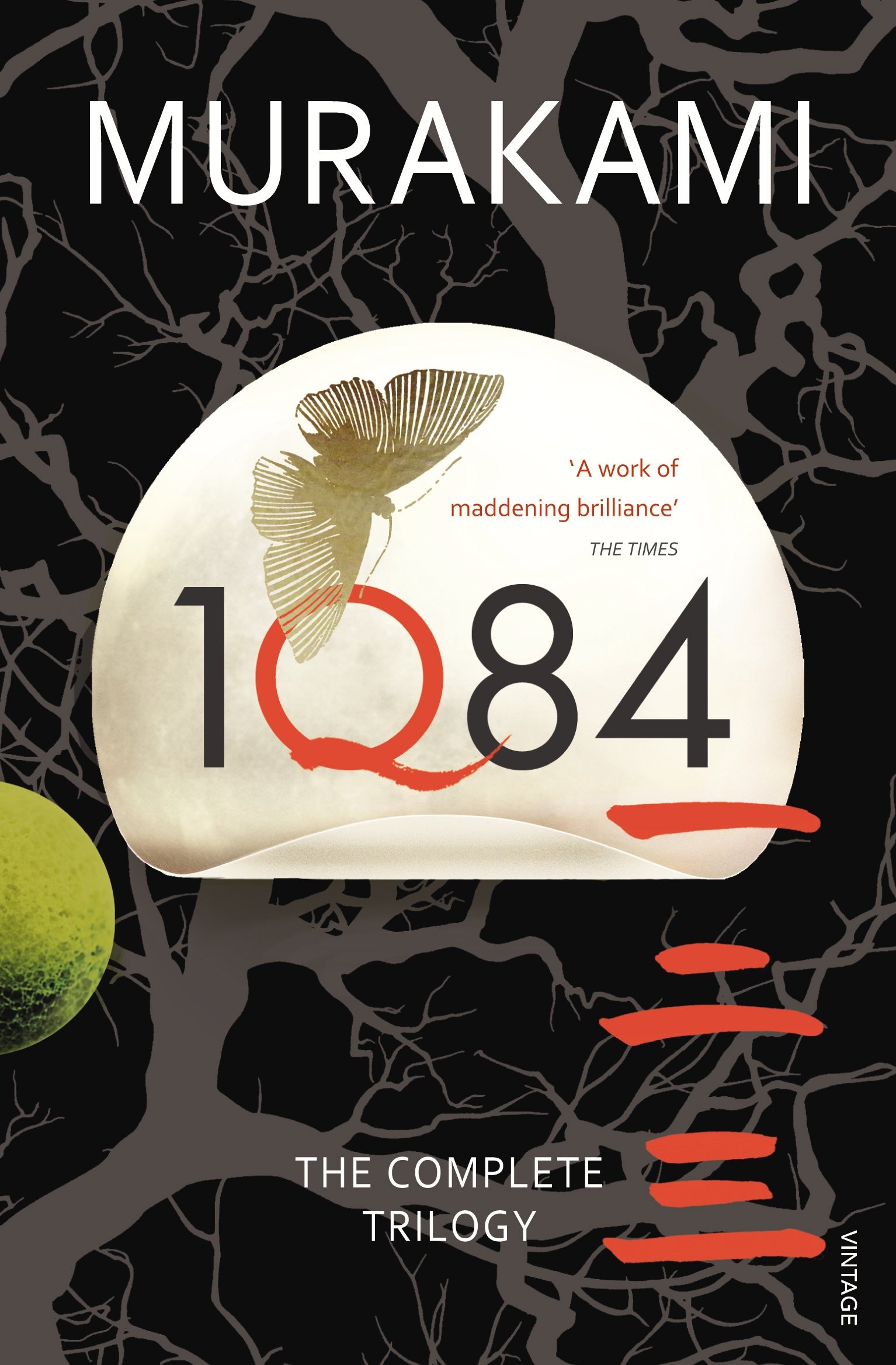
1Q84 PDF - Haruki Murakami
Haruki Murakami • Fantasy novels • 1,097 Pages
(0)
Quate
Review
Save
Share
Book Description
1Q84 by Haruki Murakami: A Hypnotic Novel of Parallel Worlds, Lost Love, and Unanswered Questions
1Q84 by Haruki Murakami is one of the author’s most ambitious and immersive novels, a vast work of contemporary Japanese fiction that blends psychological suspense, metaphysical mystery, romance, dystopian unease, and dreamlike realism. Originally published in Japan in three volumes between 2009 and 2010, the novel is set in Tokyo during an altered version of 1984, where ordinary life slowly slips into a world that feels almost the same—but not quite. The title itself plays on the sound of “1984” in Japanese, with the “Q” suggesting a question mark, a world full of uncertainty and hidden distortions.
A Story That Begins with a Small Step into the Unknown
The novel opens with Aomame, a young woman whose controlled, disciplined life hides a dangerous secret. After taking a taxi on a Tokyo expressway, she follows the driver’s strange suggestion and climbs down an emergency stairway to avoid traffic. What seems like a practical decision becomes the first movement into another reality. Soon, Aomame begins noticing subtle but unsettling differences in the world around her, and she gives this altered reality a name: 1Q84, a world that bears a question.
In a parallel storyline, Tengo Kawana, a mathematics teacher and aspiring novelist, becomes involved in a suspicious literary project. He is asked to rewrite a strange manuscript called Air Chrysalis, written by a mysterious young girl named Fuka-Eri. At first, the task appears to be a questionable but manageable act of literary editing. Yet the deeper Tengo enters the manuscript’s world, the more it begins to seem connected to something real, secretive, and far more dangerous than fiction should be. Through Aomame and Tengo, Murakami builds a double narrative in which two lonely lives move separately, yet seem drawn by invisible forces toward the same hidden center.
A Parallel Tokyo Filled with Mystery and Symbolism
One of the great strengths of 1Q84 is the way Murakami turns the everyday city into a place of quiet instability. Tokyo is still recognizable: apartments, trains, highways, convenience stores, classrooms, restaurants, and ordinary routines all remain in place. But beneath that ordinary surface lies another layer of existence, where small differences carry enormous meaning. The appearance of a second moon, the presence of a secretive religious group, and the strange figures known as the Little People transform the novel into a meditation on reality itself.
Murakami does not present the supernatural as simple fantasy. Instead, he uses the uncanny to explore emotional and philosophical questions: How do we know the world we live in is real? Can a story change reality? Are love and memory strong enough to cross invisible boundaries? This makes 1Q84 a powerful choice for readers who enjoy literary fiction with magical realism, parallel-world novels, and stories that mix suspense with deeper reflections on identity, fate, and consciousness.
Aomame and Tengo: Two Solitudes Moving Toward Each Other
At the emotional heart of 1Q84 are Aomame and Tengo, two characters shaped by isolation, childhood memory, and a longing they can barely name. Aomame is precise, self-contained, and physically strong, yet her inner life is marked by loneliness and a deep moral seriousness. Tengo is quieter and more inward, a man divided between mathematics and writing, order and imagination, routine and the desire to create something true. Their stories unfold separately for much of the novel, but Murakami gradually reveals a connection between them that gives the narrative its emotional pull.
Their relationship is not written as a conventional romance. It is built through memory, absence, longing, and the idea that certain bonds can survive years of silence. In this sense, 1Q84 is not only a novel about alternate reality; it is also a novel about the persistence of love. Murakami asks whether two people can remain connected across time, trauma, distance, and even across versions of the world. The result is a love story that feels mysterious rather than sentimental, quiet rather than melodramatic, and deeply tied to the novel’s larger questions about destiny.
Cults, Power, Violence, and the Search for Truth
Alongside its dreamlike atmosphere, 1Q84 contains darker and more suspenseful elements. The novel explores secretive organizations, abuse of power, religious control, hidden violence, and the danger of systems that isolate people from ordinary moral life. The mysterious group known as Sakigake becomes central to the story, drawing Aomame and Tengo into a web of secrecy where truth is difficult to separate from manipulation. Murakami’s interest is not simply in conspiracy, but in how people become trapped inside closed worlds—socially, psychologically, spiritually, or emotionally.
This gives the novel a strong sense of unease. The world of 1Q84 is beautiful at times, but it is never safe. Every revelation opens another question, and every attempt to understand reality leads deeper into ambiguity. For readers looking for a mysterious literary novel, a Japanese novel about alternate realities, or a psychologically rich story about hidden systems of control, 1Q84 offers a dense and memorable reading experience.
Haruki Murakami’s Signature Style at Its Most Expansive
Readers familiar with Haruki Murakami will recognize many of his signature elements in 1Q84: music, solitude, strange women, vanished memories, emotionally reserved men, symbolic animals, empty spaces, mysterious phone calls, and the feeling that ordinary life is only a thin surface over something much deeper. Yet this novel is broader in scale than many of his earlier works. It has the intimacy of a psychological novel, the suspense of a thriller, the atmosphere of a dream, and the structure of an epic.
Murakami’s prose is calm and readable, even when the events become strange or unsettling. He builds tension slowly, allowing repeated details and quiet scenes to accumulate meaning. The novel rewards patience because its power lies not only in plot, but in atmosphere: the sense of walking through a familiar city under unfamiliar moons, guided by memory, fear, desire, and the possibility that fiction may be another form of truth.
Who Should Read 1Q84?
1Q84 is ideal for readers who enjoy long, immersive novels that combine literary fiction, magical realism, psychological mystery, and philosophical suspense. It is especially appealing to readers interested in novels about parallel worlds, hidden realities, cults, fate, memory, and love that survives across time. Fans of Murakami’s other major works will find many familiar themes here, while new readers may discover one of his most complete and ambitious fictional universes.
This is not a novel that rushes toward easy answers. Readers who prefer direct plots and neatly resolved mysteries may find its rhythm slow or its symbolism elusive. But for those who enjoy atmospheric fiction, layered storytelling, and books that remain open to interpretation, 1Q84 offers a rich and unforgettable journey. It invites the reader not only to follow Aomame and Tengo, but to question the boundaries between the world we accept and the world we sense beneath it.
A Novel That Turns Reality into a Question
At its core, 1Q84 by Haruki Murakami is a novel about the fragility of reality and the strange endurance of human connection. It asks what happens when the world changes almost imperceptibly, when memory becomes a guide, when fiction begins to shape life, and when two people separated by time continue moving toward one another through darkness and uncertainty. Its scale is large, but its emotional center remains intimate: two lonely people searching for truth, safety, and a way back to each other.
With its blend of Japanese literary fiction, parallel worlds, mystery, romance, and metaphysical imagination, 1Q84 stands as one of Murakami’s most distinctive works. It is a novel of questions rather than simple answers, a story that turns the familiar into the uncanny and transforms a single year into a labyrinth of symbols, secrets, and longing. For readers willing to enter its strange atmosphere, 1Q84 offers an absorbing reading experience that continues to echo long after the final page.
Haruki Murakami
Haruki Murakami is a Japanese novelist, short story writer, essayist, and literary translator whose fiction has become one of the most distinctive and widely read bodies of contemporary world literature. Born in Kyoto in 1949 and raised in Kobe, he later moved to Tokyo and studied at Waseda University, a background that helped shape his lifelong interest in cities, memory, music, youth, solitude, and the hidden emotional patterns of ordinary life. Before becoming a full time writer, Murakami and his wife ran a small jazz bar, and that experience left a lasting imprint on his imagination. Music in his books is never merely decorative; it often becomes a way for characters to remember, grieve, wait, desire, or understand the distance between themselves and others. He began his literary career with Hear the Wind Sing, followed by Pinball, 1973 and A Wild Sheep Chase, early works that introduced many of the elements now associated with his name: quiet narrators, ironic restraint, cats, disappearances, mysterious women, fragmented memories, popular culture, and sudden openings from everyday life into dreamlike or metaphysical spaces. His breakthrough came with Norwegian Wood, a deeply emotional novel about youth, love, death, depression, memory, and regret. More realistic than many of his later works, it made him a major literary figure in Japan and introduced many readers around the world to the melancholy clarity of his voice. Murakami’s major novels include Hard Boiled Wonderland and the End of the World, Dance Dance Dance, South of the Border, West of the Sun, The Wind Up Bird Chronicle, Sputnik Sweetheart, Kafka on the Shore, After Dark, Colorless Tsukuru Tazaki and His Years of Pilgrimage, Killing Commendatore, and The City and Its Uncertain Walls. Across these books, he blends realism, surrealism, magical realism, psychological mystery, philosophical fiction, romance, fantasy, and noir without losing the calm surface of his prose. A typical Murakami story may begin with a man cooking alone, a missing cat, a phone call, a piece of music, a memory of lost love, a well, a library, or a strange town, but it gradually opens into questions about identity, time, desire, trauma, and the invisible structures that shape human life. His characters are often quiet people who listen closely to music, read books, prepare simple meals, run, wander through cities, or wait for someone who may never return. Their solitude is not empty; it becomes a sensitive space in which the hidden world can be heard. Murakami is also an important writer of short fiction, with collections such as The Elephant Vanishes, After the Quake, Blind Willow, Sleeping Woman, Men Without Women, and First Person Singular. His nonfiction work is equally significant. Underground gathers voices connected to the Tokyo subway sarin attack and reflects on public memory, violence, and ordinary lives touched by catastrophe. What I Talk About When I Talk About Running links long distance running with writing, discipline, endurance, aging, and personal freedom. As a translator into Japanese, Murakami has introduced and renewed interest in major writers from English language literature, including figures associated with modern American fiction, crime fiction, and short story traditions. His books have been translated into dozens of languages and have received major honors including the Yomiuri Prize, the World Fantasy Award, the Franz Kafka Prize, the Jerusalem Prize, the Hans Christian Andersen Literature Award, and the Princess of Asturias Award for Literature. Haruki Murakami’s enduring importance lies in his ability to make loneliness luminous, to turn ordinary rooms into thresholds, and to write novels that feel intimate, musical, mysterious, and universal.
Book Currently Unavailable
This book is currently unavailable for publication. We obtained it under a Creative Commons license, but the author or publisher has not granted permission to publish it.
Rate Now
5 Stars
4 Stars
3 Stars
2 Stars
1 Stars
1Q84 Quotes
Top Rated
Latest
Quate
Be the first to leave a quote and earn 10 points
instead of 3
Other books by Haruki Murakami
'%20/%3e%3c/svg%3e "Postmodern, Feminist and Postcolonial Currents in Contemporary Japanese Culture")
Haruki Murakami.
Literary novels
(0)
1858
English
Other books like 1Q84
J. K. Rowling.
Fantasy novels
(0)
7672
English
Comments
Be the first to leave a comment and earn 5 points
instead of 3