
مصدر الكتاب
هذا الكتاب غير متاح حاليًا للنشر. لقد حصلنا عليه من بموجب ترخيص المشاع الإبداعي، ولكن المؤلف أو دار النشر لم يمنحا الإذن بنشره.
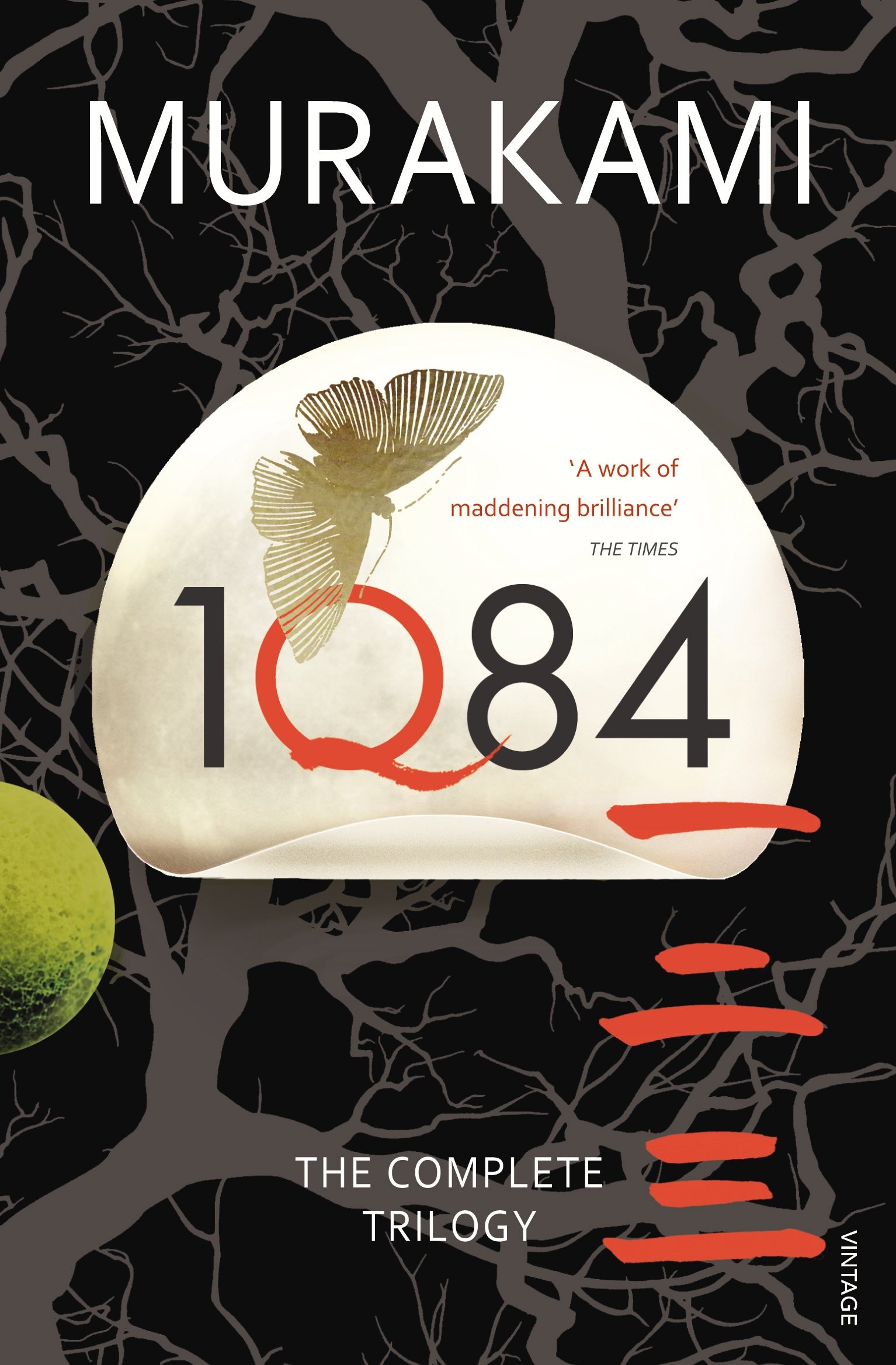
1Q84 PDF - هاروكي موراكامي
هاروكي موراكامي • روايات فانتازيا • ١٬٠٩٧ الصفحات
(0)
اقتباس
مراجعة
حفظ
مشاركة
وصف الكتاب
1Q84 by Haruki Murakami: A Hypnotic Novel of Parallel Worlds, Lost Love, and Unanswered Questions
1Q84 by Haruki Murakami is one of the author’s most ambitious and immersive novels, a vast work of contemporary Japanese fiction that blends psychological suspense, metaphysical mystery, romance, dystopian unease, and dreamlike realism. Originally published in Japan in three volumes between 2009 and 2010, the novel is set in Tokyo during an altered version of 1984, where ordinary life slowly slips into a world that feels almost the same—but not quite. The title itself plays on the sound of “1984” in Japanese, with the “Q” suggesting a question mark, a world full of uncertainty and hidden distortions.
A Story That Begins with a Small Step into the Unknown
The novel opens with Aomame, a young woman whose controlled, disciplined life hides a dangerous secret. After taking a taxi on a Tokyo expressway, she follows the driver’s strange suggestion and climbs down an emergency stairway to avoid traffic. What seems like a practical decision becomes the first movement into another reality. Soon, Aomame begins noticing subtle but unsettling differences in the world around her, and she gives this altered reality a name: 1Q84, a world that bears a question.
In a parallel storyline, Tengo Kawana, a mathematics teacher and aspiring novelist, becomes involved in a suspicious literary project. He is asked to rewrite a strange manuscript called Air Chrysalis, written by a mysterious young girl named Fuka-Eri. At first, the task appears to be a questionable but manageable act of literary editing. Yet the deeper Tengo enters the manuscript’s world, the more it begins to seem connected to something real, secretive, and far more dangerous than fiction should be. Through Aomame and Tengo, Murakami builds a double narrative in which two lonely lives move separately, yet seem drawn by invisible forces toward the same hidden center.
A Parallel Tokyo Filled with Mystery and Symbolism
One of the great strengths of 1Q84 is the way Murakami turns the everyday city into a place of quiet instability. Tokyo is still recognizable: apartments, trains, highways, convenience stores, classrooms, restaurants, and ordinary routines all remain in place. But beneath that ordinary surface lies another layer of existence, where small differences carry enormous meaning. The appearance of a second moon, the presence of a secretive religious group, and the strange figures known as the Little People transform the novel into a meditation on reality itself.
Murakami does not present the supernatural as simple fantasy. Instead, he uses the uncanny to explore emotional and philosophical questions: How do we know the world we live in is real? Can a story change reality? Are love and memory strong enough to cross invisible boundaries? This makes 1Q84 a powerful choice for readers who enjoy literary fiction with magical realism, parallel-world novels, and stories that mix suspense with deeper reflections on identity, fate, and consciousness.
Aomame and Tengo: Two Solitudes Moving Toward Each Other
At the emotional heart of 1Q84 are Aomame and Tengo, two characters shaped by isolation, childhood memory, and a longing they can barely name. Aomame is precise, self-contained, and physically strong, yet her inner life is marked by loneliness and a deep moral seriousness. Tengo is quieter and more inward, a man divided between mathematics and writing, order and imagination, routine and the desire to create something true. Their stories unfold separately for much of the novel, but Murakami gradually reveals a connection between them that gives the narrative its emotional pull.
Their relationship is not written as a conventional romance. It is built through memory, absence, longing, and the idea that certain bonds can survive years of silence. In this sense, 1Q84 is not only a novel about alternate reality; it is also a novel about the persistence of love. Murakami asks whether two people can remain connected across time, trauma, distance, and even across versions of the world. The result is a love story that feels mysterious rather than sentimental, quiet rather than melodramatic, and deeply tied to the novel’s larger questions about destiny.
Cults, Power, Violence, and the Search for Truth
Alongside its dreamlike atmosphere, 1Q84 contains darker and more suspenseful elements. The novel explores secretive organizations, abuse of power, religious control, hidden violence, and the danger of systems that isolate people from ordinary moral life. The mysterious group known as Sakigake becomes central to the story, drawing Aomame and Tengo into a web of secrecy where truth is difficult to separate from manipulation. Murakami’s interest is not simply in conspiracy, but in how people become trapped inside closed worlds—socially, psychologically, spiritually, or emotionally.
This gives the novel a strong sense of unease. The world of 1Q84 is beautiful at times, but it is never safe. Every revelation opens another question, and every attempt to understand reality leads deeper into ambiguity. For readers looking for a mysterious literary novel, a Japanese novel about alternate realities, or a psychologically rich story about hidden systems of control, 1Q84 offers a dense and memorable reading experience.
Haruki Murakami’s Signature Style at Its Most Expansive
Readers familiar with Haruki Murakami will recognize many of his signature elements in 1Q84: music, solitude, strange women, vanished memories, emotionally reserved men, symbolic animals, empty spaces, mysterious phone calls, and the feeling that ordinary life is only a thin surface over something much deeper. Yet this novel is broader in scale than many of his earlier works. It has the intimacy of a psychological novel, the suspense of a thriller, the atmosphere of a dream, and the structure of an epic.
Murakami’s prose is calm and readable, even when the events become strange or unsettling. He builds tension slowly, allowing repeated details and quiet scenes to accumulate meaning. The novel rewards patience because its power lies not only in plot, but in atmosphere: the sense of walking through a familiar city under unfamiliar moons, guided by memory, fear, desire, and the possibility that fiction may be another form of truth.
Who Should Read 1Q84?
1Q84 is ideal for readers who enjoy long, immersive novels that combine literary fiction, magical realism, psychological mystery, and philosophical suspense. It is especially appealing to readers interested in novels about parallel worlds, hidden realities, cults, fate, memory, and love that survives across time. Fans of Murakami’s other major works will find many familiar themes here, while new readers may discover one of his most complete and ambitious fictional universes.
This is not a novel that rushes toward easy answers. Readers who prefer direct plots and neatly resolved mysteries may find its rhythm slow or its symbolism elusive. But for those who enjoy atmospheric fiction, layered storytelling, and books that remain open to interpretation, 1Q84 offers a rich and unforgettable journey. It invites the reader not only to follow Aomame and Tengo, but to question the boundaries between the world we accept and the world we sense beneath it.
A Novel That Turns Reality into a Question
At its core, 1Q84 by Haruki Murakami is a novel about the fragility of reality and the strange endurance of human connection. It asks what happens when the world changes almost imperceptibly, when memory becomes a guide, when fiction begins to shape life, and when two people separated by time continue moving toward one another through darkness and uncertainty. Its scale is large, but its emotional center remains intimate: two lonely people searching for truth, safety, and a way back to each other.
With its blend of Japanese literary fiction, parallel worlds, mystery, romance, and metaphysical imagination, 1Q84 stands as one of Murakami’s most distinctive works. It is a novel of questions rather than simple answers, a story that turns the familiar into the uncanny and transforms a single year into a labyrinth of symbols, secrets, and longing. For readers willing to enter its strange atmosphere, 1Q84 offers an absorbing reading experience that continues to echo long after the final page.
هاروكي موراكامي
هاروكي موراكامي روائي وقاص ومترجم ياباني بارز، ويُعد من أكثر كتّاب الأدب المعاصر حضوراً لدى القرّاء في اليابان والعالم، لأن تجربته تجمع بين البساطة الظاهرية والعمق النفسي والغرابة الهادئة التي تجعل الواقع اليومي مفتوحاً على الحلم والذاكرة والأسئلة الوجودية. وُلد في كيوتو عام ١٩٤٩، ونشأ في كوبي، ثم انتقل إلى طوكيو حيث درس في جامعة واسيدا، وهناك تبلورت علاقته بالمدينة الحديثة وبإيقاع الحياة اليابانية بعد الحرب وبالقراءة والموسيقى والثقافة الشعبية. قبل أن يتفرغ للكتابة، أدار مع زوجته مقهى صغيراً لموسيقى الجاز، وقد تركت هذه التجربة أثراً واضحاً في عالمه الروائي، إذ تظهر الموسيقى في أعماله بوصفها لغة داخلية تساعد الشخصيات على فهم العزلة والحب والفقد والانقطاع عن الآخرين. بدأ مسيرته الأدبية برواية «اسمع الريح تغني»، ثم واصل بناء عالمه الخاص في «بينبول، ١٩٧٣» و«مطاردة خروف بري»، حيث ظهرت ملامح أسلوبه المبكر: راوٍ هادئ، شخصيات وحيدة، حس ساخر، قطط، اختفاءات، ذاكرة ناقصة، وواقع مألوف يتشقق فجأة ليكشف عن طبقات غامضة. حقق انتشاراً واسعاً مع رواية «الغابة النرويجية»، وهي من أشهر أعماله وأكثرها اقتراباً من الواقعية النفسية، إذ تتناول الشباب والحب والاكتئاب والموت والندم والحنين بطريقة جعلت القرّاء يرون في تجربته مرآة لمشاعرهم الخاصة. من أبرز رواياته أيضاً «نهاية العالم وبلاد العجائب القاسية»، «رقص رقص رقص»، «جنوب الحدود، غرب الشمس»، «يوميات الطائر الزنبركي»، «سبوتنيك الحبيبة»، «كافكا على الشاطئ»، «ما بعد الظلام»، «تسوكورو تازاكي عديم اللون وسنوات حجه»، «مقتل قائد الفرسان»، و«المدينة وجدرانها غير الأكيدة». وتكشف هذه الأعمال عن قدرة موراكامي على الجمع بين الواقعية والسريالية والرواية البوليسية والتأمل الفلسفي والفانتازيا، من دون أن يفقد نصه صفاءه أو قربه من القارئ. شخصياته غالباً ما تبدأ من حياة عادية: رجل يعيش وحيداً، امرأة تختفي، شاب يبحث عن معنى، قارئ يعثر على باب خفي، أو إنسان يسمع أغنية قديمة فتنفتح أمامه ذاكرة مؤلمة. وإلى جانب الرواية الطويلة، كتب مجموعات قصصية مهمة مثل «اختفاء الفيل»، «بعد الزلزال»، «صفصافة عمياء، امرأة نائمة»، «رجال بلا نساء»، و«المتكلم بصيغة المفرد»، وهي أعمال تؤكد براعته في تكثيف الغرابة داخل لحظات قصيرة ومألوفة. كما كتب أعمالاً غير روائية لافتة، منها «ما أتحدث عنه حين أتحدث عن الجري»، الذي يربط بين الكتابة والانضباط والجسد، و«تحت الأرض»، الذي يتناول أثر هجوم غاز السارين في مترو طوكيو من خلال شهادات إنسانية مؤثرة. وقد عمل موراكامي كذلك مترجماً أدبياً، فنقل إلى اليابانية أعمال عدد من كتّاب الأدب الغربي، مما وسّع جسوره الثقافية بين اليابان والعالم. تُرجمت كتبه إلى عشرات اللغات، وحصل على جوائز مرموقة مثل جائزة يوميوري، جائزة عالم الفانتازيا، جائزة فرانتس كافكا، جائزة القدس، جائزة هانس كريستيان أندرسن للأدب، وجائزة أميرة أستورياس للآداب. وتكمن قيمة هاروكي موراكامي في أنه حوّل الوحدة الحديثة إلى أدب شفاف، وجعل من الموسيقى والقطط والأحلام والكتب والمدن الليلية مفاتيح لفهم الإنسان المعاصر.
الكتاب غير متاح حاليًا
هذا الكتاب غير متاح حاليًا للنشر. لقد حصلنا عليه من بموجب ترخيص المشاع الإبداعي، ولكن المؤلف أو دار النشر لم يمنحا الإذن بنشره.
قيم الآن
5 نجوم
4 نجوم
3 نجوم
2 نجوم
1 نجوم
اقتباسات 1Q84
الأعلى تقييماً
الأحدث
اقتباس
كن أول من يترك اقتباسًا واكسب 10 نقاط
بدلاً من 3
كتب أخرى لـ هاروكي موراكامي
'%20/%3e%3c/svg%3e "Postmodern, Feminist and Postcolonial Currents in Contemporary Japanese Culture")
هاروكي موراكامي.
روايات أدبية
(0)
1858
الإنجليزية
كتب أخرى مشابهة 1Q84
ج. ك. رولينج.
روايات فانتازيا
(0)
7672
الإنجليزية
التعليقات
كن أول من يترك تعليقًا واكسب 5 نقاط
بدلاً من 3