
Newly released
This book is new and will be uploaded as soon as it becomes available to us and if we secure the necessary publishing rights.
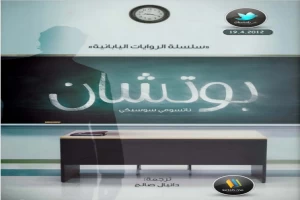
بوتشان PDF - Natsume Soseki
Natsume Soseki • Literary novels • 246 Pages
(0)
Quate
Review
Save
Share
Book Description
Natsume Soseki
Natsume Sōseki (9 February 1867 – 9 December 1916) was a Japanese novelist. He is best known around the world for his novels Kokoro, Botchan, I Am a Cat, Kusamakura and his unfinished work Light and Darkness. He was also a scholar of British literature and writer of haiku, kanshi, and fairy tales. From 1984 until 2004, his portrait appeared on the front of the Japanese 1,000 yen note.
Natsume Kin'nosuke was born on 9 February 1867 in the town of Babashita, Ushigome, Edo (present Kikui, Shinjuku, Tokyo), the fifth son of village head (nanushi) Natsume Kohē Naokatsu and his wife Chie.
Sōseki attended the First Tokyo Middle School (now Hibiya High School), where he became deeply enamored with Chinese literature, and fancied that he might someday become a writer. His desire to become an author arose when he was about fifteen when he told his older brother about his interest in literature. However, his family disapproved strongly of this course of action, and when Sōseki entered the Tokyo Imperial University in September 1884, it was with the intention of becoming an architect. Although he preferred Chinese classics, he started studying English at that time, feeling that it might prove useful to him in his future career, as English was a necessity in Japanese college.
In 1887, Sōseki met Masaoka Shiki, a friend who would give him encouragement on the path to becoming a writer, which would ultimately be his career. Shiki tutored him in the art of composing haiku. From this point on, he began signing his poems with the epithet Sōseki, a Chinese idiom meaning "stubborn". In 1890, he entered the English Literature department, and quickly mastered the English language. In 1891 he produced a partial English translation of the classical work upon request by his then English literature professor James Main Dixon.
In 1895, Sōseki began teaching at Matsuyama Middle School in Shikoku, which later became the setting of his novel Botchan. Along with fulfilling his teaching duties, Sōseki published haiku and Chinese poetry in a number of newspapers and periodicals. He resigned his post in 1896, and began teaching at the Fifth High School in Kumamoto. On June 10 of that year, he married Nakane Kyōko.
Sōseki's literary career began in 1903, when he began to contribute haiku, renku (haiku-style linked verse), haitaishi (linked verse on a set theme) and literary sketches to literary magazines. However, it was the public success of his satirical novel I Am a Cat in 1905 that won him wide public admiration as well as critical acclaim.
Book Currently Unavailable
This book is currently unavailable for publication. We obtained it under a Creative Commons license, but the author or publisher has not granted permission to publish it.
Rate Now
5 Stars
4 Stars
3 Stars
2 Stars
1 Stars
بوتشان Quotes
Top Rated
Latest
Quate
Be the first to leave a quote and earn 10 points
instead of 3
'%20/%3e%3c/svg%3e "قلوب الناس المعذبة")
Comments
Be the first to leave a comment and earn 5 points
instead of 3