

The source of the book
This book is published for the public benefit under a Creative Commons license, or with the permission of the author or publisher. If you have any objections to its publication, please contact us.
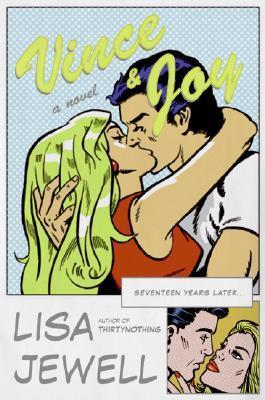
Vince and Joy PDF - Lisa Jewell
Lisa Jewell • romantic novels • 502 Pages
(0)
Quate
Review
Save
Share
Book Description
Vince and Joy by Lisa Jewell is a warm, bittersweet, and emotionally generous contemporary romance novel about first love, missed chances, timing, memory, and the strange ways two lives can remain connected even when they move in different directions. Unlike Lisa Jewell’s later reputation for dark psychological thrillers such as Then She Was Gone, The Family Upstairs, and None of This Is True, this earlier novel belongs to her relationship-driven fiction, where wit, tenderness, everyday messiness, and romantic longing shape the reading experience. The current Penguin edition describes the story as beginning in July 1986, when Vince and Joy meet with their whole lives ahead of them, only to part two weeks later and not see each other again for seven years. (penguin.co.uk)
A Story of First Love and the Life That Gets in the Way
At the heart of Vince and Joy is a simple but powerful question: what happens when the person who once felt like destiny disappears before life has had a chance to begin? Vince and Joy meet as teenagers on holiday, at the age when feelings are intense, futures are imaginary, and a brief encounter can seem more real than everything that came before it. Their connection is immediate, awkward, innocent, and unforgettable. For a short time, they inhabit the kind of summer romance that feels suspended outside ordinary life, full of possibility and emotional discovery.
But Vince and Joy is not only a nostalgic story about young love. Lisa Jewell is interested in what happens afterward: the years of ordinary life, unsuitable relationships, wrong decisions, half-formed ambitions, emotional detours, and near-misses that follow when two people who once mattered deeply to each other are separated by misunderstanding and circumstance. The novel traces the distance between youthful certainty and adult reality, showing how love can remain alive not as a fantasy, but as a quiet question that returns at unexpected moments.
Two Separate Lives, Still Secretly Entwined
The emotional appeal of Vince and Joy lies in the way the novel follows both characters through the years. Vince and Joy do not remain frozen as idealized versions of their teenage selves. They grow older, make mistakes, love other people, hurt and are hurt, and try to build lives that often do not match what they once imagined. This gives the novel the satisfying sweep of a life-spanning romantic story, where the romance is not confined to a single moment but shaped by time, character, and experience.
Kirkus Reviews describes the book as Lisa Jewell’s fifth novel and identifies it as a story filled with sharply observed real life, London eccentricity, difficult relationships, and the pull of romantic destiny. The review also notes that adult Vince is looking back on Joy while sitting with friends after the breakdown of a marriage, which gives the novel its reflective frame: the story of Joy is not merely a memory, but something unfinished. (Kirkus Reviews)
This structure makes Vince and Joy especially rewarding for readers who enjoy second-chance romance, missed connection stories, and novels about fate versus choice. The book understands that love is not always lost through lack of feeling. Sometimes it is lost through bad timing, unread messages, pride, fear, silence, or the simple fact that people do not yet know how to hold on to what matters.
Lisa Jewell’s Gift for Character and Everyday Emotion
One of the strongest qualities of Vince and Joy is Lisa Jewell’s talent for creating characters who feel recognizably human. Vince and Joy are not perfect romantic figures moving through a polished fantasy. They are flawed, funny, uncertain, vulnerable, and shaped by the social and emotional worlds around them. Their choices are sometimes frustrating, but they are believable, and that believability is what gives the novel its emotional pull.
Jewell’s early fiction often excels at portraying the details of friendship, flat shares, romantic confusion, family pressure, work frustration, and the half-comic, half-painful disorder of adulthood. In Vince and Joy, these everyday elements are not background decoration; they are the substance of the story. The novel follows the way life accumulates around people: partners, jobs, disappointments, hopes, bad habits, good intentions, and the quiet compromises that can make a person wake up years later wondering how they arrived somewhere they never meant to be.
A Romantic Novel About Timing, Memory, and Regret
The title Vince and Joy suggests a couple, but much of the novel’s tension comes from separation. These are two names that belong together in the reader’s mind, even when the characters themselves are apart. That tension gives the story its emotional rhythm. Every new relationship, every near encounter, and every memory of that first summer adds to the sense that life is constantly testing whether love is a matter of destiny or decision.
The novel is particularly effective at exploring regret without becoming bleak. There is sadness in the lost years between Vince and Joy, but there is also humor, warmth, and a strong sense of life continuing in all its awkward unpredictability. Jewell does not present adulthood as a straight path toward romantic fulfillment. Instead, she writes it as a series of missteps, delays, compromises, and discoveries. This makes the romance feel more mature than a simple “first love returns” plot, because the characters must carry the weight of who they have become, not just who they once were.
A Different Side of Lisa Jewell
For readers who know Lisa Jewell mainly through her psychological suspense, Vince and Joy offers a valuable look at the earlier side of her career. Penguin’s author profile notes that Ralph’s Party, Jewell’s first novel, was published in 1999 and became the bestselling debut novel of the year, while also noting her later success as a number one New York Times and Sunday Times author whose books have sold widely and been translated into more than thirty languages. (penguin.co.uk)
That background matters because Vince and Joy shows the foundation of many strengths that continue to define Jewell’s work: strong characterization, emotional accessibility, careful pacing, and a gift for turning ordinary lives into compelling stories. Even without the darker thriller elements of her later novels, the book demonstrates her ability to keep readers invested in secrets, longing, and the unanswered questions that shape people’s lives.
Why Readers Enjoy Vince and Joy
Vince and Joy is a strong choice for readers looking for British romantic fiction, contemporary women’s fiction, second-chance love stories, or an emotionally rich novel about growing up, looking back, and wondering whether the heart sometimes recognizes the truth long before life allows it. The novel has the comfort of a love story, but it also has the texture of real life: imperfect relationships, comic side characters, difficult choices, and the feeling that happiness is rarely simple.
Readers who enjoy stories about missed timing, youthful romance, and adulthood’s emotional detours will find much to appreciate here. The novel captures the ache of wondering what might have been, while also showing that life’s wrong turns are not always empty. They shape the people Vince and Joy become, and that makes the possibility of reunion feel deeper, more complicated, and more meaningful.
An Unforgettable Early Lisa Jewell Romance
Ultimately, Vince and Joy is a tender and absorbing novel about two people whose lives are marked by a brief but unforgettable beginning. It is about the power of first love, the cruelty of bad timing, and the way memory can preserve a connection even across years of silence. With warmth, humor, and emotional honesty, Lisa Jewell creates a story that speaks to anyone who has ever wondered whether a person from the past might still be part of their future.
Lisa Jewell
Lisa Jewell is a British author whose name has become strongly associated with psychological thrillers, domestic suspense, family secrets, missing-person mysteries, and emotionally layered crime fiction. Her fiction is widely read because it combines page-turning tension with a close understanding of ordinary lives: marriages, friendships, neighborhoods, memories, grief, obsession, and the quiet unease that can exist behind respectable doors. Her publisher describes her as a number one New York Times bestselling author of twenty-four novels, including Don’t Let Him In, None of This Is True, The Family Upstairs, Then She Was Gone, Invisible Girl, and Watching You; the same publisher notes that her novels have sold more than fifteen million copies internationally and have been translated into more than thirty languages.
Jewell’s career began with Ralph's Party, a novel that helped establish her as a fresh voice in popular fiction at the end of the 1990s. In her early work, she was often associated with warm, witty, relationship-driven fiction, but her career later moved into darker psychological territory. That shift is one of the reasons her body of work is so appealing: she did not abandon character or emotional realism when she entered the thriller field. Instead, she brought those strengths into stories about secrecy, manipulation, disappearance, memory, and danger. As a result, her thrillers feel intimate as well as suspenseful. The fear in her books often begins not with a spectacular crime scene, but with a person noticing that something in a familiar relationship does not quite fit.
One of Jewell’s defining qualities is her ability to make ordinary settings feel charged with hidden meaning. A family home, a London street, a garden, a pub, or a quiet community can become the center of a mystery where the past refuses to stay buried. In novels such as Then She Was Gone, The Family Upstairs, The Night She Disappeared, Invisible Girl, and None of This Is True, she often explores what happens when private histories collide with public identities. Her characters are rarely simple heroes or villains. They are grieving parents, lonely strangers, unreliable witnesses, wounded children, charming manipulators, and people who have learned to survive by hiding pieces of themselves. This psychological depth gives her stories a strong emotional pull.
Jewell is especially effective at writing suspense that is accessible without being shallow. Her chapters are usually shaped by momentum, revelation, and shifting points of view, but beneath the structure lies a steady interest in trauma, denial, family damage, and the stories people tell in order to protect themselves. Readers who come to her books for twists often stay for the emotional stakes. She understands that a secret is not only a plot device; it is also a burden that changes how people love, remember, trust, and fear. This makes her novels highly suitable for fans of domestic thrillers, crime fiction, book club mysteries, and psychological suspense novels that combine readability with emotional complexity.
Her reputation has continued to grow with the modern thriller audience. Penguin has described her as an author once beloved for romance who has become a household name in crime fiction, with books frequently appearing on the Sunday Times bestseller list. None of This Is True also became a major reader favorite; the BBC reported that it won Book of the Year at the 2024 TikTok Book Awards, reflecting the way Jewell’s suspense reaches both traditional readers and contemporary online reading communities.
A major part of Jewell’s appeal lies in her control of uncertainty. She rarely gives the reader a complete picture at the beginning. Instead, she offers fragments: a memory that may be wrong, a person whose charm feels slightly rehearsed, a disappearance that has never been fully explained, or a household whose surface calm hides something rotten. The reader is invited to assemble the truth alongside the characters, but the truth usually arrives with emotional consequences. That structure gives her books their compulsive rhythm, making them the kind of novels readers often describe as difficult to put down.
For readers discovering Lisa Jewell, her work offers a strong entry point into contemporary British suspense. She writes about fear, but also about longing, grief, family bonds, social performance, and the way the past can return through the smallest detail. Her novels appeal to readers who enjoy clever plotting, morally complicated characters, and stories where danger grows from the most familiar spaces. Whether the book begins with a missing girl, a strange inheritance, a dangerous friendship, or a man who seems too perfect to trust, Jewell’s fiction promises a carefully built atmosphere of suspicion and emotional discovery.
Earn Rewards While Reading!
Every 10 pages you read and spent 30 seconds on every page, earns you 5 reward points! Keep reading to unlock achievements and exclusive benefits.
Read
Rate Now
5 Stars
4 Stars
3 Stars
2 Stars
1 Stars
Vince and Joy Quotes
Top Rated
Latest
Quate
Be the first to leave a quote and earn 10 points
instead of 3
'%20/%3e%3c/svg%3e "None of This Is True")
Comments
Be the first to leave a comment and earn 5 points
instead of 3