

The source of the book
This book is published for the public benefit under a Creative Commons license, or with the permission of the author or publisher. If you have any objections to its publication, please contact us.
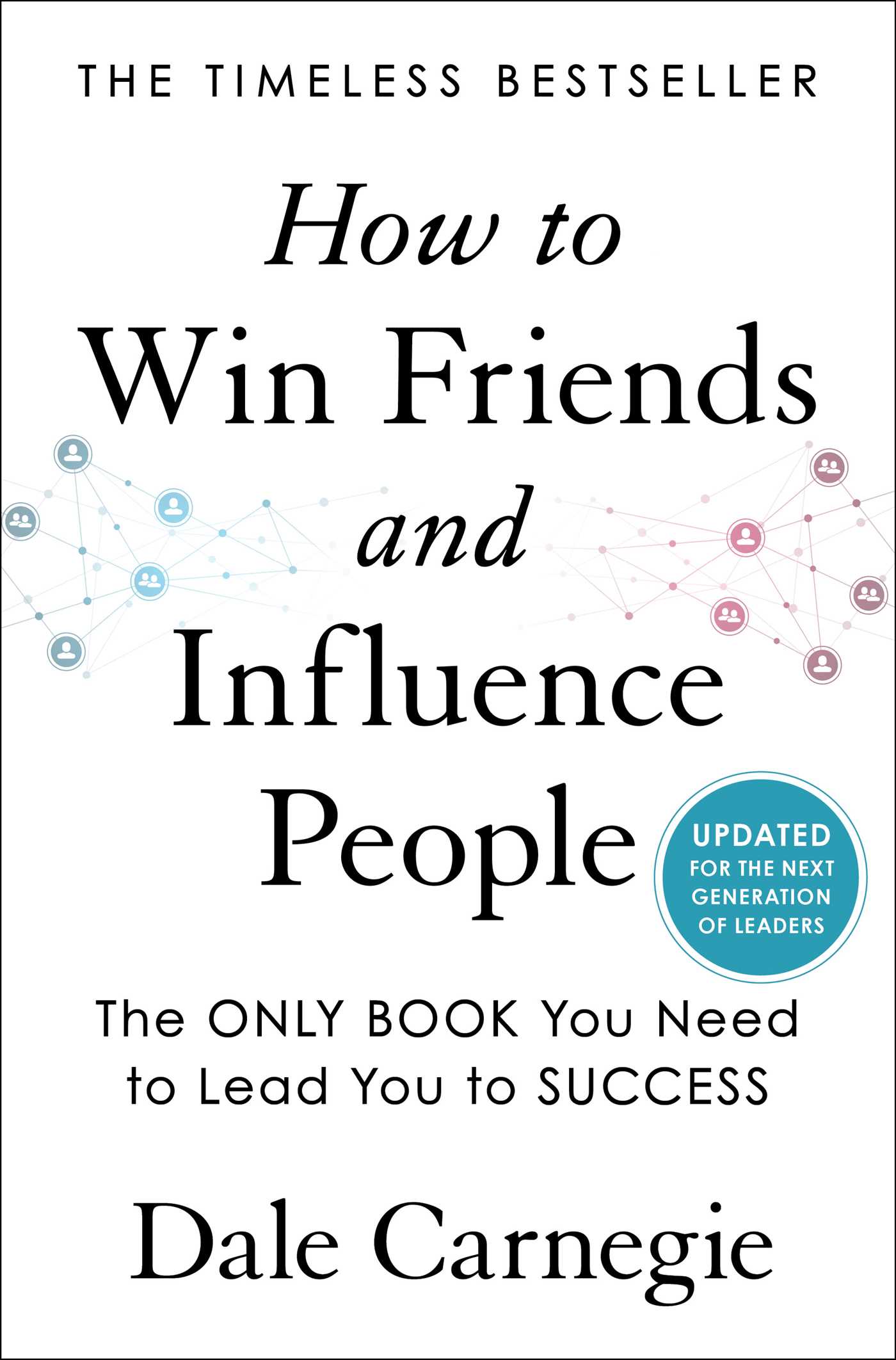
How to Win Friends and Influence People: Updated For the Next Generation of Leaders PDF - Dale Carnegie
Dale Carnegie • psychology • 257 Pages
(0)
Author
Dale CarnegieCategory
Social sciencesSection
Number Of Downloads
1
Number Of Reads
39
File Size
2.04 MB
Views
51
Quate
Review
Save
Share
Book Description
How to Win Friends and Influence People: Updated for the Next Generation of Leaders brings Dale Carnegie’s classic lessons in communication, influence, and human relationships to a modern audience. Long regarded as one of the most important books in self-help, personal development, leadership, and interpersonal communication, this updated edition preserves the practical spirit of Carnegie’s original work while making its ideas feel relevant for readers navigating today’s workplaces, friendships, teams, and professional networks. The book was updated for the first time in more than forty years under the care of Donna Dale Carnegie, with material restored from the original 1936 text.
A Timeless Guide to Better Communication
At its heart, How to Win Friends and Influence People is a book about understanding people. Dale Carnegie focuses on the everyday habits that shape trust, respect, cooperation, and likability: how we listen, how we speak, how we respond to criticism, how we handle disagreement, and how we make others feel valued. Rather than presenting influence as manipulation, Carnegie frames it as a skill rooted in empathy, attention, and sincere appreciation. This makes the book especially useful for readers who want to improve their social skills, build stronger relationships, communicate with more confidence, and become more effective in both personal and professional settings.
The updated edition speaks directly to a generation of readers who live and work in fast-moving environments where communication often happens across emails, meetings, social media, teams, and digital platforms. While the tools of connection have changed, the central challenge remains the same: people still want to be heard, respected, understood, and treated with genuine interest. Carnegie’s principles continue to matter because they address human behavior at a practical level, offering guidance that can be applied in conversations, leadership situations, negotiations, customer relationships, and daily interactions.
Leadership Lessons for Modern Readers
This edition is particularly valuable for readers searching for a leadership book that is accessible, practical, and grounded in real human experience. Carnegie’s advice is not limited to executives or managers; it applies to anyone who wants to lead with greater awareness, earn cooperation without force, and create a positive influence in the lives of others. The publisher categorizes the book across areas such as communication and social skills, interpersonal relations, leadership, and psychology, which reflects its broad appeal to professionals, students, entrepreneurs, team leaders, and lifelong learners.
What makes the book enduring is its focus on small behavioral changes that can produce meaningful results. Carnegie encourages readers to show sincere interest in others, avoid unnecessary criticism, recognize the importance of names, listen with care, and approach disagreement in ways that reduce defensiveness. These ideas may seem simple, but their power lies in consistent practice. For the next generation of leaders, the book offers a reminder that influence is not only about authority, strategy, or ambition; it is also about emotional intelligence, respect, and the ability to connect with people in a way that makes collaboration possible.
Why Dale Carnegie’s Classic Still Matters
Dale Carnegie was a major figure in the development of the modern self-improvement genre, and his work has continued to reach readers since the original publication of How to Win Friends and Influence People in 1936. Simon & Schuster describes him as a pioneer of self-improvement whose writing has influenced millions of readers, and this updated edition continues that legacy for contemporary audiences.
The lasting appeal of Carnegie’s book comes from its clarity. It does not depend on complicated theory or abstract motivation. Instead, it presents memorable principles that readers can test immediately in real life. A reader can finish a section and apply it the same day in a meeting, a family conversation, a sales call, a difficult discussion, or a networking situation. This practical quality is one reason the book remains a frequent choice for people looking for the best books on communication skills, books about influence, personal growth books, and leadership books for professionals.
Reading Experience and Practical Value
The reading experience is direct, conversational, and example-driven. Carnegie’s style is designed to feel approachable rather than academic, which makes the book suitable for readers who may be new to personal development as well as those already familiar with leadership and communication literature. The lessons are organized around recognizable social situations, allowing readers to reflect on their own habits and identify where small improvements could change the quality of their relationships.
Readers looking for a book about becoming more persuasive will find useful guidance here, but the deeper value of How to Win Friends and Influence People: Updated for the Next Generation of Leaders is its emphasis on character and awareness. Carnegie repeatedly points readers back to sincerity, humility, patience, and respect. The book suggests that the most effective way to influence others is not to overpower them, impress them, or argue them into agreement, but to understand what matters to them and communicate in a way that honors their point of view.
Who Should Read This Book?
This book is ideal for anyone who wants to improve the way they relate to people. It is especially relevant for new leaders, managers, business owners, sales professionals, teachers, public speakers, students, customer service workers, and anyone building a career that depends on trust and communication. It is also useful for readers who want to become more confident in social situations, develop stronger personal relationships, or understand how to handle conflict with more tact.
Because the book combines personal development, business communication, and relationship-building advice, it appeals to a wide audience. A professional may read it to become a better team leader, while another reader may approach it as a guide to everyday kindness and better conversation. Its flexibility is part of its strength: the same principles can be applied in the office, at home, in networking spaces, in community life, and in moments when thoughtful communication matters most.
A Modern Edition of an Influential Self-Help Book
How to Win Friends and Influence People: Updated for the Next Generation of Leaders offers a refreshed way to engage with one of the most influential works in the self-help tradition. It keeps the focus on Carnegie’s central insight: success with people begins with understanding people. In a world where attention is divided and communication can easily become rushed or impersonal, the book’s message feels especially relevant. It invites readers to slow down, listen better, speak with care, and lead through respect.
For readers searching for a practical and enduring book on how to communicate effectively, how to build better relationships, how to influence people positively, or how to become a better leader, Dale Carnegie’s updated classic remains a meaningful place to begin. Its lessons continue to offer value not because human nature has changed, but because it has not: people still respond to warmth, respect, encouragement, and genuine interest.
Dale Carnegie
Dale Carnegie is one of the most influential American authors, lecturers, and self-improvement pioneers of the twentieth century, best known for “How to Win Friends and Influence People,” a landmark book that helped define the modern language of communication, persuasion, leadership, confidence, and human relations. Born in 1888 in rural Missouri as Dale Carnagey, he came from modest farming roots and developed an early understanding of ambition, insecurity, social aspiration, and the powerful need people have to be noticed, respected, and valued. Carnegie’s rise was not immediate or effortless. He studied at what is now the University of Central Missouri, worked in sales, tried acting, and experienced the uncertainty familiar to many people attempting to build a public career. Those struggles became central to his later credibility: he did not write as a distant theorist, but as a practical teacher who understood fear of failure, fear of public speaking, and the everyday difficulty of dealing with customers, colleagues, employers, families, and strangers. His breakthrough came through teaching public speaking classes, especially in New York, where he discovered that adults enrolled not merely to improve their voices or gestures, but to become braver, more persuasive, and more comfortable in human interaction. From those classes grew the Dale Carnegie Course and the broader method that would make his name famous. Carnegie believed that successful communication begins with genuine interest in other people. Instead of urging readers to dominate conversations, display superiority, or win arguments through force, he taught them to listen, appreciate, remember names, avoid needless criticism, admit mistakes, and help others feel important. In 1936, “How to Win Friends and Influence People” turned those principles into one of the most enduring self-help books ever published. Its structure is memorable because it presents advice through stories, examples, and simple rules rather than abstract philosophy. Carnegie’s principles—do not criticize, condemn, or complain; give honest appreciation; arouse in the other person an eager want; become genuinely interested in others; smile; be a good listener; talk in terms of the other person’s interests—remain widely quoted because they address ordinary situations with unusual clarity. His later book “How to Stop Worrying and Start Living” expanded his influence from social success to emotional resilience. In that work, Carnegie encouraged readers to live in “day-tight compartments,” analyze worries clearly, accept possible outcomes mentally, and keep the mind engaged in useful action rather than helpless rumination. He also wrote about Abraham Lincoln in “Lincoln the Unknown” and produced important work on public speaking and business influence. Carnegie’s style can seem simple, but its simplicity is deliberate: he translated observations about pride, fear, ego, courtesy, and encouragement into techniques ordinary readers could apply immediately. His legacy continues through Dale Carnegie Training programs in leadership, sales, communication, and professional confidence, while his books remain fixtures in business, personal development, and motivational reading. Dale Carnegie matters because he helped millions of readers see that success is not only a matter of intelligence or talent; it is also a matter of empathy, tact, disciplined speech, emotional self-control, and the ability to make other people feel genuinely seen.
Earn Rewards While Reading!
Every 10 pages you read and spent 30 seconds on every page, earns you 5 reward points! Keep reading to unlock achievements and exclusive benefits.
Read
Rate Now
5 Stars
4 Stars
3 Stars
2 Stars
1 Stars
How to Win Friends and Influence People: Updated For the Next Generation of Leaders Quotes
Top Rated
Latest
Quate
Be the first to leave a quote and earn 10 points
instead of 3
Other books by Dale Carnegie
'%20/%3e%3c/svg%3e "How to Win Friends and Influence People in the Digital Age")
3966
English
49159
English
Comments
Be the first to leave a comment and earn 5 points
instead of 3