

The source of the book
This book is published for the public benefit under a Creative Commons license, or with the permission of the author or publisher. If you have any objections to its publication, please contact us.
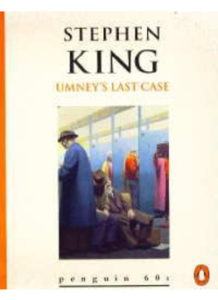
Umney's Last Case PDF - Stephen King
Stephen King • science fiction novels • 107 Pages
(0)
Quate
Review
Save
Share
Book Description
Stephen King’s Umney’s Last Case is a short crime-fantasy story by American author Stephen King. It first appeared in King’s 1993 collection Nightmares & Dreamscapes, published by Viking, and was later issued as a separate slim paperback by Penguin Books in 1995 as part of the Penguin 60s series. Although it is often listed as a standalone book, Umney’s Last Case is best understood as a short story that blends hardboiled detective fiction, metafiction, fantasy, and psychological horror.
The story follows Clyde Umney, a private detective living in a version of 1930s Los Angeles that strongly resembles the world of classic noir fiction. At the beginning, Umney believes he is facing an ordinary day in his familiar universe of smoky offices, streetwise dialogue, and routine detective work. Very quickly, however, the world around him begins to feel wrong. People who have always been part of his daily life suddenly disappear, quit, move away, or behave in ways that break the pattern of his reality. These changes disturb Umney because they suggest that his life is not as stable or as real as he once believed.
The turning point comes when a strange client enters Umney’s office. The man is Samuel Landry, a crime writer who reveals that he is actually Umney’s creator. Landry explains that Clyde Umney is not a real man in the ordinary sense, but a fictional detective invented for a series of stories. This revelation changes the story from a detective pastiche into a darker meditation on authorship, control, identity, and escape. Landry is not simply visiting his character; he has come with a selfish plan. Tired of his own painful life, he wants to take Umney’s place and live inside the fictional detective world he created.
Landry’s real life has been marked by grief, illness, and emotional exhaustion. To him, Umney’s noir universe appears more exciting, more controllable, and more meaningful than the ordinary modern world. Because he is the author, Landry has power over the fictional setting and can reshape it to suit his needs. Umney, who has built his identity around independence and toughness, discovers that his entire existence may be subject to another man’s imagination. This makes the story unsettling, because the detective is not merely solving a mystery; he is the mystery.
Landry succeeds in forcing a switch. Umney is pushed out of his own world and into Landry’s life in the 1990s. Instead of the glamorous danger of old Los Angeles, he finds himself trapped in a modern reality that feels ugly, dull, confusing, and emotionally empty. He must live in the body and circumstances of the man who stole his existence. This reversal gives the story its sharpest irony: the writer escapes into fiction, while the fictional man is condemned to reality.
As Umney adjusts to this strange new world, he begins to understand the truth of his situation. He recognizes that his former life was artificial, but that does not make his longing for it any less powerful. His memories, habits, desires, and anger remain real to him. Rather than accepting his fate, Umney decides to fight back using the same weapon that created and displaced him: writing. By learning to write, he hopes to regain control, return to his original universe, and confront Landry.
Umney’s Last Case is memorable because Stephen King uses the structure of a detective story to explore the relationship between creator and creation. The plot begins like a tribute to classic private-eye fiction, but it gradually becomes a story about power, revenge, and the fragile boundary between fiction and reality. Clyde Umney is both a parody of the hardboiled detective and a surprisingly sympathetic figure, because his struggle is not only to solve a case but to prove that his life matters. For readers interested in Stephen King’s metafiction, crime-inspired writing, and darker reflections on storytelling itself, Umney’s Last Case offers a compact but clever example of King’s ability to twist genre expectations into something stranger and more haunting.
Stephen King
Stephen King is an American author best known for his contributions to the horror, supernatural fiction, and suspense genres. He was born in Portland, Maine in 1947 and began his writing career as a teenager, submitting short stories to various magazines. After graduating from college, King worked as a teacher while continuing to write in his spare time. His breakthrough novel, "Carrie," was published in 1974 and became a bestseller, launching his career as a full-time writer.
King is known for his prolific output, having written over 60 novels and 200 short stories throughout his career. Many of his books have been adapted into successful films and TV series, such as "The Shining," "It," and "The Stand." He has also won numerous awards for his work, including the Bram Stoker Award, the World Fantasy Award, and the National Medal of Arts.
King's writing style is characterized by his ability to create vivid and often terrifying imagery, as well as his focus on exploring the darkest aspects of the human psyche. He has tackled a wide range of subjects in his work, from the supernatural and the paranormal to more grounded themes such as addiction, family dynamics, and the struggles of everyday life.
Despite his success, King has also faced criticism for the often graphic and violent content of his work. Nevertheless, he remains one of the most popular and influential writers of his generation, with legions of fans around the world eagerly awaiting his next release.
In addition to his writing, King has also been an advocate for various causes, including freedom of expression and gun control. He has been active on social media, often sharing his thoughts on current events and engaging with his fans.
Earn Rewards While Reading!
Every 10 pages you read and spent 30 seconds on every page, earns you 5 reward points! Keep reading to unlock achievements and exclusive benefits.
Read
Rate Now
5 Stars
4 Stars
3 Stars
2 Stars
1 Stars
Umney's Last Case Quotes
Top Rated
Latest
Quate
Be the first to leave a quote and earn 10 points
instead of 3
Other books by Stephen King
Other books like Umney's Last Case
'%20/%3e%3c/svg%3e "Imprisoned with the Pharaohs")
3045
English
Comments
Be the first to leave a comment and earn 5 points
instead of 3