

The source of the book
This book is published for the public benefit under a Creative Commons license, or with the permission of the author or publisher. If you have any objections to its publication, please contact us.
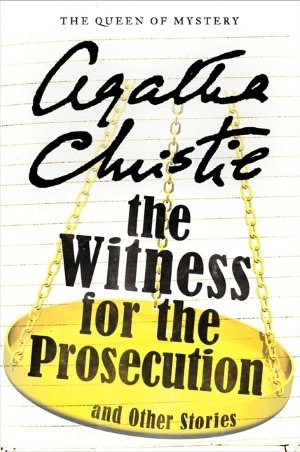
The Witness for the Prosecution and Other Stories PDF - Agatha Christie
Agatha Christie • Crime novels and mysteries • 236 Pages
(0)
Quate
Review
Save
Share
Book Description
The Witness for the Prosecution and Other Stories by Agatha Christie: A Classic Collection of Crime, Suspense, and Brilliant Twists
The Witness for the Prosecution and Other Stories by Agatha Christie is a gripping short story collection that brings together eleven tales of crime, deception, psychological suspense, and classic mystery from the Queen of Crime. First published as a collection in 1948, the book is best known for its unforgettable title story, “The Witness for the Prosecution,” one of Agatha Christie’s most famous and widely adapted works. The official Agatha Christie site presents the book as a collection of 11 stories, including some of Christie’s most striking examples of baffling crime and brilliant deduction.
Unlike a single full-length detective novel, this collection offers a variety of mysteries in compact form. Each story presents its own atmosphere, characters, central problem, and final revelation. Some stories are traditional crime puzzles, while others move closer to psychological suspense, domestic danger, eerie coincidence, or moral uncertainty. For readers who enjoy Agatha Christie short stories, classic detective fiction, courtroom mystery, British crime fiction, and stories with clever endings, The Witness for the Prosecution and Other Stories is a rich and satisfying choice.
A Famous Title Story Full of Courtroom Suspense
The title story, “The Witness for the Prosecution,” is the centerpiece of the collection and one of Christie’s most powerful short works. Set in 1920s London, it revolves around the murder of the wealthy Emily French and the suspicion that falls on Leonard Vole, a young man who had become connected to her fortune. The case becomes even more complicated through the roles of Janet Mackenzie, Emily French’s devoted housekeeper, and Romaine, Leonard’s enigmatic partner, whose testimony may change the direction of the trial.
What makes this story so memorable is not only the crime itself, but the tension between truth, performance, loyalty, and betrayal. Christie turns the courtroom into a stage where every word matters and every witness may be hiding something. The reader is drawn into a world where evidence can appear convincing, emotion can be manipulated, and the truth may be more dangerous than anyone expects. Without relying on a long novel’s space, Christie creates a complete drama of suspicion and surprise, showing her mastery of structure and timing.
A Collection with Variety Beyond the Courtroom
Although the title story is the most famous piece in the volume, The Witness for the Prosecution and Other Stories is much more than one courtroom mystery. The collection includes stories such as “The Red Signal,” “The Fourth Man,” “S.O.S.,” “Wireless,” “The Mystery of the Blue Jar,” “Sing a Song of Sixpence,” “Accident,” “Mr Eastwood’s Adventure,” “Philomel Cottage,” and “The Second Gong.” The official listing also notes that “The Second Gong” is a Hercule Poirot story, giving Poirot fans a familiar point of connection within an otherwise varied collection.
This variety gives the book a special appeal. Instead of repeating the same kind of mystery, Christie explores different forms of suspense. Some stories depend on crime and evidence, while others focus on fear, coincidence, intuition, temptation, or the disturbing possibility that danger may be hidden inside ordinary domestic life. The result is a collection that feels lively and unpredictable, with each story offering a fresh reading experience.
Agatha Christie’s Skill in Short Mystery Form
Short mystery fiction requires precision, and this collection shows how effectively Agatha Christie could work in a limited space. In only a few pages, she could introduce a suspicious situation, create atmosphere, develop character, plant clues, mislead the reader, and deliver a final turn that changes the meaning of everything that came before. The stories are compact, but they are carefully built.
Christie’s greatest strength is her control of expectation. She understands how readers think, what they are likely to assume, and where they are likely to look for guilt. A character who seems harmless may be more important than expected. A small phrase may become a clue. A domestic setting may conceal a serious threat. A person who appears frightened, loyal, innocent, or respectable may be performing a role. This makes The Witness for the Prosecution and Other Stories especially enjoyable for readers who like mysteries that reward close attention.
Crime, Psychology, and Hidden Motives
Across the collection, Christie explores many of her favorite themes: greed, fear, betrayal, guilt, jealousy, ambition, and the danger of trusting appearances. Her stories often begin with ordinary people in recognizable situations: a marriage, a household, a social visit, a legal case, a warning, a strange sound, or an unexpected event. Yet beneath these ordinary surfaces, hidden motives begin to appear.
The collection is especially strong in its psychological suspense. Christie does not always need a detective to explain the mystery in a formal way. Sometimes the tension comes from watching a character move closer to danger without fully understanding it. Sometimes the mystery depends on whether a person is lying to others or to themselves. This gives the book a darker and more varied tone than a simple puzzle collection. It is not only about solving crimes; it is about understanding how people deceive, manipulate, and protect their secrets.
The Power of the Unexpected Ending
One reason The Witness for the Prosecution and Other Stories remains so effective is Christie’s talent for the unexpected ending. The title story became especially famous for its twist, and the official Agatha Christie site notes that it has been adapted for film, television, radio, and stage, with Christie herself later adapting it for the theatre in 1953. This lasting popularity reflects the strength of the original story’s design: it is a mystery built not only on evidence, but on the reader’s own assumptions.
The same pleasure appears throughout the collection. Christie often leads the reader toward one explanation, then reveals that the emotional or logical center of the story lies somewhere else. Her endings are not random shocks; they are carefully prepared reversals. Once the truth is revealed, earlier details take on new meaning. This is what gives her short stories their lasting satisfaction.
A Good Choice for Christie Readers and Classic Mystery Fans
The Witness for the Prosecution and Other Stories is a strong choice for readers who want an Agatha Christie book that can be enjoyed one story at a time. It is ideal for fans of classic crime short stories, courtroom drama, psychological mystery, and golden age detective fiction. Readers who already love Christie’s novels will enjoy seeing her apply the same intelligence and misdirection to shorter forms, while new readers may find this collection an accessible way to enter her world.
The book is also appealing because it is not limited to one detective or one formula. While Hercule Poirot appears in “The Second Gong,” the collection as a whole showcases Christie’s broader range as a storyteller. She could write courtroom suspense, domestic terror, eerie mystery, clever detective puzzles, and stories of human weakness with equal confidence. This range makes the volume especially valuable for readers who want to experience different sides of her fiction.
A Classic Christie Collection of Suspense and Deception
The Witness for the Prosecution and Other Stories by Agatha Christie is a polished, suspenseful, and highly readable collection that captures Christie’s gift for mystery in concentrated form. From the famous courtroom drama of the title story to tales of danger, deception, strange events, and hidden guilt, the book shows why Christie remains one of the defining writers of classic crime fiction.
For anyone searching for an Agatha Christie short story collection, a classic courtroom mystery, or a book of suspenseful crime stories with intelligent twists, The Witness for the Prosecution and Other Stories is an excellent choice. It is a collection about truth and performance, guilt and innocence, appearances and reality. Clever, tense, and full of Christie’s signature storytelling power, it remains a memorable volume for readers who enjoy mysteries where the final revelation changes everything.
Agatha Christie
Agatha Christie was an English author of detective fiction, widely considered one of the most influential writers in the genre. She was born on September 15, 1890, in Torquay, Devon, and died on January 12, 1976, in Wallingford, Oxfordshire.
Christie wrote 66 detective novels and 14 short story collections, as well as a number of plays, many of which have been adapted for film, television, and stage productions. Her best-known characters include Hercule Poirot, a Belgian detective with a distinctive mustache, and Miss Marple, an elderly spinster who solves crimes in her village.
Christie's writing career began in 1920 with the publication of her first novel, "The Mysterious Affair at Styles," which introduced Hercule Poirot to readers. Her works are known for their intricate plots, surprising twists, and ingenious solutions. Her novels have sold over 2 billion copies worldwide, making her one of the best-selling authors of all time.
Christie's personal life was just as intriguing as her novels. She had a love of travel, and her experiences in places such as Egypt and Iraq often found their way into her stories. She was also known for her disappearance in 1926, which sparked a massive manhunt and captivated the public's imagination.
Despite her immense popularity and success, Christie remained a private person throughout her life. She was appointed a Dame Commander of the Order of the British Empire in 1971 for her contribution to literature, and her legacy as the Queen of Crime continues to inspire new generations of writers and readers alike.
Earn Rewards While Reading!
Every 10 pages you read and spent 30 seconds on every page, earns you 5 reward points! Keep reading to unlock achievements and exclusive benefits.
Read
Rate Now
5 Stars
4 Stars
3 Stars
2 Stars
1 Stars
The Witness for the Prosecution and Other Stories Quotes
Top Rated
Latest
Quate
Be the first to leave a quote and earn 10 points
instead of 3
Other books by Agatha Christie
'%20/%3e%3c/svg%3e "Murder on the Orient Express: A Hercule Poirot Mystery")
Agatha Christie.
Crime novels and mysteries
(0)
4547
English
Other books like The Witness for the Prosecution and Other Stories
Jonathan Cahn.
Crime novels and mysteries
(0)
3000
English
Jonathan Cahn.
Crime novels and mysteries
(0)
2665
English
Comments
Be the first to leave a comment and earn 5 points
instead of 3