

The source of the book
This book is published for the public benefit under a Creative Commons license, or with the permission of the author or publisher. If you have any objections to its publication, please contact us.
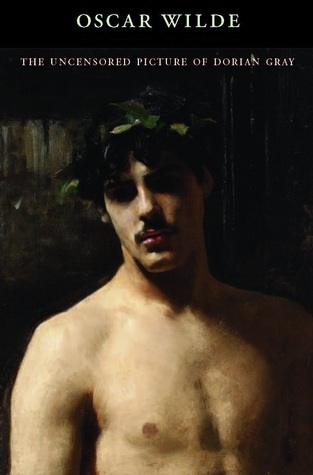
The Uncensored Picture of Dorian Gray PDF - Oscar Wilde
Oscar Wilde • Fantasy novels • 206 Pages
(0)
Quate
Review
Save
Share
Book Description
The Picture of Dorian Gray is one of the most enduring and provocative works in English literature, written by Oscar Wilde. Often referred to in its expanded or “uncensored” editions to highlight restored or less-edited textual elements from early manuscripts and publications, this classic novel continues to captivate readers with its dark exploration of beauty, morality, corruption, and the hidden consequences of a life devoted entirely to pleasure and aestheticism.
At its core, The Picture of Dorian Gray tells the story of a young man whose extraordinary beauty becomes both his greatest gift and his deepest curse. When Dorian Gray has his portrait painted, he makes a subconscious wish that he might remain forever young while the painting ages in his place. This seemingly innocent desire sets off a haunting chain of events, as the portrait begins to reflect not just the passage of time, but the moral decay of its subject. While Dorian remains outwardly flawless, untouched by age or consequence, the hidden portrait becomes increasingly grotesque, bearing the burden of his sins, indulgences, and moral corruption.
The novel is widely regarded as one of the most powerful literary explorations of the duality between appearance and reality. Wilde constructs a world where beauty is worshipped almost as a religion, yet this devotion to surface-level perfection conceals profound philosophical and ethical questions. Through Dorian’s journey, the story challenges the reader to consider what it truly means to live a meaningful life when desire, influence, and temptation constantly blur the boundaries between right and wrong.
The Meaning Behind the Portrait
One of the most compelling aspects of the novel is the symbolic function of the portrait itself. It is not merely a supernatural device but a mirror of the soul. As Dorian indulges in a life of excess, manipulation, and emotional detachment, the painting becomes increasingly disturbing, reflecting the hidden consequences of actions that society does not immediately see. This contrast between outward appearance and inner reality is central to the novel’s enduring appeal and continues to resonate strongly with modern readers in an age shaped by image culture, social media, and curated identities.
Wilde uses this duality to question whether moral decay is visible or invisible in society. If someone can appear untouched by wrongdoing while internally collapsing, what does justice or truth even mean? This philosophical tension is what elevates the novel beyond a simple gothic story into a timeless moral inquiry.
Aestheticism, Influence, and Moral Philosophy
Oscar Wilde was a leading figure in the Aesthetic Movement, which emphasized “art for art’s sake,” and this philosophy is deeply woven into the novel. Characters such as Lord Henry Wotton embody a seductive worldview that prioritizes beauty, pleasure, and sensation above traditional moral constraints. Under Lord Henry’s influence, Dorian becomes increasingly detached from ethical responsibility, embracing a life of indulgence without accountability.
This tension between aesthetic pleasure and moral consequence forms the philosophical backbone of the story. The novel does not offer simple answers or moral judgments; instead, it presents a psychological descent that forces readers to question how ideas and influence shape human behavior. The “uncensored” framing of the text is often associated with a more direct engagement with Wilde’s original thematic intentions—particularly the darker undertones that earlier editions were sometimes softened to accommodate Victorian sensibilities.
Psychological Depth and Character Transformation
Dorian Gray’s transformation is one of the most psychologically complex arcs in classic literature. At the beginning of the novel, he is innocent, impressionable, and deeply affected by external admiration. However, as he becomes increasingly aware of his eternal youth and the hidden consequences absorbed by the portrait, his moral compass gradually erodes. Instead of seeking redemption, he begins to pursue sensation without restraint, believing he is free from consequence.
This descent is not portrayed as sudden but as a gradual unraveling, shaped by guilt, denial, and self-justification. Wilde carefully constructs Dorian as both a victim of influence and an active participant in his own corruption, creating a layered exploration of responsibility and choice. The result is a character who is both fascinating and deeply unsettling, embodying the conflict between human desire and ethical awareness.
Gothic Atmosphere and Timeless Appeal
The novel’s gothic atmosphere plays a crucial role in its emotional and thematic impact. Shadowy London settings, secretive encounters, and the eerie presence of the hidden portrait contribute to a sense of unease that persists throughout the narrative. Yet beneath the gothic surface lies a deeply intellectual work that engages with questions of identity, reputation, and the nature of the soul.
Modern readers continue to find relevance in the novel’s themes, particularly in relation to curated identities and the gap between public image and private reality. The idea that a person can maintain a flawless external appearance while concealing inner turmoil feels especially resonant in contemporary culture.
Why Readers Still Engage With This Classic
The continued popularity of The Picture of Dorian Gray is rooted in its ability to function on multiple levels. It can be read as a gothic horror story, a philosophical novel, a moral allegory, or a critique of aestheticism and societal values. Its language, rich with Wilde’s signature wit and elegance, adds further depth to its exploration of human nature.
Readers are often drawn to its exploration of temptation, influence, and consequence, as well as its haunting central metaphor of the portrait. The “uncensored” framing highlights the novel’s original intensity and reinforces its place as a work that does not shy away from uncomfortable truths about desire and corruption.
A Lasting Literary Legacy
Over a century after its publication, The Picture of Dorian Gray remains a defining work in English literature and a cornerstone of discussions around aesthetic philosophy and moral complexity. Wilde’s ability to blend beauty with darkness, elegance with psychological tension, ensures that the novel continues to be studied, adapted, and reinterpreted across generations.
Its enduring power lies in its refusal to provide easy moral closure. Instead, it invites readers into a world where appearances deceive, influence can corrupt, and the pursuit of beauty may come at an unforeseen cost.
Oscar Wilde
Oscar Wilde (1854-1900) was an Irish playwright, poet, and novelist who is widely regarded as one of the greatest writers of the Victorian era. He was born in Dublin, Ireland, and educated at Trinity College, Dublin, and Magdalen College, Oxford. Wilde was a flamboyant figure in Victorian society, known for his wit, dandyism, and homosexuality, which was then considered a crime.
Wilde's literary career began in the 1880s, when he gained popularity with his comedic plays, including "Lady Windermere's Fan," "A Woman of No Importance," and "The Importance of Being Earnest." These plays were known for their clever wordplay, social commentary, and satirical portrayal of Victorian society.
In addition to his plays, Wilde also wrote novels, including "The Picture of Dorian Gray," which tells the story of a beautiful young man who makes a Faustian pact to remain young and beautiful while his portrait ages and becomes ugly. The novel caused controversy when it was first published in 1890 because of its decadent themes and homoerotic undertones.
Despite his literary success, Wilde's personal life was tumultuous. In 1895, he was convicted of homosexual acts and sentenced to two years of hard labor. The trial and subsequent imprisonment destroyed his reputation and health, and he died in Paris in 1900, at the age of 46.
Wilde's legacy lives on through his works, which continue to be celebrated for their wit, humor, and social commentary. His writing has influenced generations of writers, and his plays continue to be performed and adapted for film and television. Today, Wilde is remembered not only as a great writer, but also as a symbol of resistance against Victorian moralism and hypocrisy.
Earn Rewards While Reading!
Every 10 pages you read and spent 30 seconds on every page, earns you 5 reward points! Keep reading to unlock achievements and exclusive benefits.
Read
Rate Now
5 Stars
4 Stars
3 Stars
2 Stars
1 Stars
The Uncensored Picture of Dorian Gray Quotes
Top Rated
Latest
Quate
Be the first to leave a quote and earn 10 points
instead of 3
Other books by Oscar Wilde
Other books like The Uncensored Picture of Dorian Gray
'%20/%3e%3c/svg%3e "Fantastic Beasts: The Crimes of Grindelwald - the Original Screenplay")
J. K. Rowling.
Fantasy novels
(0)
7573
English
Comments
Be the first to leave a comment and earn 5 points
instead of 3